
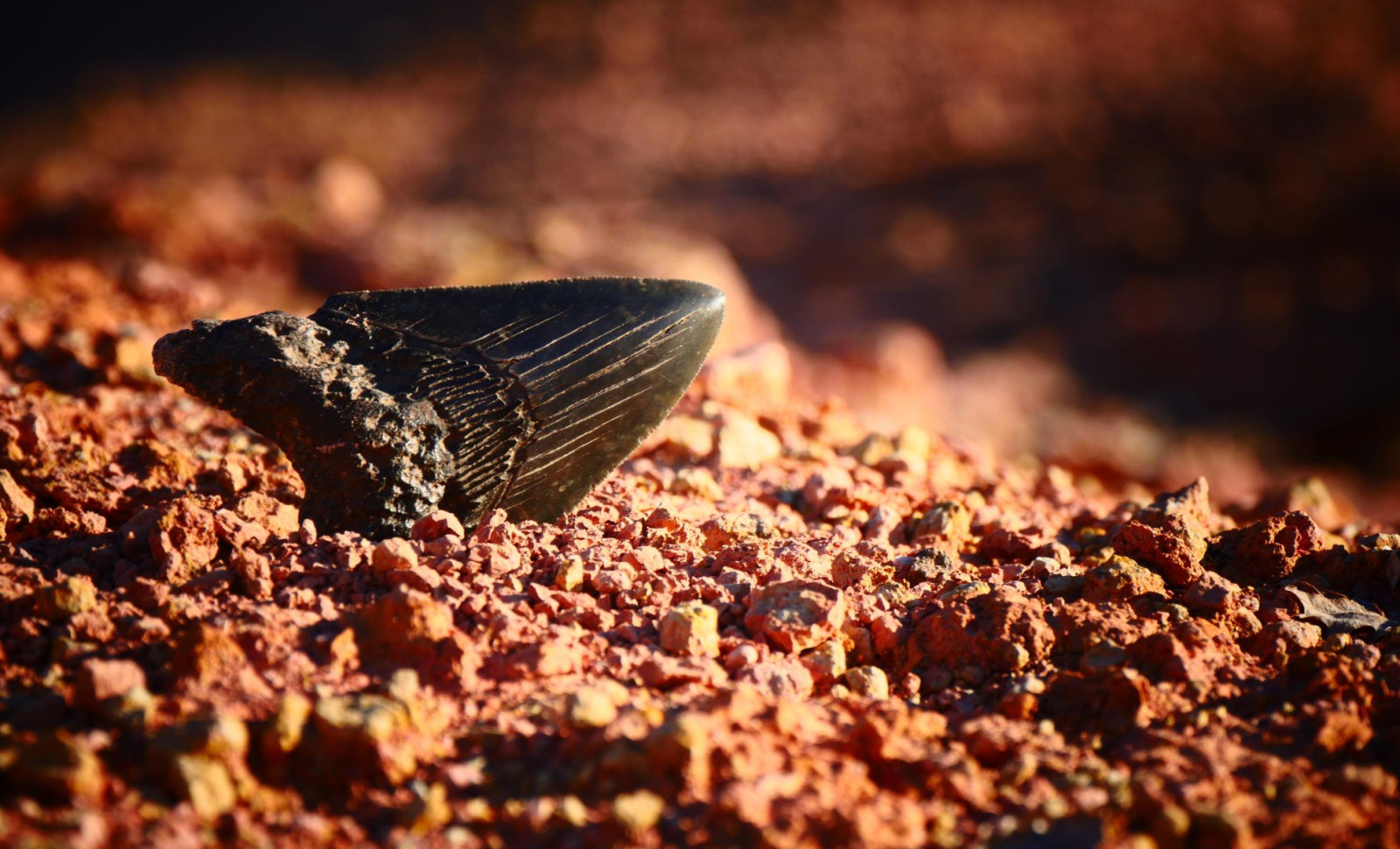
Scientists have uncovered a fossilized megalodon tooth situated over 10,000 feet deep in the Pacific Ocean, marking the first instance of such a find documented in its original deep-sea location.
This remarkable tooth was retrieved during a 2022 expedition orchestrated by the Ocean Exploration Trust, venturing into an uncharted seamount located within the Pacific Remote Islands Marine National Monument. While megalodon teeth frequently emerge on land or near coasts, discovering one so far beneath the ocean floor is exceptionally rare.
The significance of this fossil lies in the researchers’ ability to trace its precise position on the ocean bed prior to collection, a detail often absent in deep-sea fossil findings usually obtained via trawling. The findings were published in the journal Historical Biology.

Unexpected Discovery City Under the Waves
During a June 2022 survey of the seabed around Johnston Atoll—some 800 miles (1,300 kilometers) south of Hawaii—scientists aboard the vessel Nautilus made the stunning discovery.
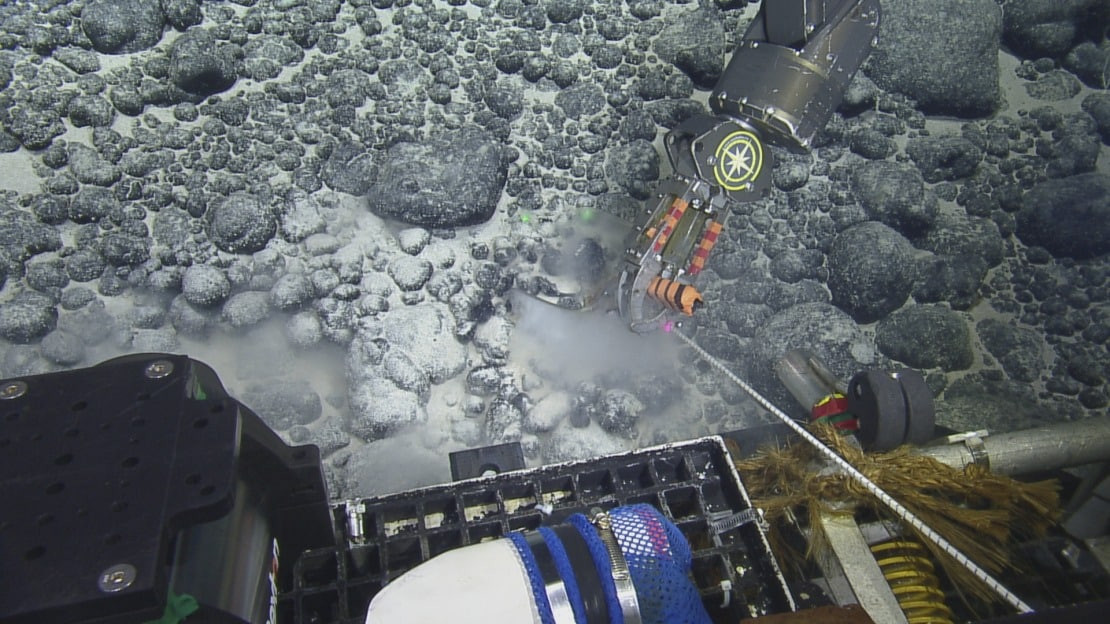
The team deployed Hercules, a deep-diving remotely operated vehicle, to explore the seamount, gathering several samples from depths exceeding 10,000 feet (3,090 meters).
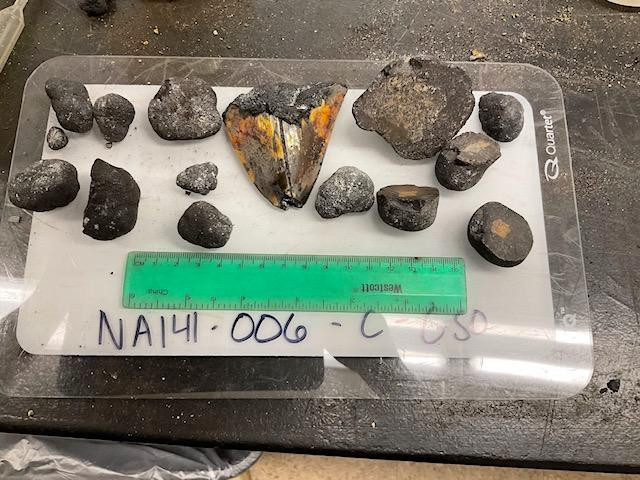
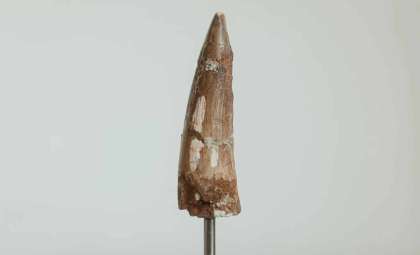
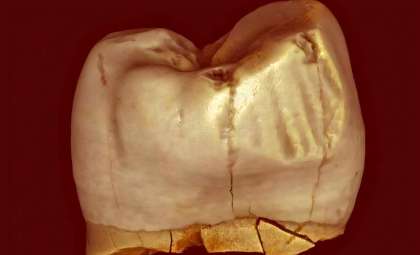
Samples were processed at the University of Rhode Island, where a distinctive 2.7-inch (6.8-centimeter) long gold-hued tooth was identified.
The Ocean Exploration Trust noted early on that the specimen was likely a megalodon tooth, a claim later confirmed by shark specialist Dave Ebert from Moss Landing Marine Laboratories in California.
Underwater Video Captured the Tooth Before Retrieval
Further analysis of video footage from the Hercules dive showcased the tooth protruding from sediment before collection, highlighting this concrete in-situ discovery.
The researchers report in Historical Biology that this is the first documented in-place observation and retrieval of a megalodon tooth from the deep sea.
Unlike typical fossil collections retrieved by dragging nets across the ocean floor—often obscuring their original context—this find enabled researchers to associate the fossil directly with its deep-sea environment.
Nicolas Straube, co-author of the study from the University Museum of Bergen, hailed the discovery as remarkable in an official statement from the Ocean Exploration Trust. He further remarked:
“The fossil was discovered at a very remote deep-sea locality from which megalodon fossils are rarely documented. Further, its partial encapsulation with manganese suggests that fossil shark teeth are an ideal basis for manganese accumulation.”
Insights Into Megalodon's Ocean Travels
This discovery sheds light on the habitat and range of Otodus megalodon, a giant prehistoric shark that reigned over the seas for millions of years.
The research highlights that megalodon existed from approximately 20 million years ago until its extinction about 3.6 million years ago. Estimates suggest that individuals could grow to at least 49 feet (15 meters), with some possibly reaching lengths near 65 feet (20 meters).
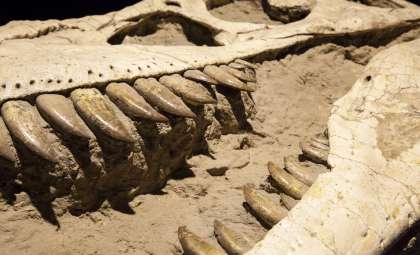
Megalodon teeth are among the more frequently found fossils, as each shark had nearly 276 teeth and the species occupied global oceans. However, most teeth are typically discovered near coastal areas or river deposits rather than the deep ocean floor.
For the research team, this particular specimen is extraordinary. Study contributor Jürgen Pollerspöck from the Bavarian State Collection of Zoology explained:
“This fossil provides us with important insights into the distribution of megalodon.”
He also suggested that this finding supports the idea that megalodon was not strictly a coastal dweller but rather traversed ocean basins similarly to present-day sharks like the great white shark.
- Categories:
- News




0 comments
Sign in to Comment