
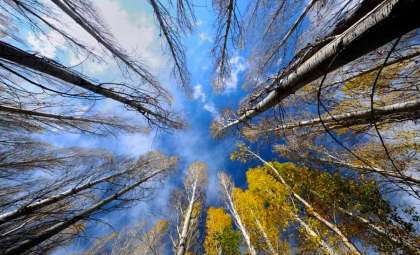
Hidden beneath the pine canopy in eastern Oregon is a colossal living entity, recognized as the largest organism known to science. Referred to as the “Humongous Fungus,” this ancient organism extends beneath more than 2,000 acres of woodland, mostly concealed from view. It isn’t an animal or a tree, but a vast network of Armillaria ostoyae, a parasitic fungus that slowly devours the forest from below.
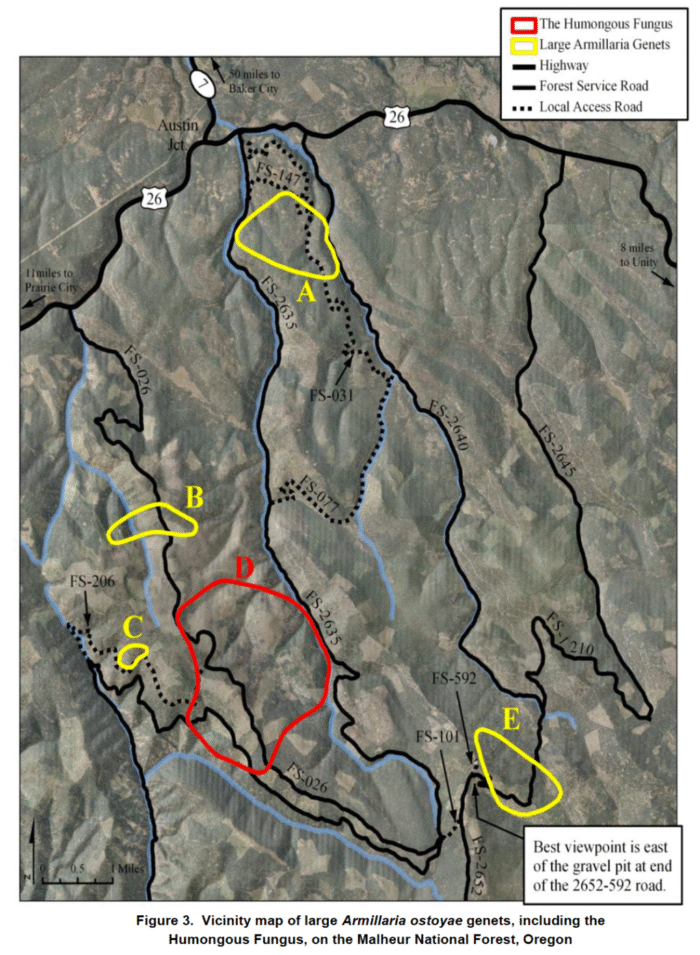
Discovered initially in 1988 within the Malheur National Forest, early estimates placed its size around 400 acres. However, improved genetic analysis later confirmed that this massive underground fungus spreads across an incredible 2,385 acres. Its lifespan, spanning about 8,000 years, ranks it among the oldest and largest living organisms on our planet.
A Colossal Lifeform Beneath the Surface
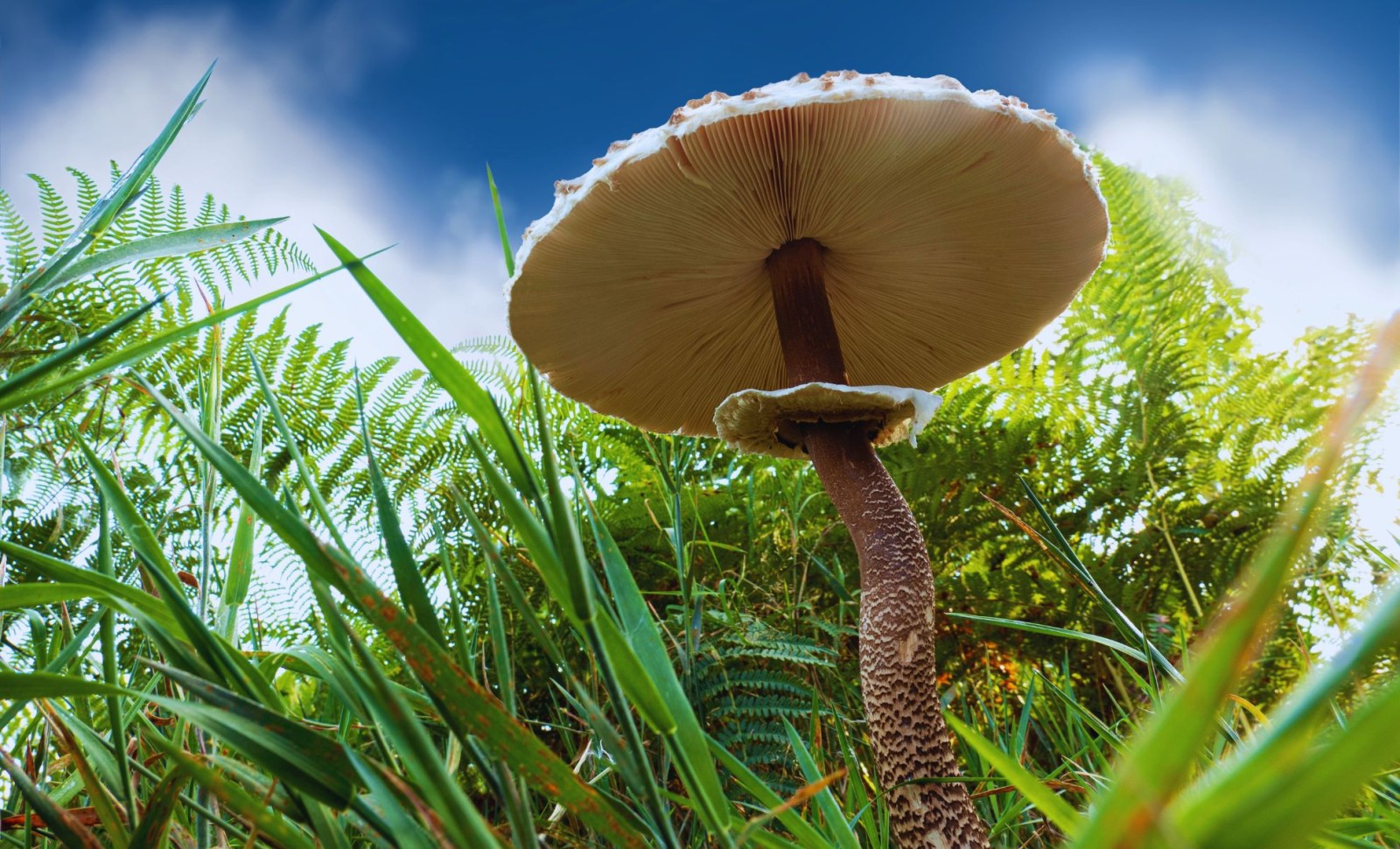
Buried under layers of soil, Armillaria ostoyae mostly remains out of sight. The fungus becomes visible for only a brief window each autumn, when clusters of honey mushrooms briefly emerge. These mushrooms serve as the fruiting structures of a vast subterranean network made up of dark, root-like rhizomorphs and white mycelial mats growing within the bark and sapwood of infected trees.

Weighing as much as 35,000 tons—the equivalent of roughly 60 Boeing 747 airplanes—this fungal giant’s extent was confirmed by DNA testing of samples taken across the forest. Every specimen tested shared identical genetics, proving a single massive entity. Despite its formidable size, it spreads at a gradual pace, advancing between 0.7 and 3.3 feet annually, as noted by the Oregon Encyclopedia and U.S. Forest Service.
A Stealthy Threat to Forest Health
Beyond its immense size, Armillaria ostoyae is notorious for its damaging effects. As a parasite, it infects healthy trees by feeding on their roots and inner tissues, ultimately causing tree death. Pathologist Greg Filip of the U.S. Forest Service described the process:
“[Trees are] girdled by the fungus,” he told Oregon Public Broadcasting in 2015. “The fungus will grow all the way around the base of the tree and then kills all the tissues.”
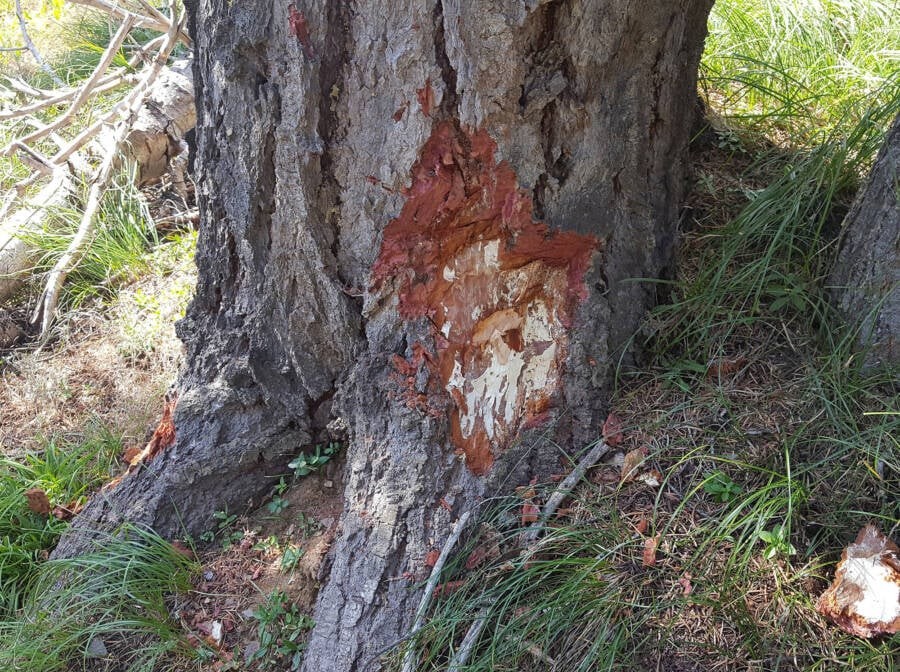
Signs of infection include resin leaking from the base of the tree, yellowing or thinning leaves, and the presence of honey mushrooms near the roots during autumn. Even after infected trees die and fall, the fungus continues to consume the decaying wood. Efforts to eliminate the fungus have failed, as eradicating every piece of its root-like structures, rhizomorphs, is nearly impossible. However, fallen, decomposing trees offer important habitats for cavity-nesting birds and other forest wildlife.
A Remarkable but Quiet Forest Icon
In contrast to a similar discovery at Crystal Falls, Michigan, where locals celebrate with an annual Humongous Fungus Fest dedicated to their smaller Armillaria colony, Oregon’s counterpart has remained more low-key but equally significant.
Author Richard Faulk highlighted the Malheur National Forest in his book Gross America, naming it one of the country’s most unsettling places due to this fungal giant beneath the surface. The fungus has also been featured on PBS’s Oregon Field Guide and various travel blogs praising the forest’s enigmatic resident as a natural oddity.
Though hidden below walking visitors’ feet, the Humongous Fungus continues to captivate researchers and nature enthusiasts. According to All That’s Interesting, it already stretches over an area five times larger than Monaco, steadily expanding beneath the forest floor.
- Categories:
- Nature

0 comments
Sign in to Comment