
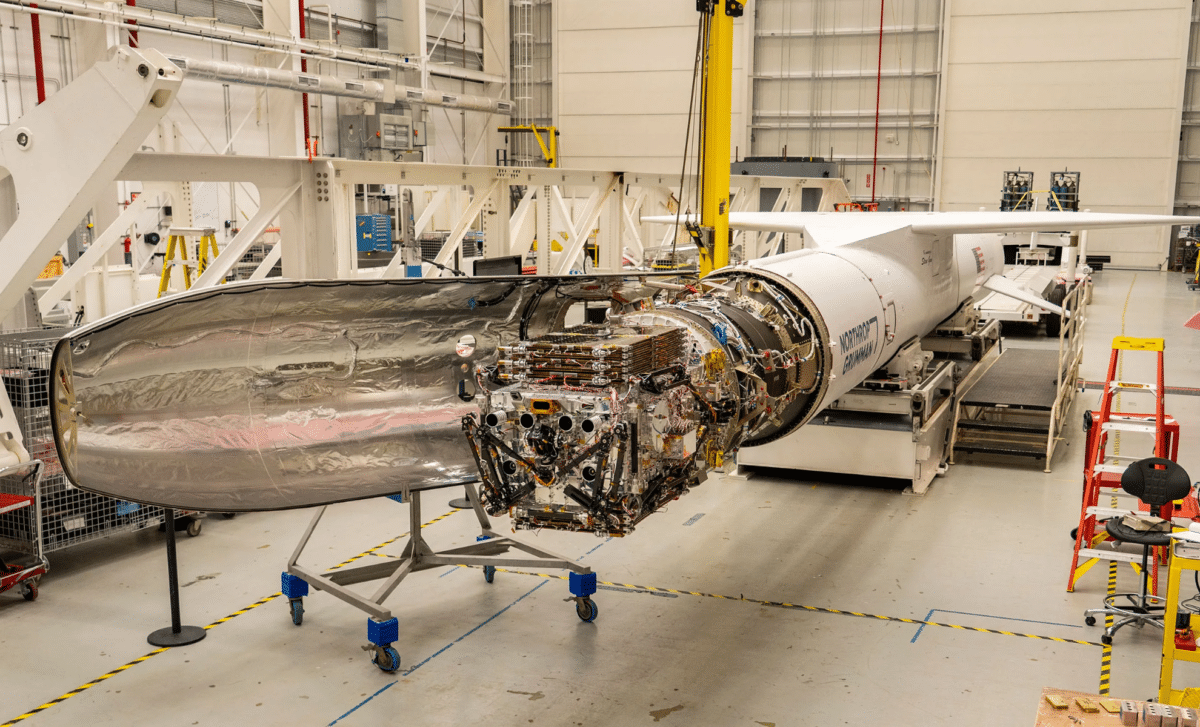
NASA is gearing up for a groundbreaking mission that could redefine how spacecraft are serviced while in orbit. The Katalyst Space mission aims to rendezvous with the aging Neil Gehrels Swift Observatory and elevate its orbit, potentially prolonging the telescope’s functionality after over 20 years in space. If successful, this endeavor will preserve a vital scientific instrument and showcase a pioneering approach that could shape future space missions.
An Aging Telescope with an Uncertain Destiny
Since its launch in 2004, the Neil Gehrels Swift Observatory has been a key asset for studying some of the universe’s most energetic, fleeting phenomena. It specializes in capturing gamma-ray bursts, intense cosmic explosions that can temporarily outshine entire galaxies. Swift’s swift detection and alert capabilities have given it a critical role on the global astronomy stage.
After more than two decades in orbit, Swift is now facing the effects of increased solar activity, which is gradually lowering its low-Earth orbit and pulling it closer to Earth. Typically, satellites in this situation are allowed to decay and re-enter the atmosphere, ending their missions. However, due to Swift’s scientific value and the chance to test new space technologies, NASA has chosen an alternative route. Instead of retiring the observatory, the agency is attempting an orbital servicing mission aimed at extending its operational life, setting a precedent for satellite sustainability.

The Robotic Spacecraft Poised to Revitalize Swift
Central to this mission is LINK, a robotic servicing spacecraft developed by Katalyst Space. LINK is designed to carry out a precise orbital rendezvous with Swift and then execute maneuvers that raise the telescope’s altitude. These operations demand exceptional accuracy since spacecraft traveling at thousands of miles per hour must align their orbits perfectly before interacting.
This mission goes beyond a simple orbital boost—it is a live test of how spacecraft might be serviced, upgraded, or repositioned in space without needing to launch replacements. As satellite networks grow, both government and commercial sectors are increasingly investigating on-orbit servicing solutions. A successful LINK mission would demonstrate that robotic systems can safely manage complex tasks on active spacecraft, paving the way for future servicing models in Earth orbit and beyond.
NASA's Vision Extends Far Beyond the Swift Observatory
According to NASA, the Swift orbital boost is as much a technology showcase as it is a preservation effort. Awarded in September 2025, the contract to Katalyst Space demands a rapid mission development and execution timeline—less than one year—which is unusually fast for an orbital servicing project.
NASA highlights that future deep-space missions could rely heavily on technologies that enable spacecraft to be repaired, refueled, upgraded, or repositioned post-launch. As space missions grow more complex and costly, extending the active life of current assets offers both scientific and economic advantages. The Swift project serves as a critical proving ground for these concepts, utilizing an operational observatory with a strong scientific legacy. Achieving success will bolster confidence in robotic servicing and lay groundwork for infrastructure support in lunar, planetary, and deep-space environments.
Final Phase Before Launch
The LINK vehicle is planned to deploy on a Northrop Grumman Pegasus XL rocket, launching from Kwajalein Atoll in the Marshall Islands. This mission has gained widespread interest from government agencies and commercial stakeholders alike, as it merges scientific objectives with key technology validation.
NASA has arranged a forthcoming media briefing featuring agency officials, mission researchers, Katalyst Space representatives, and Northrop Grumman’s launch experts. This event will offer insight into mission procedures, rendezvous techniques, and the broader implications of the demonstration. Industry watchers see this venture as a high-profile example of commercial collaboration in spacecraft servicing.
An Operation with the Potential to Shape Future Spacecraft Servicing
The significance of this mission goes well beyond preserving a single telescope. Globally, space agencies are prioritizing methods to enhance spacecraft durability, sustainability, and adaptability post-deployment. The ability to renew operational capabilities could revolutionize mission design and reduce premature asset replacement.
Having been in orbit for over two decades, Swift has enabled scientists to explore high-energy cosmic phenomena and respond rapidly to dramatic space events. Now, it embarks on a new kind of mission—one that could redefine how spacecraft are maintained in orbit long after launch. Should LINK complete its rendezvous and orbital boost successfully, the mission will be celebrated not only for saving Swift but also for pioneering a transformative approach to space exploration.
- Categories:
- Science











0 comments
Sign in to Comment