
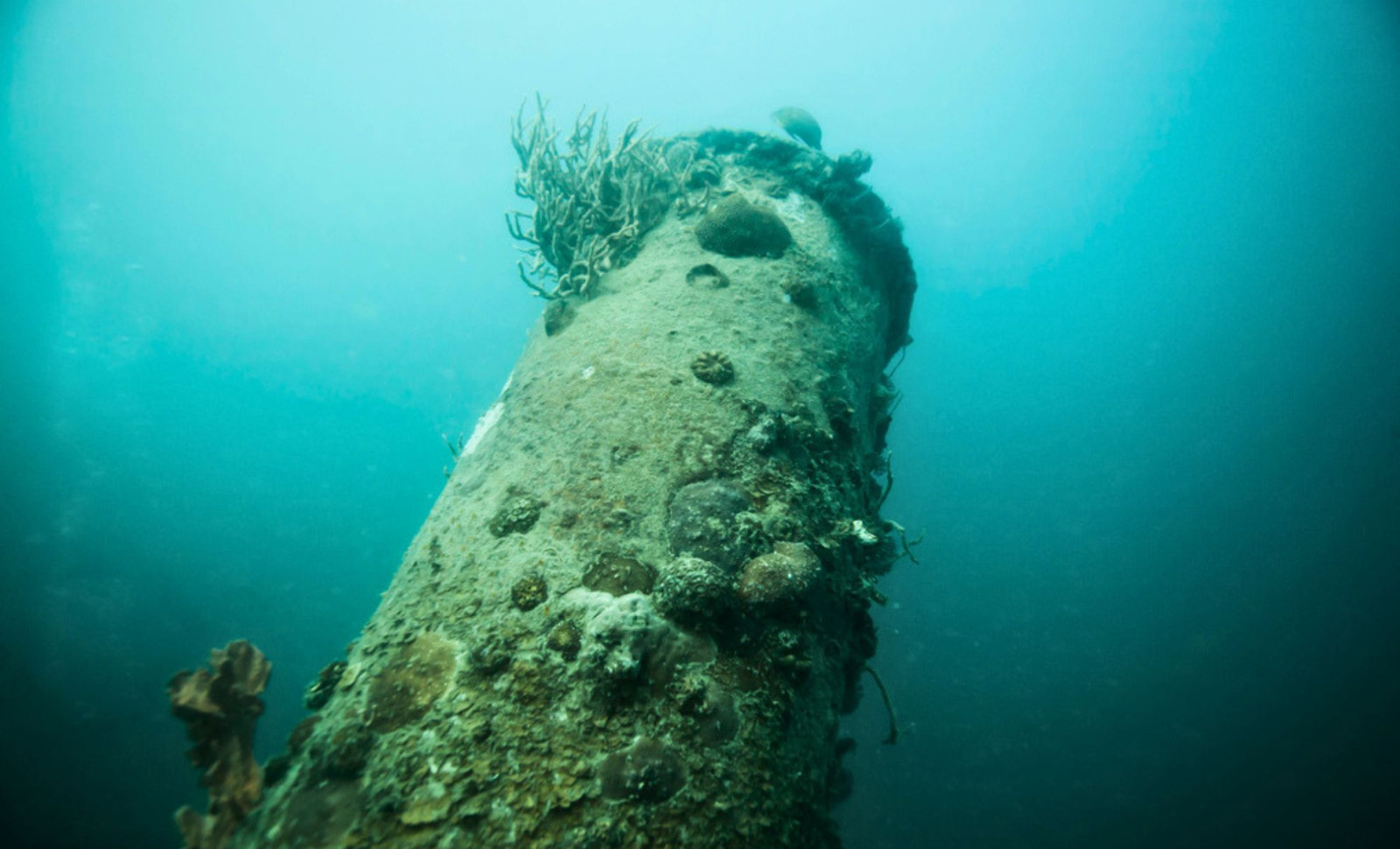
During dredging operations on the Savannah River, a clamshell dredge unexpectedly retrieved a rusted cannon that had lain submerged since the era of the American Revolution. This discovery was part of a $973 million project aiming to deepen a 40-mile stretch of the river, which unexpectedly led to significant archaeological finds.
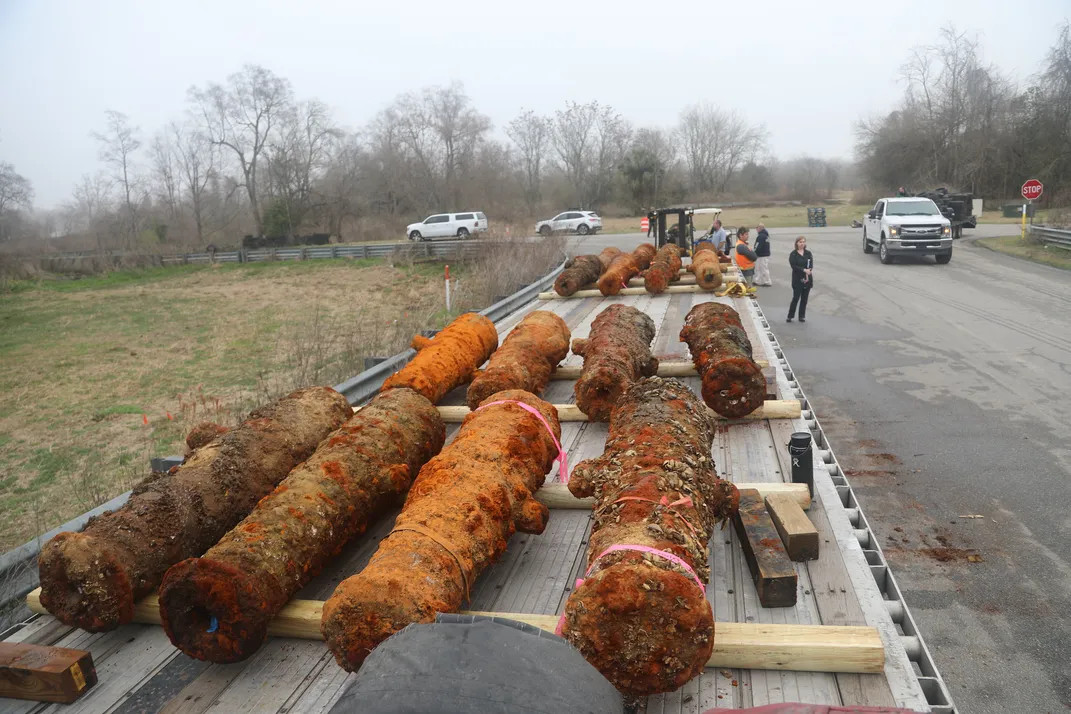
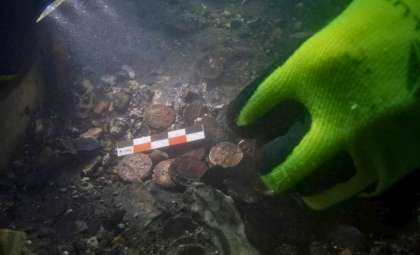
As work progressed, additional cannons were uncovered. By 2022, a total of 19 artillery pieces, each weighing over a thousand pounds, had been removed from the riverbed. Initially seen as a construction curiosity, these artifacts unveiled a deeper story of British control, defensive river strategies, and Savannah's strategic importance during the Revolutionary War.
These items were located near Old Fort Jackson, concealed for centuries beneath layers of sediment and murky water. Originally, officials suspected these might be relics from the nearby Civil War, but further analysis dated them to the mid-18th century, coinciding with conflicts over Savannah's control in the Revolutionary period.

Uncovering Hidden Treasures Through Dredging
The initial three cannons surfaced in February 2021 while a hinged clamshell dredge worked on deepening efforts. According to the Associated Press, workers also found a ship’s anchor along with a large wooden beam. The discovery emphasized that the dredge had reached a historically significant section of the river floor.
Work in the vicinity was paused to assess the possibility of further artifacts. Despite poor underwater visibility limiting diver inspections, experts employed sonar and other remote sensing technology to scan the sediment, which led to the discovery of 19 cannons in total without solely relying on direct visual confirmation.
By March 2022, the U.S. Army Corps of Engineers, Savannah District announced that the dredging yielded enough cannons to total 19. Some artifacts had remained undetected due to their angle and burial in the river sediment, explaining their previous invisibility.
British Wartime River Blockade Revealed
Scientific examination identified the cannons as dating from the 1700s. While a definitive origin was pending, historical records suggest most came from the HMS Savannah, linked to British naval strategies to obstruct Savannah’s waterways during the Revolutionary War.
The Corps highlighted that HMS Savannah, HMS Venus, and other ships were sunk with their armaments intact in an area known as Five Fathom Hole. These deliberate sinkings formed barriers designed to impede the French fleet’s approach in September 1779, just before the Siege of Savannah in October, when American and French forces attempted to reclaim the city.
This context elevates the cannons beyond mere relics; they represent tangible proof of the British defensive tactics used to secure a vital port city during a pivotal conflict. Some cannons were found still loaded, implying rapid sinking of their vessel. Initial theories linked them to the HMS Rose, but subsequent research revealed that ship had sunk farther upstream and did not carry these weapons.
Careful Restoration Efforts Span Several Years
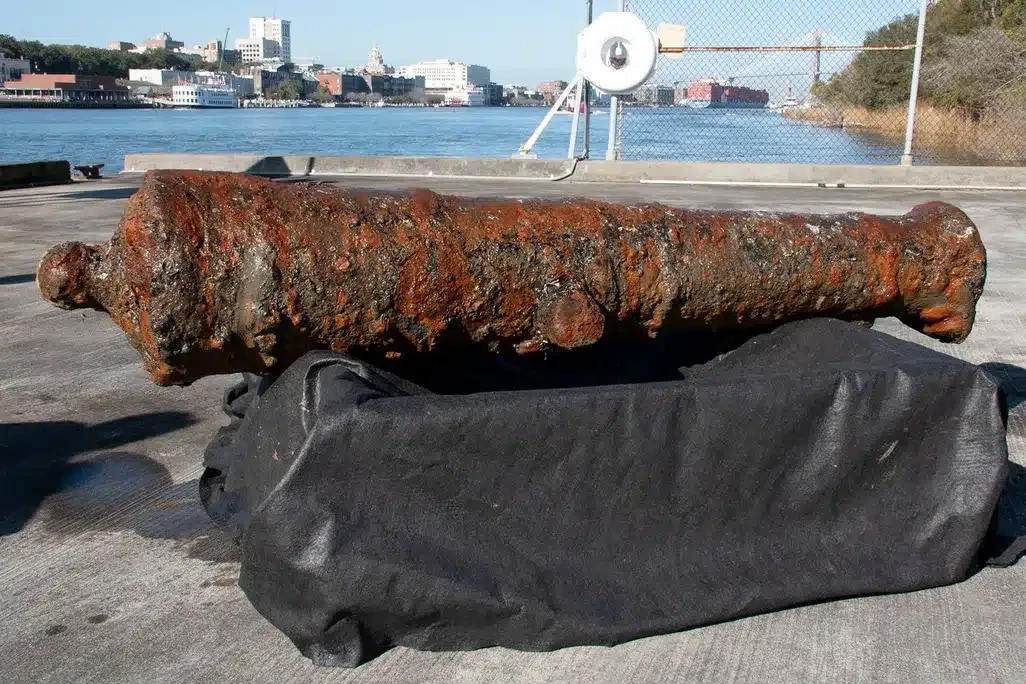
Following recovery, two cannons remained encrusted with rust and sediment and were showcased at the Savannah History Museum in 2021. The other 17 were transported to Texas A&M University’s conservation lab after confirming the loaded guns posed no danger, enabling specialists to begin preservation treatments.
Iron artifacts submerged for centuries become vulnerable once exposed to air. Conservators invested years treating these pieces, transforming them into stable artifacts fit for display. Though details on each step remain limited, the extensive and specialized nature of the work is well emphasized.
Wooden plugs from the cannons underwent radiocarbon dating, confirming they originated in the late 1700s and reinforcing their Revolutionary War-era provenance. This contributed further evidence tying the cannons to the British occupation of Savannah.
The discoveries extended beyond the cannons: anchors and fragments of a ship’s bronze bell were retrieved. None bore clear identifying marks, leaving uncertainty about whether all the cannons came from the same wreck.
Upcoming Exhibit to Showcase Saved Artifacts
Seventeen refurbished cannons are set for public exhibition starting July 2, 2026, in the Loyalists & Liberty display at the Savannah History Museum. The Coastal Heritage Society announced the exhibit will feature these Revolutionary War relics alongside many items recovered from the 2021–2022 Savannah River digs.
The exhibit, part of America 250 commemorations, will delve into Savannah’s strategic role in the Revolution. Some fragile pieces, such as paper remnants from cartridge bags, will be shown temporarily due to their delicate nature, offering visitors rare glimpses of seldom-exhibited objects.
Visitors will also see the contrast between the 17 fully restored cannons and the two that remain coated in river sediment, highlighting the transformation from artifact recovery to museum presentation and deepening understanding of the conservation process.
- Categories:
- News



0 comments
Sign in to Comment