
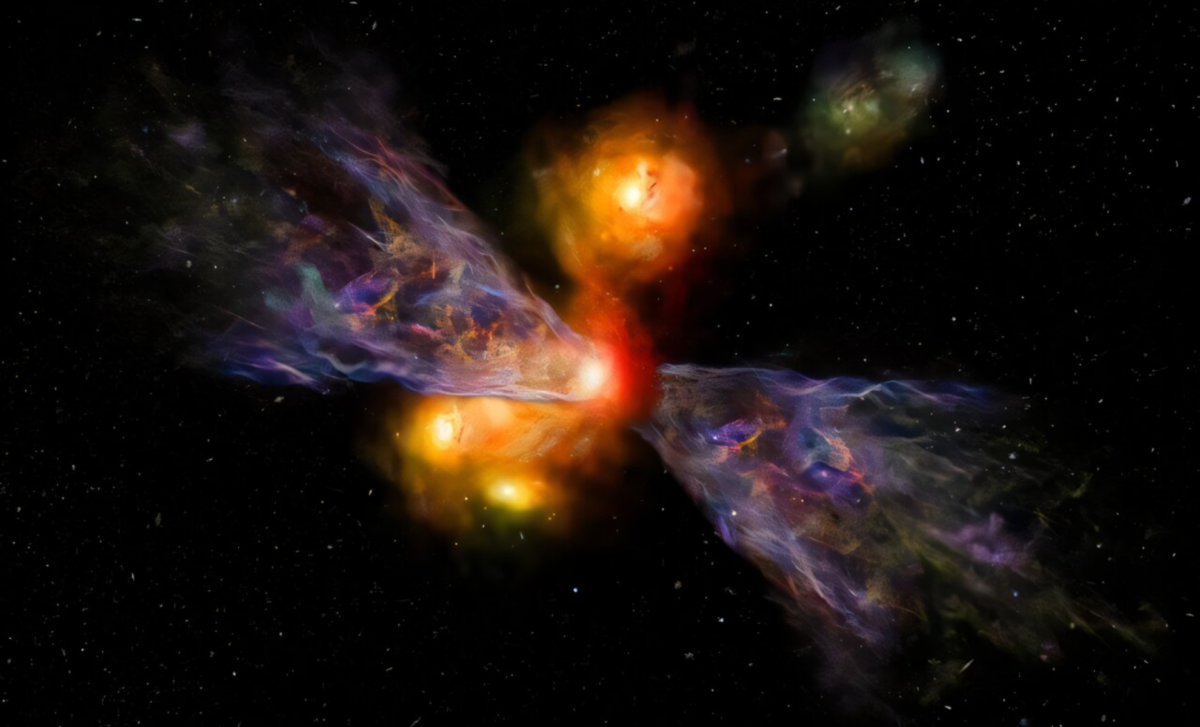
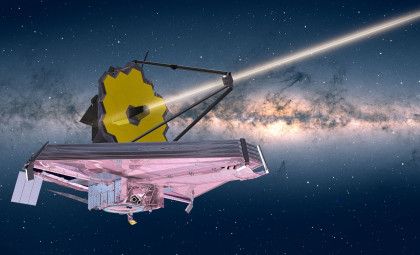
Researchers have identified powerful winds capable of halting star formation in galaxies during the universe’s infancy, offering new insight into why massive galaxies cease forming stars much earlier than anticipated. Utilizing the James Webb Space Telescope (JWST) alongside the Atacama Large Millimeter/submillimeter Array (ALMA), scientists detected an enormous outflow of gas escaping from a galaxy merely one billion years after the Big Bang. This discovery gives concrete proof of a mechanism likely instrumental in shaping early galaxy evolution. The findings appear in today’s issue of the Monthly Notices of the Royal Astronomical Society.
Galaxy Mergers Ignite Intense Cosmic Winds
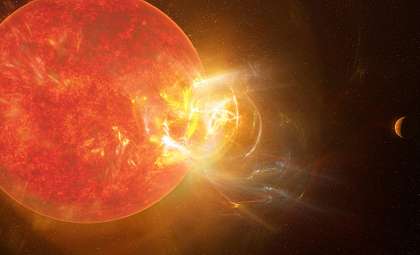
In the early cosmos, galaxies were densely packed, experiencing frequent collisions which fueled rapid star formation. Such chaotic environments directed gas towards galactic centers, sparking prolific stellar births that subsequently drove fierce winds.
“Dense regions of the universe are like very active cities,” said lead author Dr. Rebecca Davies of Swinburne University of Technology in Melbourne, who conducted the study with Associate Professor Deanne Fisher. “Galaxies collide and undergo frenzied bursts of star formation. But when the biggest stars burn out, they explode as supernovas, launching powerful winds that blast away the very gas galaxies need to keep forming stars.”
Add Cosmo Herald as a Preferred Source

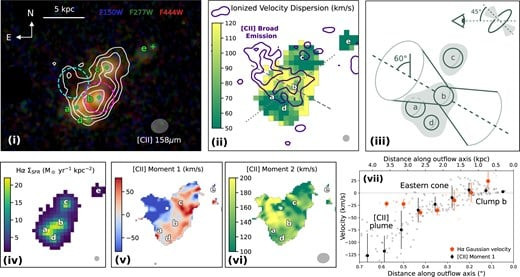
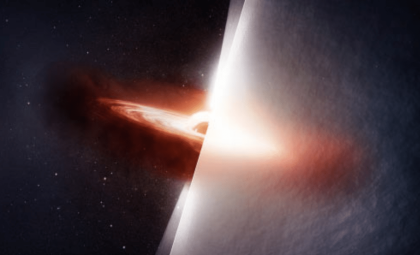
These winds act as a cosmic scavenger, driving out the gas required to fuel the creation of new stars. Studies of the galaxy cluster CRISTAL-02, currently engaged in a multigalactic collision, reveal this effect dramatically: a stream of cold gas nearly as extensive as the galaxy itself marks a swift depletion of star-forming material.
CRISTAL-02 Offers a Glimpse into Early Galaxy Demise
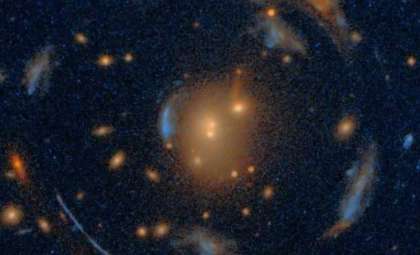
CRISTAL-02 is an extraordinary assembly of colliding galaxies, exhibiting a star formation rate twice that of typical galaxies its size. Through JWST and ALMA’s advanced capabilities, astronomers captured massive gaseous outflows streaming from the system, illustrating the severity of the galactic winds responsible for shutting down star formation.
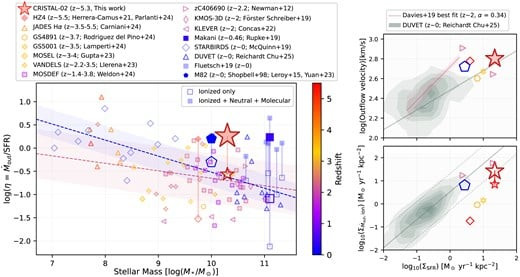
“The galaxy has a powerful wind that is ejecting material twice as fast as the galaxy forms stars,” Dr. Davies explained. “If this rapid blowout continues, the galaxy could be dead in less than 50 million years, explaining the origin of the mysterious massive dead galaxies in the early universe.”
This direct observation confirms the theory that early galaxies burned through their star-making fuel quickly and then rapidly ceased star formation, resolving a puzzle that has challenged astronomers for years.
Broad Impact on Models of Galaxy Lifecycles
The results, featured in Monthly Notices of the Royal Astronomical Society, indicate that such galaxy-quenching winds were not rare but prevalent throughout the early cosmos. Nearly half of the massive galaxies from that era appear to be interacting with other galaxies, suggesting that collisions and accelerated star formation were typical occurrences.
“Almost half of early massive galaxies are interacting with other nearby galaxies, suggesting this isn’t a quirk but a widespread cosmic phenomenon,” Dr. Davies added. “If many early galaxies collide and experience rapid growth, then it may not be surprising that we see so many dead galaxies in the early universe. CRISTAL-02 offers a natural solution to the mystery of why these massive galaxies live fast and die young.”
This research enriches our comprehension of how galaxies formed and evolved during the universe’s formative epochs, shedding light on the life cycles of its earliest massive systems.
Revolutionizing Our View of the Early Universe
The study highlights the groundbreaking role of JWST and ALMA in unlocking secrets from the cosmos’s first billion years. By observing phenomena such as galaxy-terminating winds, astronomers can trace how primordial galaxies flourished through collisions, only to rapidly fade. These findings are reshaping our cosmic timeline and refining theoretical models to better capture the violent origins and swift ends of early galactic giants.
CRISTAL-02’s story exemplifies the fleeting but spectacular nature of the universe’s initial massive galaxies, which burned bright before succumbing to their own powerful winds.
- Categories:
- Astronomy



0 comments
Sign in to Comment