

At only 16, Boyan Slat started developing what many considered an overly ambitious project: a mechanism capable of extracting most of the floating plastic litter polluting our oceans. This initial school endeavor eventually transformed into The Ocean Cleanup, an internationally recognized nonprofit, with Boyan earning the distinction as the United Nations’ youngest-ever “Champion of the Earth.”
A Sea Overwhelmed by Waste Instead of Wildlife
During a 2011 diving trip in Greece, Boyan Slat anticipated encountering diverse marine creatures. Instead, he was met with an unsettling sight: heaps of plastic bags surrounding him. This stark reality struck a chord, highlighting a glaring irony—while humans were busy sending probes to Mars, colossal “garbage islands” were expanding across Earth’s oceans.
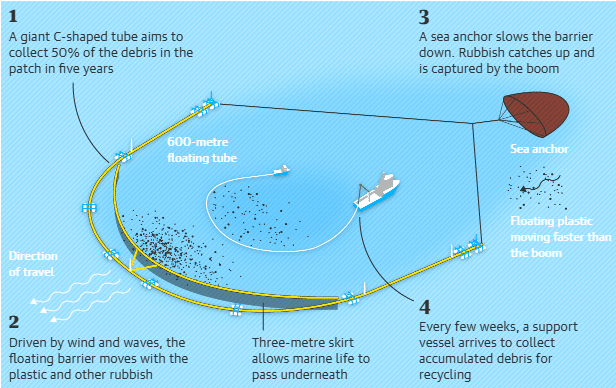
Back in his native Netherlands, Boyan converted this shock into a research initiative for high school. Rejecting traditional ideas of vessels chasing trash, he proposed a stationary system that harnessed ocean currents to corral and collect floating debris. His concept was often likened to an “ocean-scale pool skimmer.”

At 18, Boyan presented his idea on the TEDx Delft stage in 2012. Although initial attention was modest, a surge of interest soon followed as bloggers spread the message, leading to a surge in worldwide donations.
Turning Online Excitement Into Real-World Progress
With growing enthusiasm came financial backing. A crowdfunding effort amassed $2.2 million from 38,000 supporters spanning 160 countries, enabling the official creation of The Ocean Cleanup.
” The Ocean Cleanup is a non-profit organization developing and scaling technologies to rid the oceans of plastic. To achieve this objective, we clean legacy pollution from the garbage patches as well as from coastal ecosystems, stop plastic flows from rivers or waterways, and advocate for stronger international plastic regulations,” explained on the website.
Choosing commitment over his aerospace engineering studies, Slat plunged full-time into the project, initially working with just €300 and a small crew. The initiative gradually grew to include more than 120 professionals from over 30 nations.
Facing technical obstacles, early prototypes struggled with plastic escaping barriers and structural failures in the challenging ocean environment, prompting numerous redesigns. By 2019, an improved system showed consistent debris capture, and by 2021, a newer model collected 20,000 pounds of ocean waste in a single effort.
Expanding the Mission Worldwide
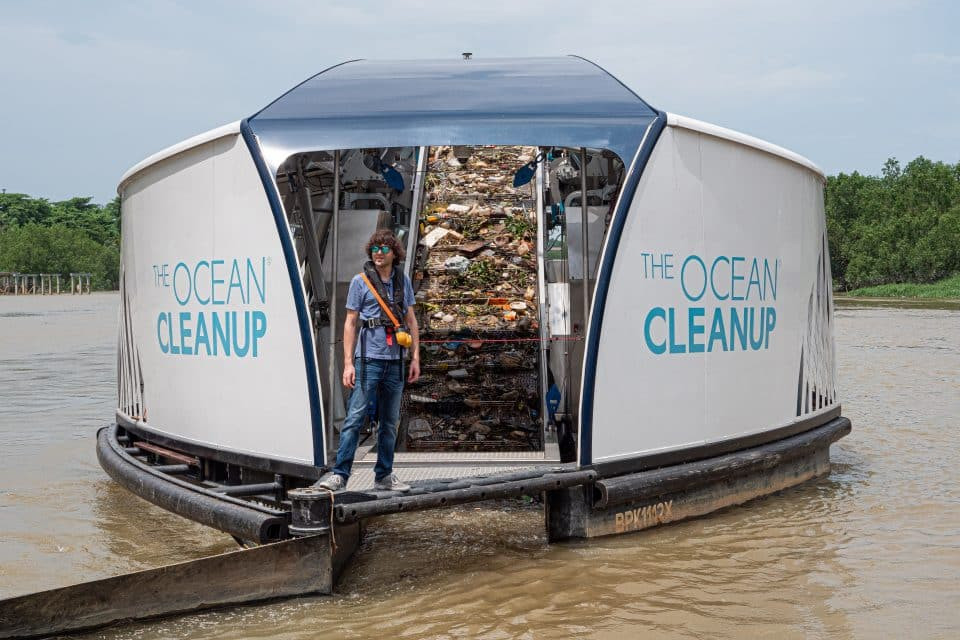
Data referenced by the organization reveal that about 1,000 rivers contribute to 80% of the plastic entering the seas. Addressing this, The Ocean Cleanup introduced the “Interceptor,” a solar-powered, barge-like machine designed to trap waste in rivers before it can reach the ocean.
“We now have a self-contained system in the Great Pacific Garbage Patch that is using the natural forces of the ocean to passively catch and concentrate plastics … This now gives us sufficient confidence in the general concept to keep going on this project,” he explained, as quoted by The Guardian.
This river-targeted approach works to curb incoming plastic pollution while offshore technologies remove existing ocean litter. Boyan Slat aims high: to eliminate 50% of the Great Pacific Garbage Patch within five years and reach 90% cleanup by 2040.
“I think in a few years’ time when we have the full-scale fleet out there, I think it should be possible to cover the operational cost of the cleanup operation using the plastic harvested,” he said
- Categories:
- Tech














0 comments
Sign in to Comment