
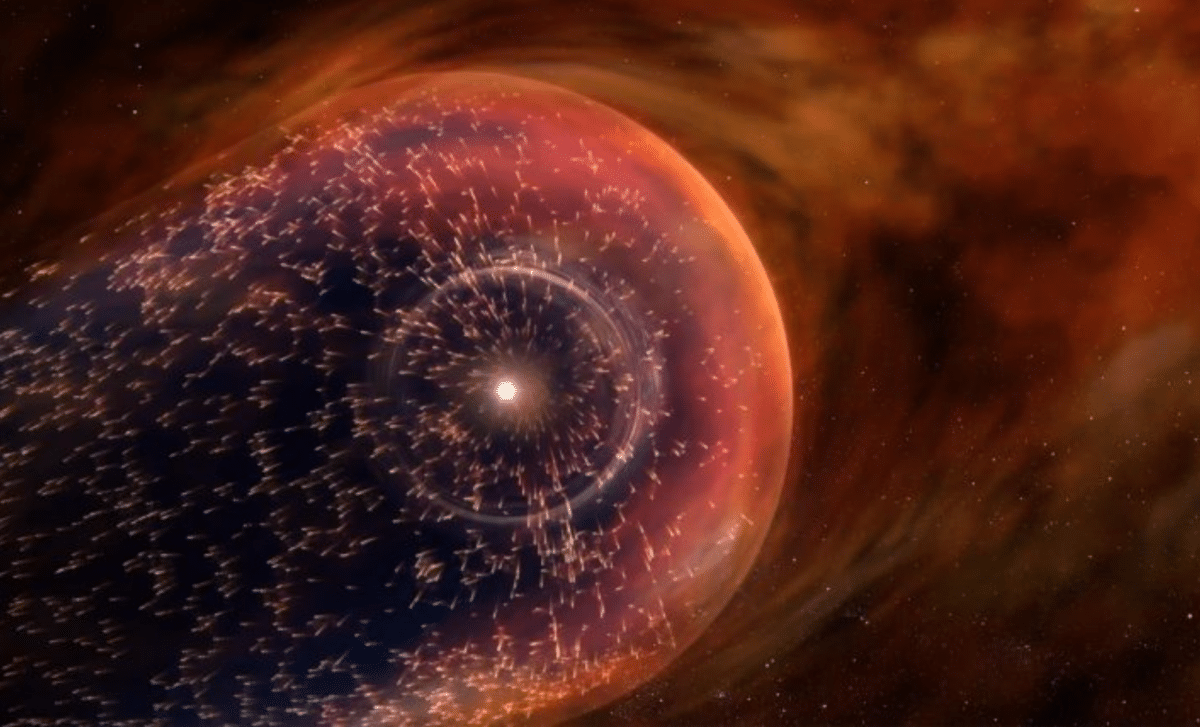
Physicists have long recognized four fundamental forces governing the universe: gravity, electromagnetism, and the strong and weak nuclear forces. However, unexplained irregularities in observations suggest that this framework might be incomplete. Recent research published in Physical Review D highlights a subtle, enduring effect that could indicate the existence of an additional, overlooked force permeating reality.
Bridging the Gap Between Cosmic and Local Phenomena
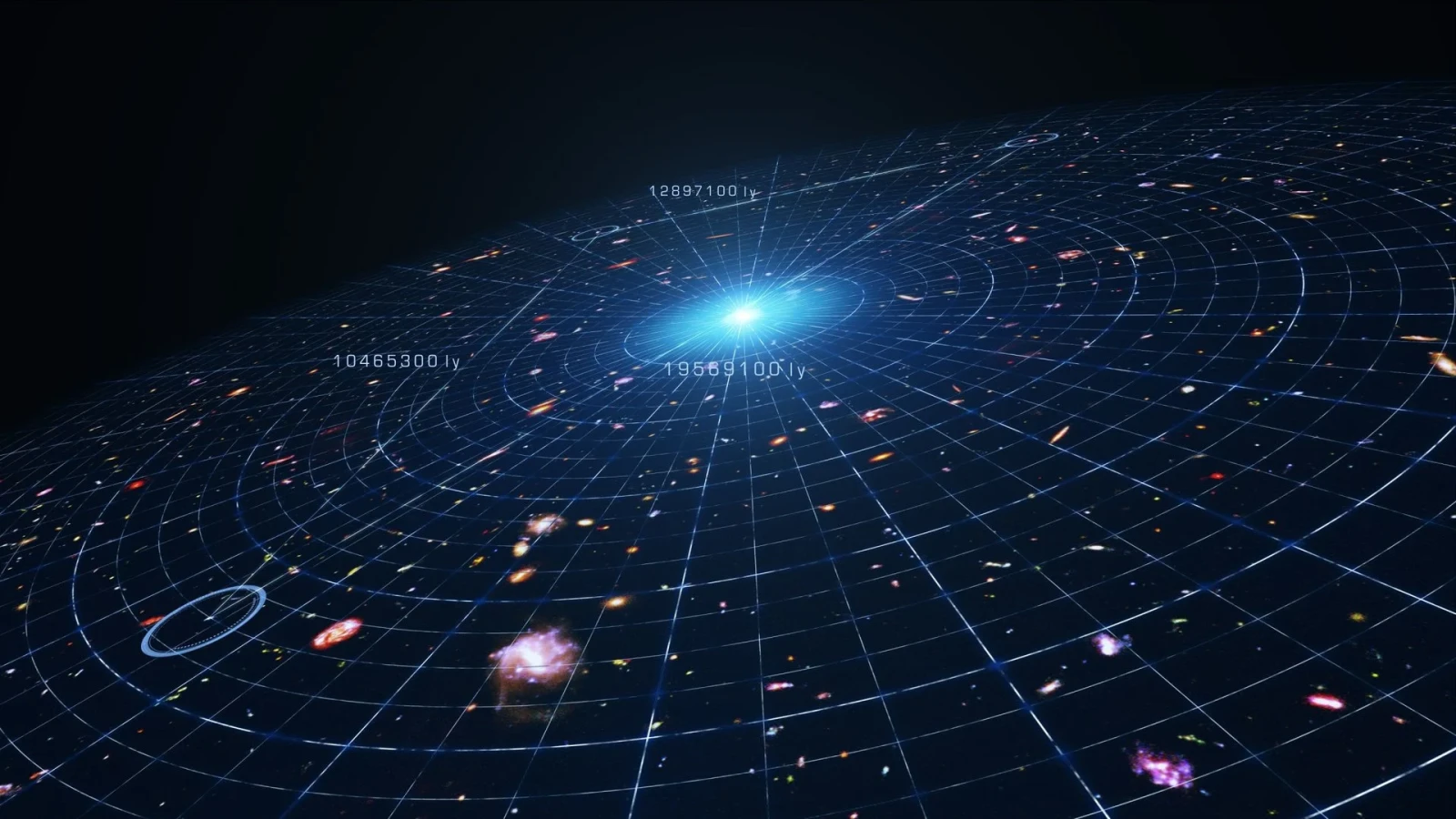
Astronomers have grappled with a notable contradiction for years. On cosmic scales, the Universe exhibits behaviors that defy explanation by standard physics. Galaxies rotate at unexpected speeds, the universe’s expansion accelerates, and immense structures respond to influences beyond Einstein’s general relativity. These patterns imply the presence of dark matter and dark energy, enigmatic forces dominating the cosmos.
Conversely, within our solar system, phenomena align precisely with established physics. Planetary motions match predictions flawlessly, spacecraft follow highly accurate paths, and light signals near the Sun confirm spacetime curvature as Einstein described. No detectable anomalies or unknown influences have been found here.

As Universe Today reports, this puzzle is dubbed the Great Disconnect. If new physics governs the cosmos, why is it invisible locally? This absence is a major hurdle in comprehending reality’s full nature. Research led by Slava Turyshev at NASA’s Jet Propulsion Laboratory offers a novel perspective, suggesting the force might be present but cleverly concealed.
An Environmental Fifth Force That Shifts Its Strength
The study featured in Physical Review D investigates a hypothetical fifth force, distinct from the known four, which could alter its behavior depending on its environment. This phenomenon, known as screening, may explain why the force influences vast cosmic scales but remains hidden near Earth.
A prominent example is the chameleon mechanism. Here, the fifth force’s strength diminishes in dense regions like the solar system while growing stronger in the emptier reaches of space. In low-density areas, this force could affect cosmic acceleration similarly to dark energy. Near massive bodies like the Sun, it weakens and becomes nearly undetectable.
Rather than vanishing, the force may exist subtly near large masses, confined to thin outer layers. Detecting these faint traces challenges the sensitivity of current instruments, accounting for the absence of observed anomalies in precise local measurements.
This perspective implies that physical laws might not be uniform but instead adapt to their surroundings.
How Vainshtein Screening Masks Hidden Forces
The alternative Vainshtein screening model proposes that the fifth force’s strength remains constant but its effects are suppressed by intense gravitational fields. This suppression renders the force undetectable near massive objects.
Central to this idea is the concept of a Vainshtein radius, marking the boundary beyond which the force operates freely. Around the Sun, this radius could reach up to 400 light-years, covering the solar system and a significant portion of the local galaxy. Inside this zone, the fifth force’s presence would be masked, justifying why local experiments uphold Einstein’s theory.
If valid, this model suggests humanity may exist within a protected region where new forces remain hidden, only potentially observable by studying phenomena well beyond this boundary or by engineering tools capable of overcoming the suppression.
Future Missions: Key to Unveiling the Fifth Force
Turyshev’s findings emphasize that existing experiments, though extraordinarily accurate, likely lack the design to detect the subtle effects predicted by screening mechanisms.
Moving forward, crafting specialized experiments based on rigorous theoretical guidance is essential. Without targeted goals, even advanced instruments might fail to uncover new physics. Large projects like Euclid and the Dark Energy Spectroscopic Instrument (DESI) play crucial roles by delivering data to refine theories and support testable predictions.
Subsequent steps will require dedicated spacecraft missions that can measure minuscule deviations in gravitational interactions using optimal trajectories and ultra-sensitive equipment. Each technical advancement narrows the gap toward detecting hidden forces.
The stakes are high: discovering a fifth fundamental interaction would revolutionize our grasp of gravity, dark energy, and the Universe’s fundamental framework.
- Categories:
- Physics


0 comments
Sign in to Comment