
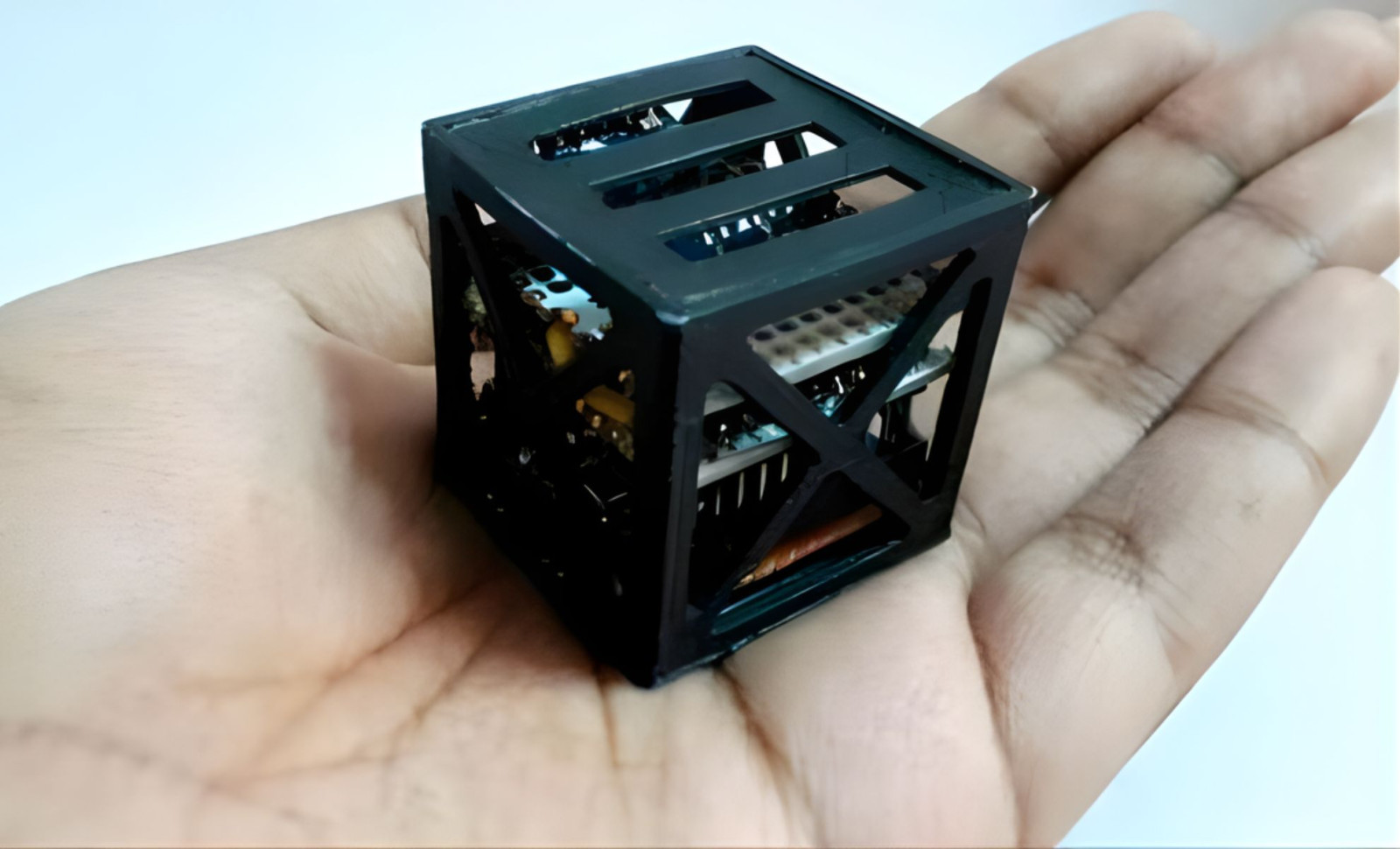
In 2017, an 18-year-old innovator achieved a remarkable feat by creating a satellite weighing just 64 grams—roughly the mass of a small handful of coins—which was subsequently launched with the support of NASA. Nearly a decade later, this breakthrough continues to inspire discussions about ultra-lightweight space technology and youth-driven innovation.
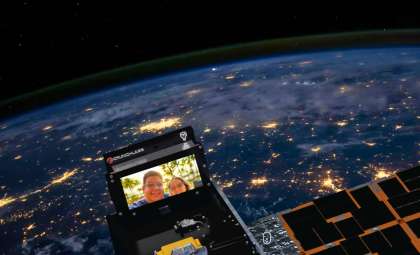
The satellite, called KalamSat, was designed by Rifath Shaarook for the Cubes in Space challenge, a competition led by idoodlelearning and supported by NASA as well as the Colorado Space Grant Consortium. The challenge was to engineer a small, lightweight device capable of enduring the harsh environment of space.
An Ultra-Light Satellite with Precise Constraints
The competition imposed strict requirements: each entry had to fit inside a 4-centimeter (1.6-inch) cube and not exceed 64 grams in weight. KalamSat, named after the esteemed Abdul Kalam, an Indian scientist and former president, exactly met these specifications, a factor that set it apart from other contenders.


Within this tiny frame, eight sensors were embedded to track acceleration, rotation, and Earth's magnetosphere, gathering critical data during its mission. According to a report from Business Standard, Rifath Shaarook emphasized:
“We designed it completely from scratch,” he stated. “It will have a new kind of on-board computer and eight … built-in sensors to measure acceleration, rotation, and the magnetosphere of Earth.”
Advanced Materials Provide Strength Without Weight
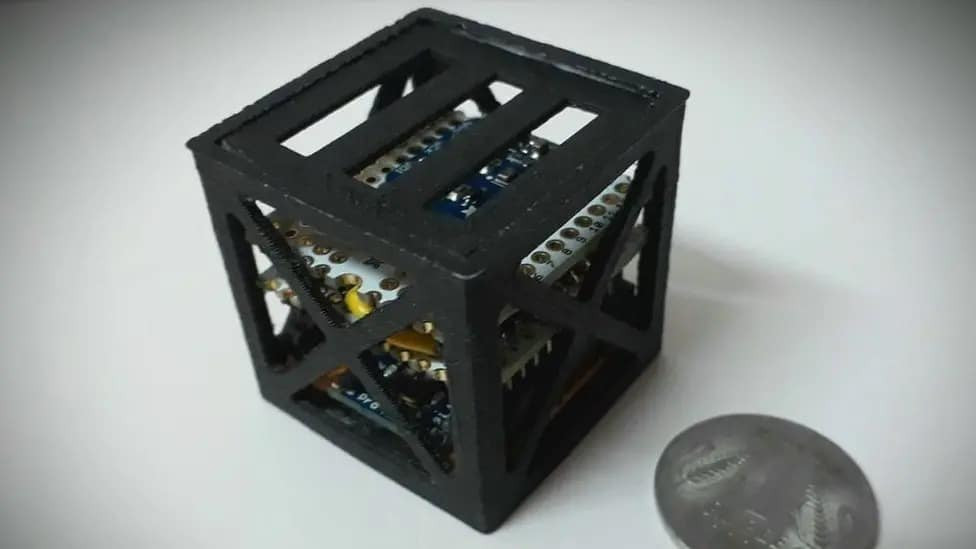
The satellite's featherweight nature largely resulted from its innovative construction. It utilized a reinforced carbon fiber polymer, a material prized in aerospace for being both durable and lightweight.
The casing was produced through 3D printing, a technique offering meticulous control over form and mass. The project aimed to analyze how this extraordinarily light structure would perform under space conditions, particularly in microgravity.
“This is the first time 3D printing technology has been used in space,” noted Shaarook, as quoted by the BBC. “We have made history”
A Short Space Journey with Big Implications
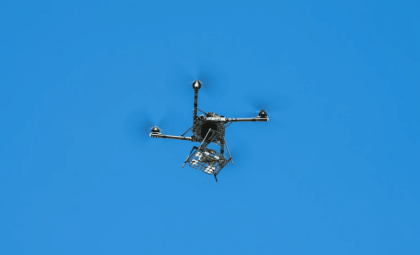
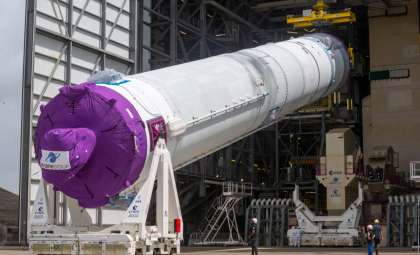
On June 21, 2017, KalamSat was launched from NASA’s Wallops Flight Facility in Virginia. Rather than reaching orbit, it followed a suborbital trajectory, traveling into space briefly before descending back to Earth. This allowed the satellite to experience space conditions momentarily without entering prolonged orbit.
The entire mission lasted around four hours, including roughly 12 minutes of microgravity. During this time, KalamSat remained functional, collecting scientific measurements and testing its structural resilience. Despite its minuscule size, the satellite marked a major milestone in space tech research.
.@NASA launches world's smallest satellite built by Indian teenager Rifath Shaarook#kalamsat pic.twitter.com/hAwbXdDFfG
— WION (@WIONews) June 22, 2017
- Categories:
- Tech










0 comments
Sign in to Comment