
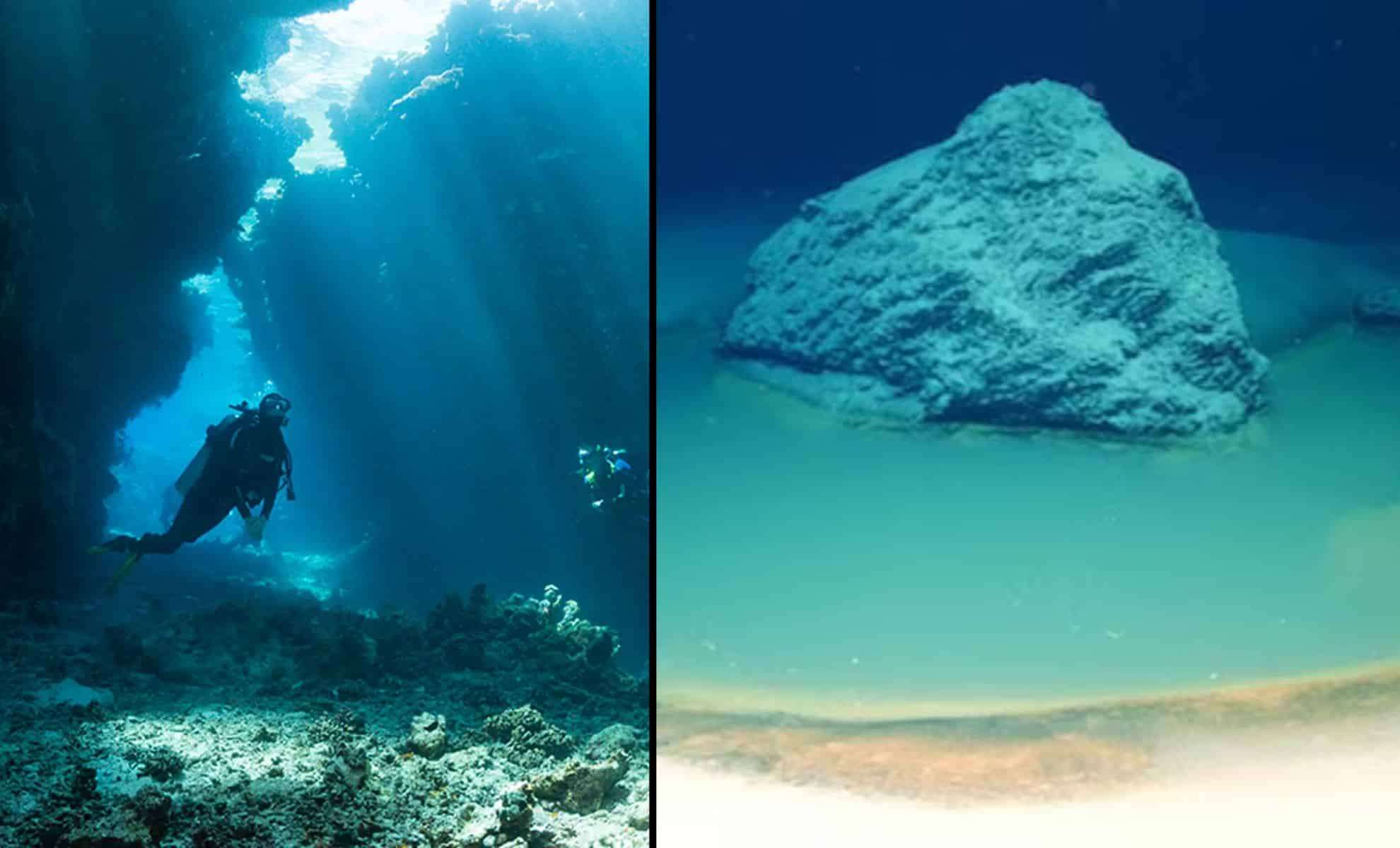
Explorers studying the deep waters of the Red Sea have encountered a chilling phenomenon—enormous brine pools that act as lethal traps beneath the waves. Found thousands of meters below the surface, these pools contain extremely high salt levels and almost no oxygen, causing any marine life that drifts inside to be instantly incapacitated or perish.
Despite their ominous nature, these so-called “death pools” may provide valuable clues about how life began on our planet and offer models for identifying life beyond Earth. A recent article in Nature Communications highlights how these extraordinary habitats rank among the most extreme zones on Earth and could mirror environments on far-off “water worlds” elsewhere in the cosmos.
Venturing into the Red Sea’s Mysterious Depths
The remarkable discovery, detailed in Nature Communications, was made possible by a team led by Professor Sam Purkis from the University of Miami’s Department of Marine Geosciences. Employing remote-operated vehicles and deep-sea instrumentation, the crew explored the deep ocean trenches between Africa and the Arabian Peninsula to chart unexplored seafloor regions and study unique underwater geology.

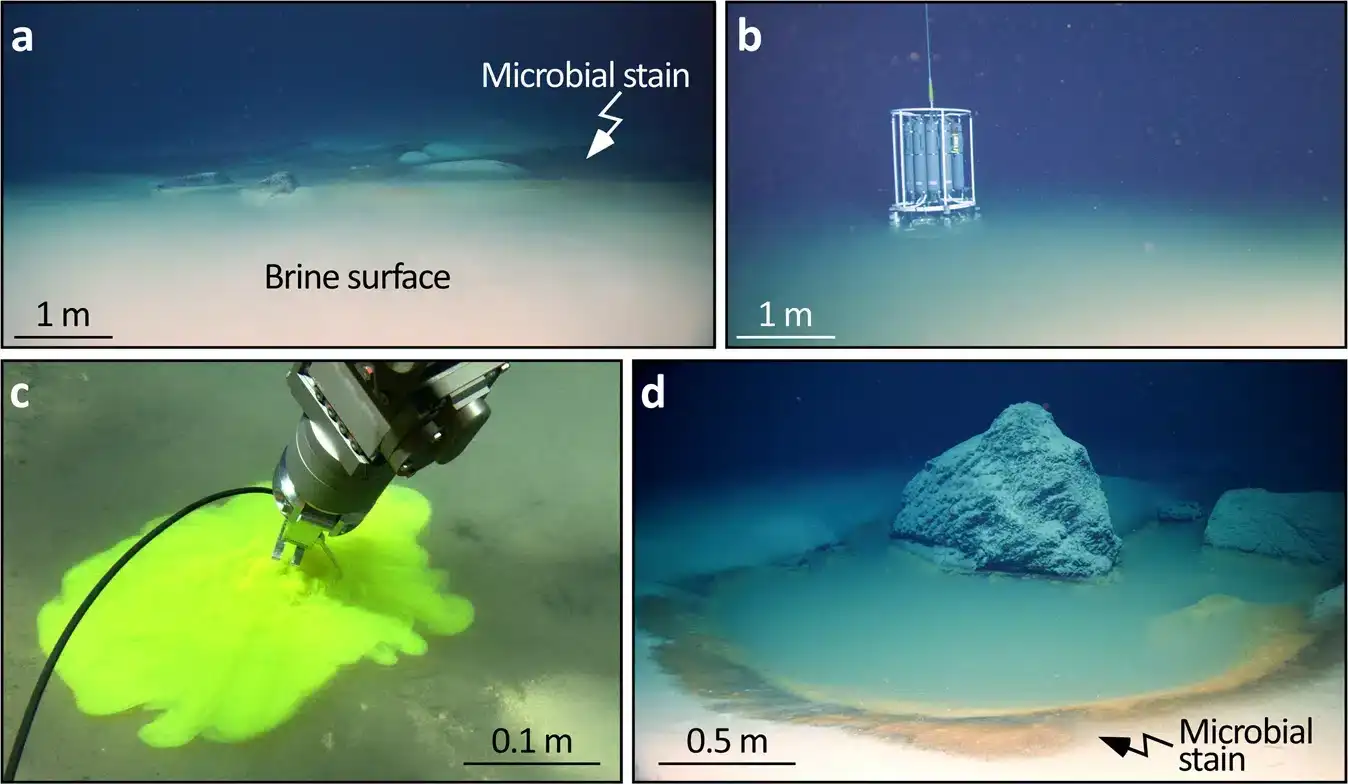
Instead of typical seafloor landscapes, the expedition revealed a network of hypersaline brine pools—isolated bodies of extremely salty water that create some of the planet’s harshest habitats. Unlike standard seawater, these dense, oxygen-poor pools are inhospitable to nearly all marine organisms.
Purkis characterized these pools as natural death chambers, in which unsuspecting fish and other organisms are abruptly stunned or killed. Predators, aware of this deadly hazard, often lie in wait at the pool’s perimeter, ready to capture their immobilized victims.
Scientists have long investigated similar features in the Mediterranean, Gulf of Mexico, and Antarctic waters, yet those located in the Red Sea distinguish themselves by their great depth, isolation, and untouched states, offering exceptional opportunities for scientific inquiry.
Tracing Earth’s Origins: Could These Pools Unlock Life’s Beginnings?
Though extremely hostile, these unique underwater regions might serve as portals into Earth’s primordial past. Researchers hypothesize that early life forms on our planet could have arisen in deep-sea, oxygen-free habitats resembling these brine pools.
“Current evidence suggests life emerged under anoxic deep-sea conditions,” Purkis explained. He noted that studying these pools allows scientists to examine ancient microbial ecosystems that likely thrived in Earth’s oceans billions of years ago.
Additionally, the undisturbed sediment layers at the bottom of these pools provide a pristine record of the planet’s environmental changes. Normally, sediment is constantly disrupted by marine creatures, but the brine pools’ lethal conditions prevent this, preserving a detailed archive of past geological and climate events.
“Whereas seabed sediments are usually churned by animals, in these brine pools the layers stay perfectly intact,” Purkis added. This makes it possible for scientists to study ancient oceanographic conditions with unprecedented precision, shedding light on Earth’s evolving ecosystems over millions of years.
Implications for Extraterrestrial Life: Analogues for Alien Oceans
Beyond Earth’s history, these toxic pools may help shape strategies for discovering life beyond our world. Researchers posit that similar salty, oxygen-deprived environments could be found beneath the icy crusts of moons such as Europa and Enceladus, or on ocean-covered exoplanets in faraway solar systems.
Because Earth’s earliest life possibly developed in habitats like the Red Sea brine pools, scientists hope comparable microbial life could survive under analogous conditions elsewhere.
“Investigating these communities provides insights into the environments where life began here and could guide the search for organisms on other remote water-rich worlds,” Purkis said.
The Red Sea’s Lethal Traps: A Prime Spot for Deep-sea Predators
Despite their scientific significance, these brine pools represent some of the ocean’s deadliest locations. Marine animals that venture inside are swiftly incapacitated, making them easy targets for larger predators that stake out the areas near the pools’ margins.
In effect, these pools serve as natural ambush sites, where predators exploit the stunning effect of the brine on prey. This rare predator-prey dynamic illustrates just how alien and merciless these deep-sea realms truly are.
As researchers delve deeper into the secrets of the Red Sea’s deadly brine pools, they anticipate uncovering further revelations about life’s emergence, Earth’s environmental history, and the possibilities for life beyond our planet.
Whether viewed as a subject of scientific fascination or a stark reminder of nature’s extremes, these pools rank among the most intriguing discoveries from the ocean’s depths, proving that even the darkest, most forbidding places can harbor remarkable mysteries.
- Categories:
- News









0 comments
Sign in to Comment