
A comprehensive new study featured in the Monthly Notices of the Royal Astronomical Society strengthens one of cosmology’s pivotal conclusions: the universe’s expansion is accelerating, propelled by a mysterious force commonly referred to as dark energy. This research directly challenges recent suggestions that the apparent acceleration might be due to observational errors, confirming that the acceleration signal is consistent across various datasets and correction techniques used in modern astrophysics.
Confirming a Milestone Discovery
The revelation that the universe is speeding up its expansion was a groundbreaking finding during the late 20th century, first observed through distant supernova explosions signaling galaxies moving apart at increasing rates. This discovery, honored with the Nobel Prize in Physics, has since formed a cornerstone of contemporary cosmology. In this recent analysis, scientists revisited critiques of this conclusion, evaluating whether subtle measurement biases related to stellar brightness could explain the acceleration. Their findings affirm that standard cosmological models already account for these potential biases, leaving the expansion rate measurements unchanged.
The study further illustrates how diverse observational surveys, while using different calibration approaches, consistently find the same accelerating expansion trend. This pattern holds true across varying distances, epochs, and galactic environments, reinforcing the robustness of the dark energy explanation in the prevailing cosmological paradigm.

The Role of Type Ia Supernovae in Measuring Cosmic Distances
Type Ia supernovae continue to serve as vital tools for gauging cosmic expansion due to their use as dependable distance indicators. These stellar explosions occur when a white dwarf accumulates enough mass to trigger a luminous outburst that can outshine entire galaxies briefly. Their well-known intrinsic brightness pattern allows astronomers to measure distances accurately by comparing observed light intensity. This method underpinned the discovery that faraway galaxies appear dimmer than expected in a uniformly expanding cosmos.
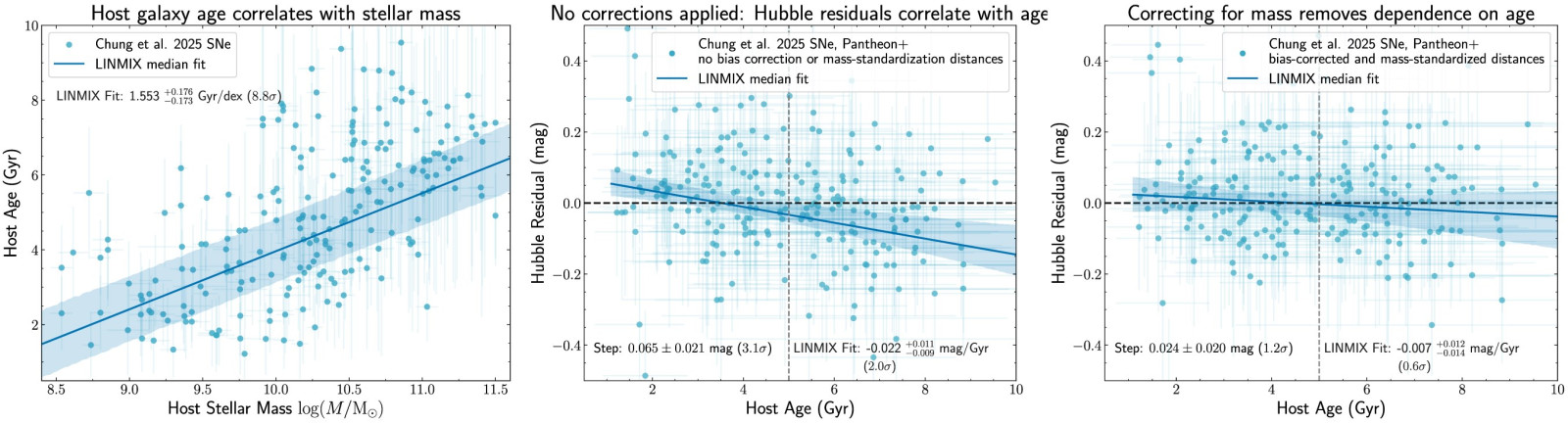
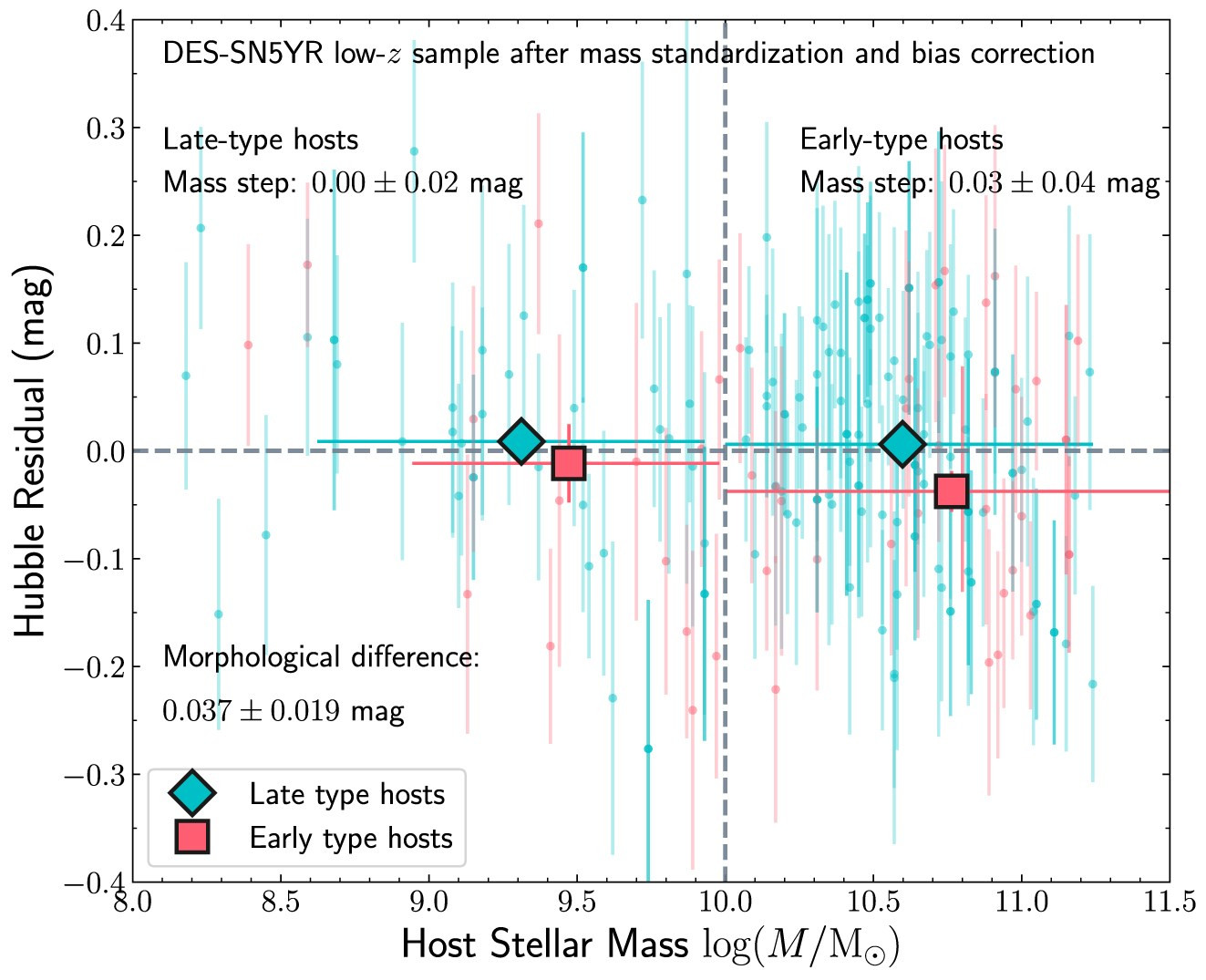
The study critically examines earlier claims that variations in host galaxy characteristics might skew distance measurements. It finds that corrections for galaxy mass and stellar surroundings are already integrated into mainstream analysis methods. With these adjustments in place, the supposed systematic dimming effect over cosmic time largely disappears, leaving the acceleration evidence solid.
Ongoing Investigations into Dark Energy
The core question about dark energy is whether an unknown force truly drives the accelerated expansion, or if observational biases might mimic this effect. The present analysis strongly supports the existence of dark energy by demonstrating that alternative explanations cannot fully account for the observed supernova data across time. It reinforces the consensus that dark energy constitutes approximately 70% of the universe’s total energy content.
Adam Riess, a pivotal figure in establishing cosmic acceleration, remarked: “Extraordinary claims require especially careful testing,” underscoring the study’s meticulous approach in rigorously examining potential statistical or astrophysical confounders. The results consistently affirm that, while improvements may be possible, no current evidence challenges the foundational conclusion.
Insights from the Latest Observational Data
Extensive cosmic surveys, analyzing over a thousand supernovae, consistently reveal a persistent acceleration pattern spanning vast cosmic scales. These comprehensive datasets enable researchers to verify whether brightness corrections fluctuate with time or galaxy evolution. The minimal variations detected are far too small to dismiss the presence of dark energy.
Published in the Monthly Notices of the Royal Astronomical Society, the study reexamines previous suggestions that differences in stellar populations bias distance measurements. After factoring in known galactic effects, the evidence still strongly supports an accelerating universe, reinforcing current cosmological theories and limiting potential alternative models.
- Categories:
- News










0 comments
Sign in to Comment