
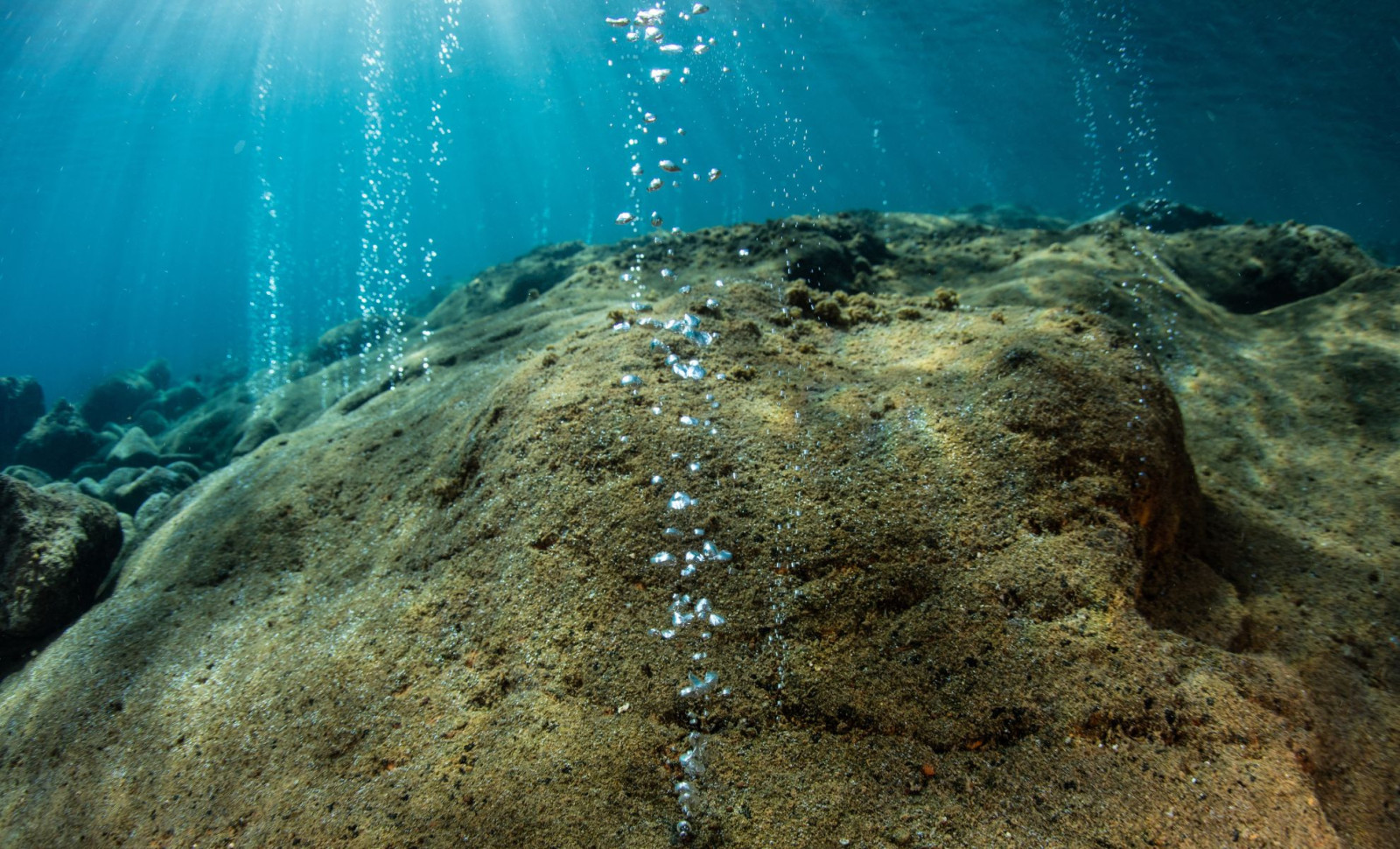
Scientists have developed an advanced simulation of Earth’s interior dynamics that is transforming our understanding of the formation of tens of thousands of submerged mountains scattered across the ocean floor. This model retraces 270 million years of mantle activity, linking deep thermal processes to both extensive volcanic chains and isolated seamounts.
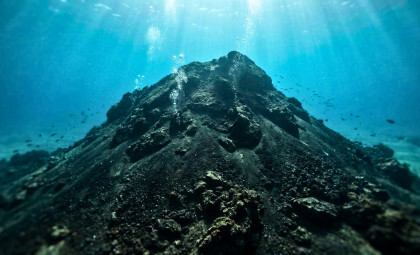
Seamounts, one of the most common volcanic formations on the planet, remain largely concealed beneath the ocean surface. They exist in various shapes: some form elongated chains such as the Hawaiian–Emperor system, while others stand solitary across expansive oceanic regions. With over 40,000 mapped seamounts, they represent a significant portion of Earth’s volcanic landscape, but their origin stories have not been fully deciphered.
Traditionally, the hotspot hypothesis has served as the prevailing explanation for volcanic chains. This concept involves mantle plumes ascending from deep inside Earth, melting rock as tectonic plates drift overhead. However, this theory only accounts for a minority of observed formations. According to the Institute of Geology and Geophysics at the Chinese Academy of Sciences (CAS), approximately 50 seamount chains fit this model well, leaving the majority unexplained.

Exploring 270 Million Years of Earth’s Mantle Activity
A research team led by Professor Liu Lijun at CAS has crafted extensive computational simulations reconstructing mantle convection through 270 million years. Their findings, published in Nature Geoscience on June 10, detail the rise of mantle plumes from the vicinity of the core-mantle boundary and their evolution ascending through Earth’s layers.
Beyond mapping plume trajectories, this model illustrates how rising plumes interact dynamically with surrounding mantle material over millions of years, enabling scientists to correlate deep thermal signatures with present-day seamount distribution. The team emphasized that this time-dependent framework bridges the gap between interior geodynamics and surface volcanic patterns.
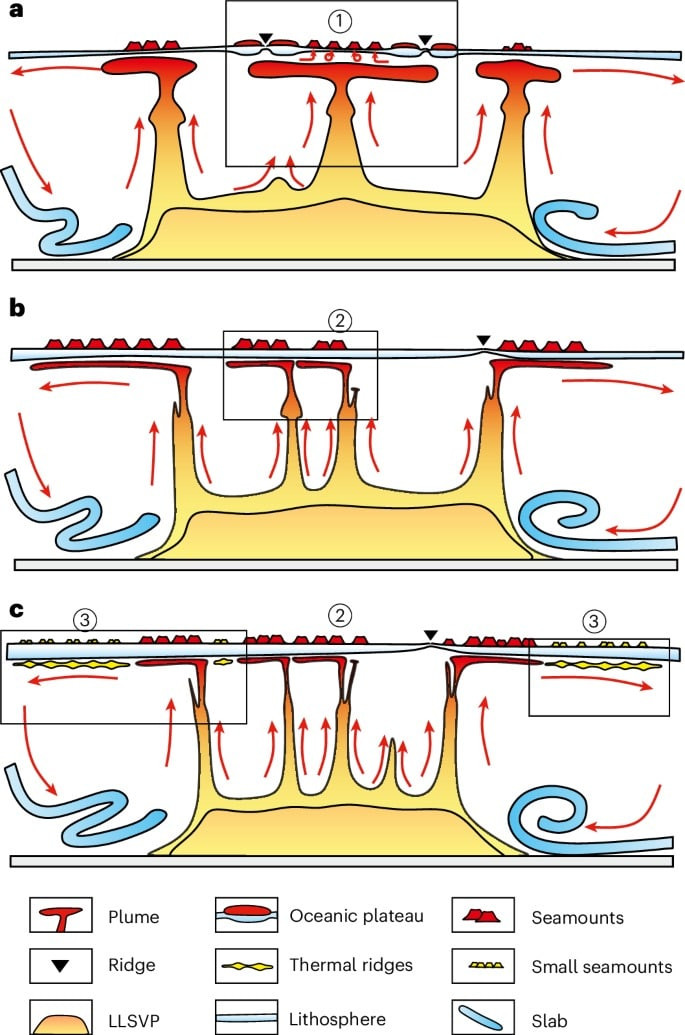
The Pacific Plate serves as a key focus for these reconstructions. Initial mantle plume activity beneath this plate appears to have generated significant thermal buildup below the relatively young oceanic crust, reshaping broad sections of the upper mantle across extensive timeframes.
Thermal Anomalies Beneath Dispersed Volcanic Sites
One important discovery is how asthenospheric thermal anomalies—zones of elevated temperature within the upper mantle caused by rising plume material—affect volcanic patterns. The CAS researchers describe how these heat pockets form when hot mantle material spreads under migrating tectonic plates.
In the Western Pacific, simulated thermal anomalies closely align with locations of scattered seamount clusters. This suggests that volcanic activity does not always depend on narrow, singular plumes; instead, broad hot regions within the mantle can trigger numerous eruption sites spread over wide areas.
“Most Cretaceous seamounts in the Pacific Ocean formed above major plume heads ponding beneath the young oceanic plate, where the resulting hot zones fuelled widespread intraplate volcanism without age progression,” thr authors noted.
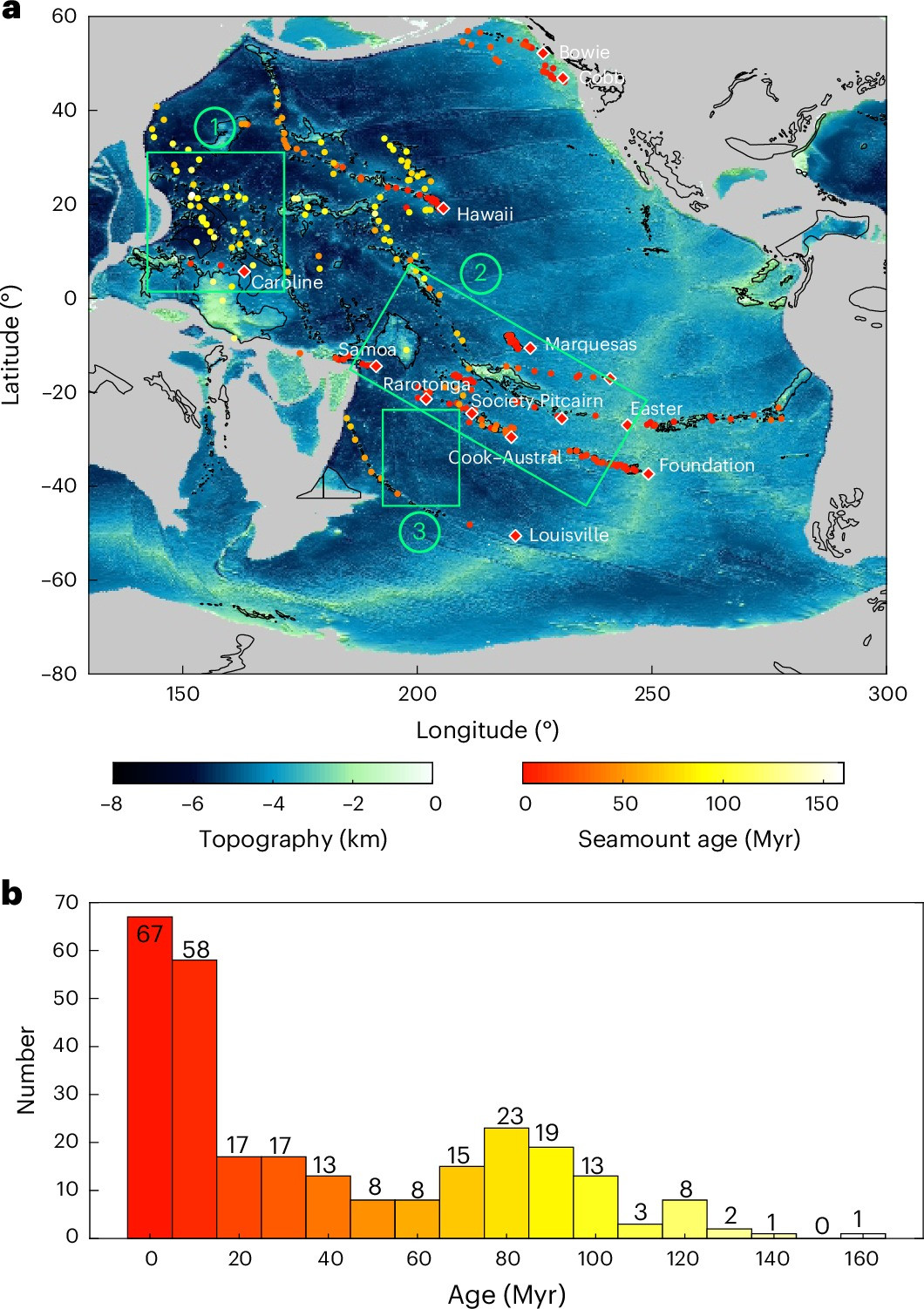
The team refers to these areas as “seamount generation zones,” where sustained heat flow promotes volcanic formation at varying locations rather than along traditional linear chains. This challenges the idea that volcanoes mainly form as ordered chains.
The Fragmentation and Longevity of Mantle Plumes
The analysis also reveals that mantle plumes can fragment as they ascend. Models show that such breaks occur either near the plume’s deep mantle origin or within the mantle transition zone, creating smaller plumes that increase the number of volcanic sources.
This process helps explain why many seamounts appear isolated rather than aligned with continuous volcanic chains. Multiple smaller upwellings arise and evolve independently over geological time.
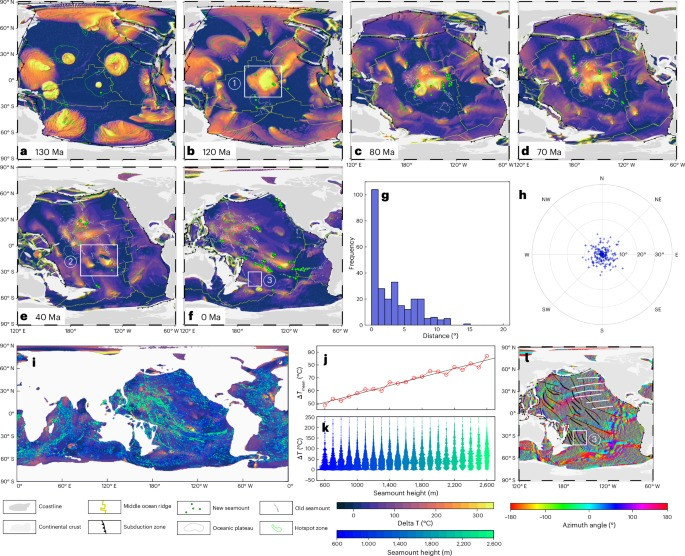
Another key insight is the prolonged retention of heat within the asthenosphere. The model indicates that thermal anomalies can persist for extended durations, gradually moving with mantle circulation. A clear correlation was also observed between the temperature of these hot zones and the heights of seamounts; warmer regions tend to produce taller volcanic structures.
- Categories:
- Science


0 comments
Sign in to Comment