

In a pioneering experiment, researchers have successfully photographed light traveling at its incredible speed. Utilizing a cutting-edge combination of ultrafast photography and laser pulses, the team managed to visualize light’s rapid progression, unveiling intricate details of its motion near the universal speed limit. This remarkable feat offers a unique perspective on light’s characteristics and opens new avenues for physics exploration.
The findings, featured in Communications Physics, represent a landmark in experimental physics, enabling direct observation of phenomena described by Einstein’s theory of special relativity. The Vienna-based scientists demonstrated the visual appearance of objects moving at light speed.
Bringing a Nearly 100-Year-Old Prediction to Life
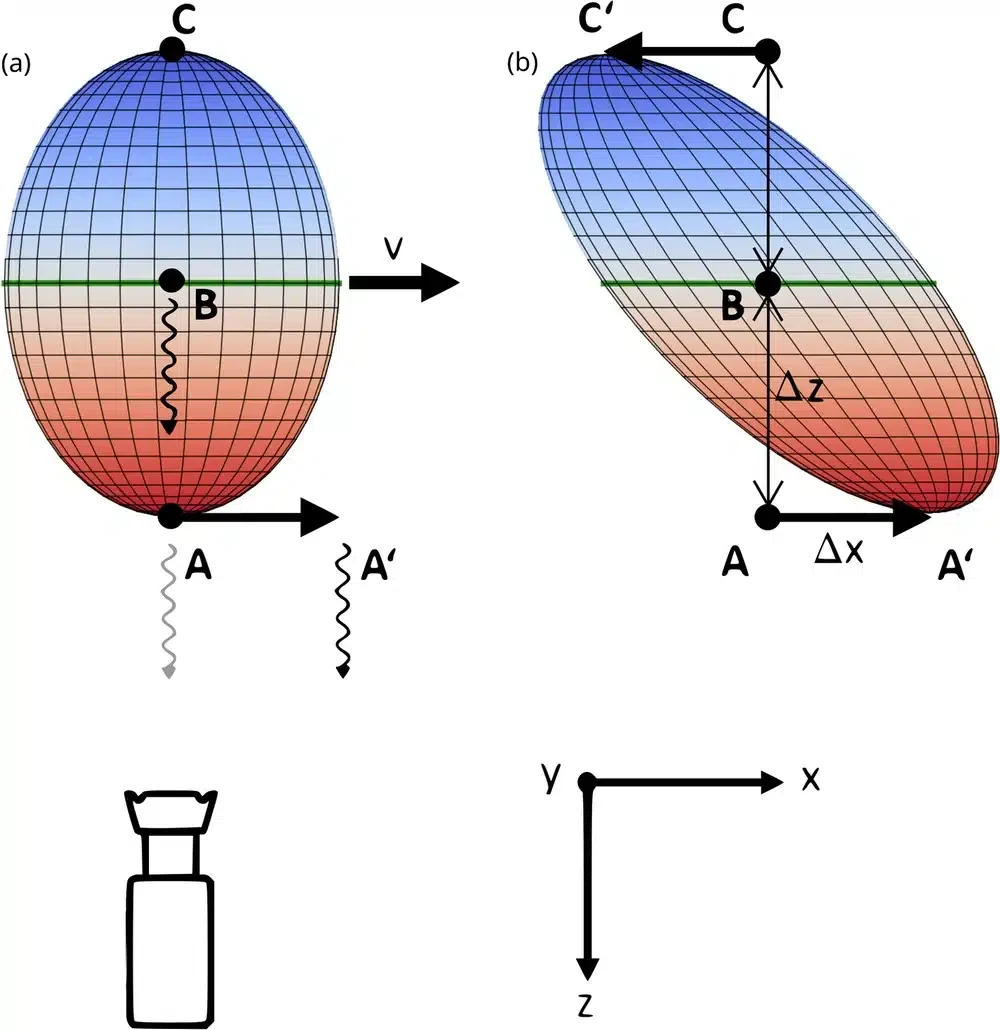
At the heart of this discovery is the Terrell-Penrose effect, first theorized almost a century ago. This effect predicts that an object traveling at light speed would not just appear squashed or distorted, but rather seem to be rotated in images.

In 1924, physicist Anton Lampa proposed that objects nearing light speed undergo apparent shape changes. Building on this, Roger Penrose and Nelson James Terrell later concluded that such objects would appear as rotated rather than merely compressed.
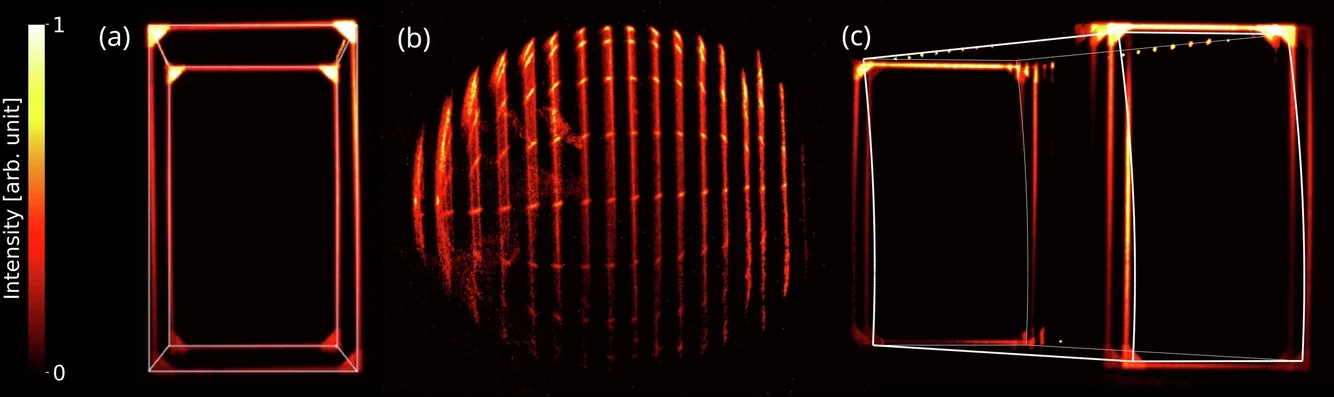
According to the publication, scientists from the University of Vienna and the Vienna Center for Quantum Science and Technology (TU Wien) recreated this phenomenon by combining laser techniques with rapid imaging. In their report, quantum physics and relativity expert Peter Schattschneider explained:
“If you wanted to take a picture of the rocket as it flew past, you would have to take into account that the light from different points took different lengths of time to reach the camera,” he explained, “This makes it look to us as if the cube had been rotated.”
Using Laser Pulses and Fast Imaging to Freeze Light’s Motion
Capturing light in motion presents a massive challenge due to its astounding speed—traveling at 299,792 kilometers per second. Traditional cameras cannot capture such rapid movement.
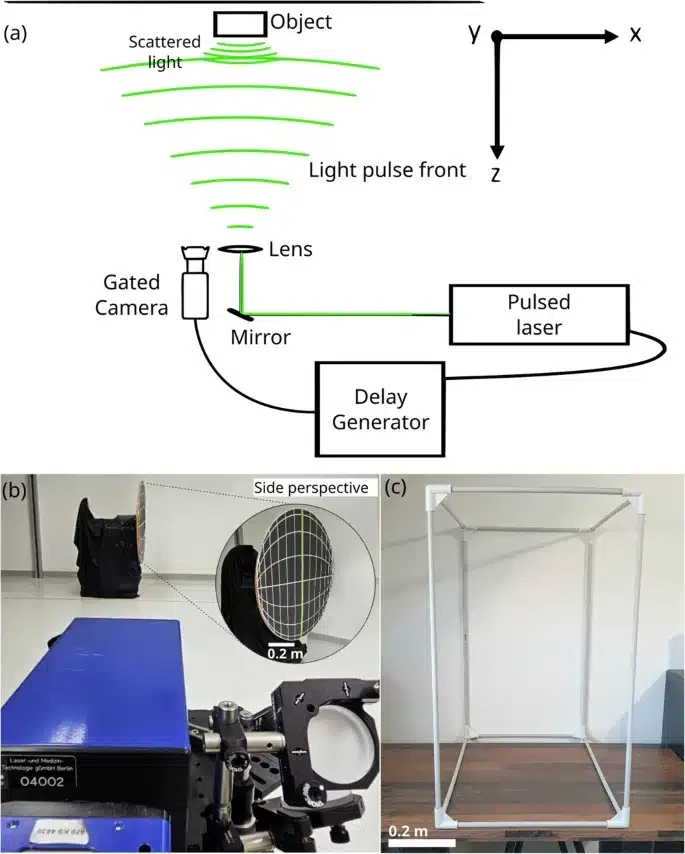
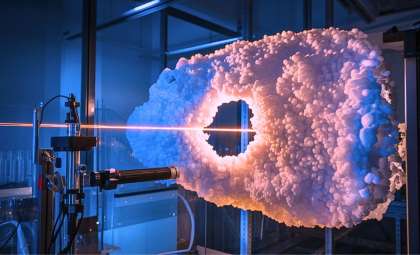
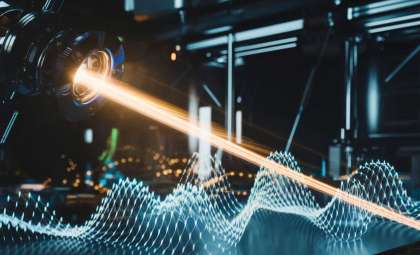
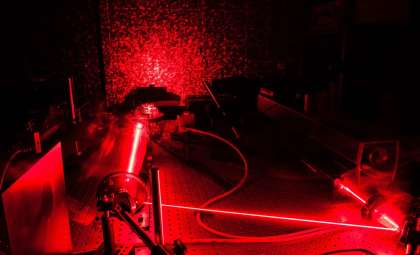
“We illuminate the object with a pulsed laser and take a photo after a certain delay time. Light reflected from parts of the object that correspond to the respective optical path length will appear bright in this photo,” the authors said.
The researchers captured individual snapshots of light waves reflecting from targets at precise intervals and combined these images, producing a smooth visual sequence of the object’s movement.
This technique effectively slowed light's apparent speed to around two meters per second. They observed a twisting cube and a spherical object retaining its shape, along with shifts in the viewed orientation—effects characteristic only at speeds close to light.
Opening New Frontiers in Relativity Experiments
This advancement in capturing light-speed phenomena promises to transform research in special relativity and particle physics. The team suggests that similar methods could be employed to study relativistic behavior of subatomic particles in facilities like CERN.
Moreover, this breakthrough could significantly impact astrophysics and cosmology. As this imaging technology advances, it might enable deeper investigations into black hole environments, light’s behavior near massive bodies, and relativistic time dilation effects. This novel capability allows physicists to explore light and motion phenomena once confined to theoretical models.
- Categories:
- Physics






0 comments
Sign in to Comment