
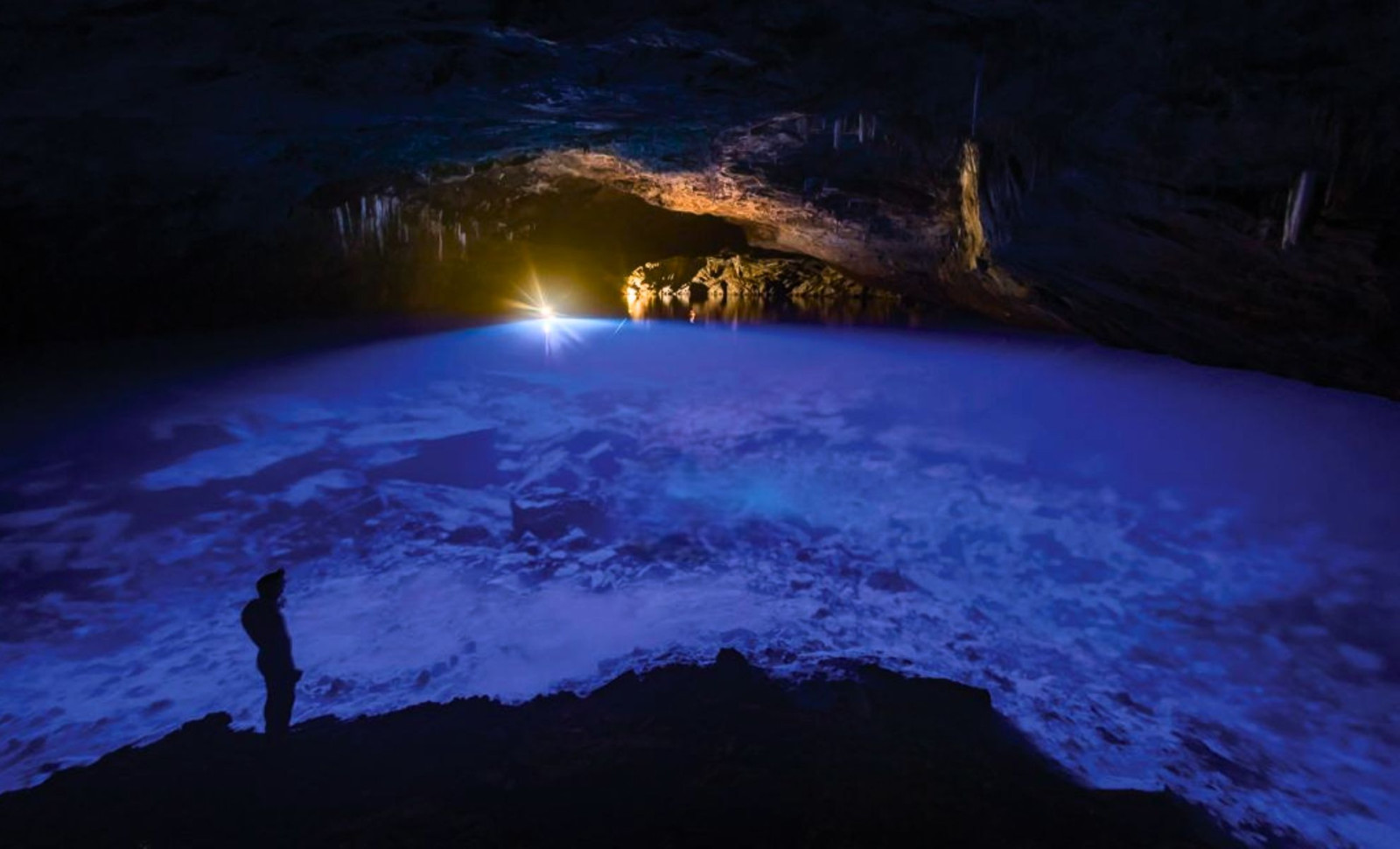
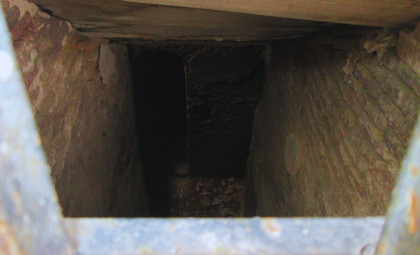
Deep beneath the arid terrain north of Grootfontein, a narrow opening in the rock vents warm, moist air. Adventurers entering Dragon’s Breath Cave leave behind Namibia’s scorching surface to enter a concealed chamber where a vast underground lake lies in darkness.
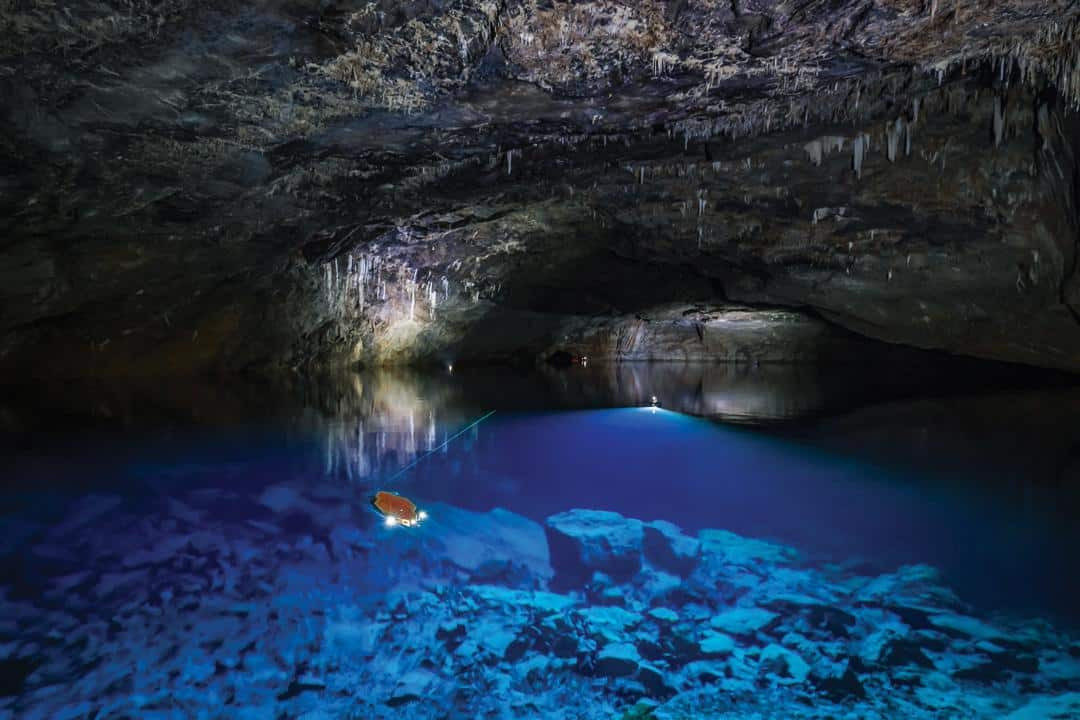
Situated in the Otjozondjupa area, roughly 46 kilometres from Grootfontein, the cave’s unassuming entrance masks an immense lake spanning nearly 2 hectares—about the size of two soccer fields. According to details on Dragon’s Breath Cave, this lake plunges to depths of 264 metres, ranking it among the most extraordinary subterranean water reserves known.
Beyond its size, the cave is a rare ecological niche, home to species evolved to thrive in pitch-black environments. Their survival depends on a delicate food chain supported mainly by bat guano descending from the cave’s surface. This blend of vastness, seclusion, and specialized life captivates scientists and poses extreme challenges to explorers alike.

An Underground Oasis Beneath Arid Landscapes
Namibia’s remarkable underground lake was first uncovered in 1986 by South African explorer Roger Ellis during a speleological mission. The following year, Ellis and a team from the South African Speleological Association navigated steep drops and vertical shafts to finally reach the water.
Measurements revealed the lake's surface area to be close to 2 hectares (4.9 acres). From above ground, few indications hint at the vast flooded cavern hidden below, making the discovery all the more extraordinary: a dry, rocky exterior giving way to a vast, shadowy aquatic expanse.
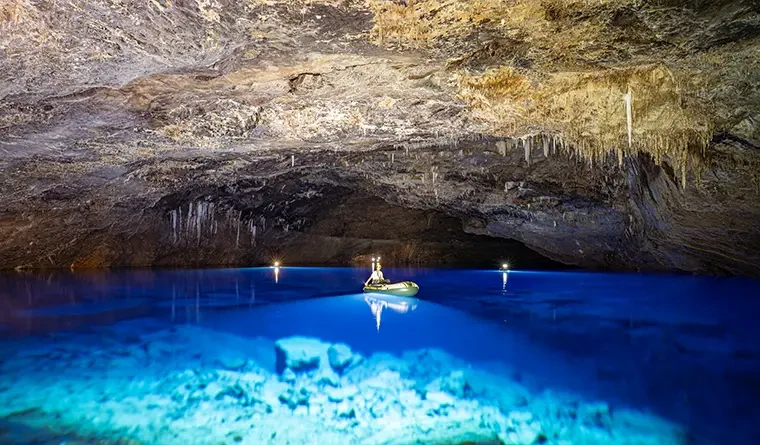
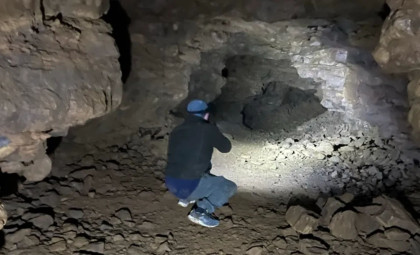
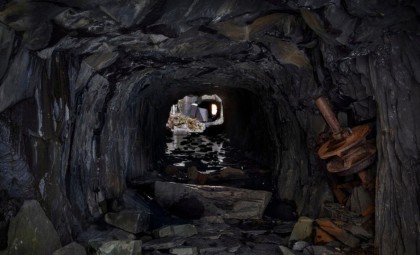
This cave system formed through karst processes, where groundwater gradually dissolves soluble rock to create hollow spaces, shafts, chambers, and submerged tunnels. A Travel Namibia report by Linda de Jager details the 60-metre descent required to reach a ladder and narrow passages leading onward to the lake chamber.
The name derives from the cave’s warm, humid airflow. During a visit with entomologist John Irish, a member of the 1986 discovery team, de Jager described this phenomenon: the “dragon’s breath” is a warm current of air forced upward through a small opening near the ceiling of the lake chamber. Under certain conditions, this breath condenses into mist at the cave entrance.
Diving Depths Surpassed by Robotic Mapping
The true depth of the world’s largest subterranean lake remained a mystery for many years because of the entry difficulty and diving hazards. Every dive involves transporting precise and heavy gear down narrow shafts before reaching the water.
In 2015, divers reached 132 metres, hitting the limits of human endurance and technical equipment at that time. The lake’s deepest point was still unknown, as long descents, darkness, and decompression constraints capped how far divers could go.
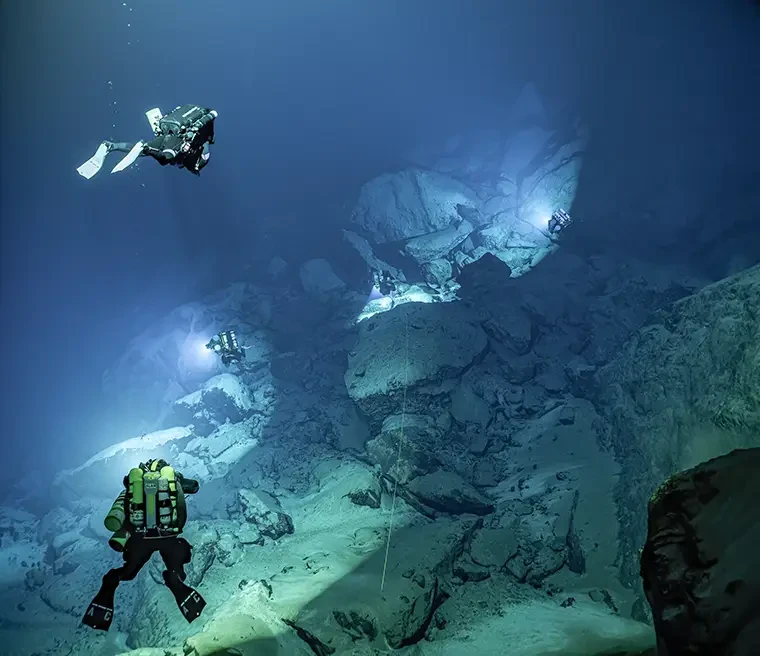
By 2019, Stone Aerospace employed the AI-driven Sunfish autonomous drone to chart the lake floor via multi-beam sonar. This robotic explorer located the bottom at 264 metres. Expedition leader Vickie Siegel hailed Sunfish as the first autonomous device to probe an entirely unknown region within Earth’s interior.
Exploration continued beyond robotic mapping. A 2023 manned dive reached near 160 metres during a nine-hour mission into uncharted cave channels. This demonstrated that the Dragon’s Breath system still holds unexplored sections waiting for documentation by expert teams.
The 2024 Expedition Transported 1.5 Tons of Gear
Oliver Schöll’s InDEPTH report from November 6, 2024, illuminates the expedition’s immense scale. The six-day journey included Tom Baier, Alan Calovs, Louw Greef, Stefan Gries, Stefan Pape, Oliver Schöll, Markus Schuster, Chris Steencamp, and Ralf Wupper.
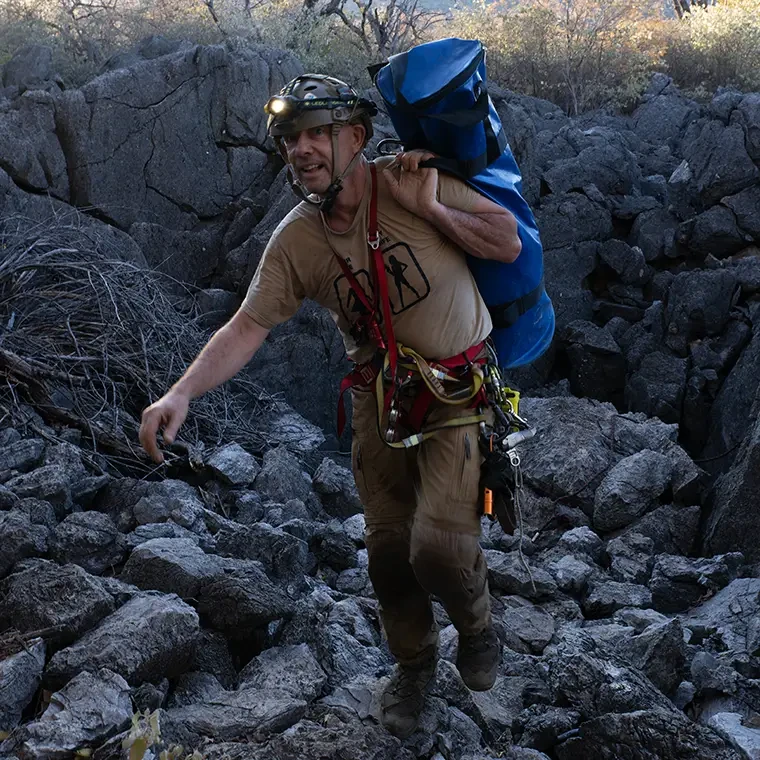
The team prepared for a year to safely operate 60 metres below the surface where accidents could rapidly become serious. A 2023 expedition revealed no firm ground near the dive area, prompting the team to set up floating pontoon bases.
Training included lowering into inflatable boats from three-metre heights, donning drysuits and rebreathers in water, and expediting these procedures. Dive prep time dropped from roughly 20 minutes to 7-10 minutes per person, a vital gain in a demanding subterranean environment.
The 2024 Dragon’s Breath expedition departed on June 12 with over 800 kilograms of equipment. After flying into Windhoek, they drove 450 kilometres to Haarsieb Farm near Tsumeb. They carried about 1.5 tonnes of supplies for 200 metres to the entrance, then further down to the lake.
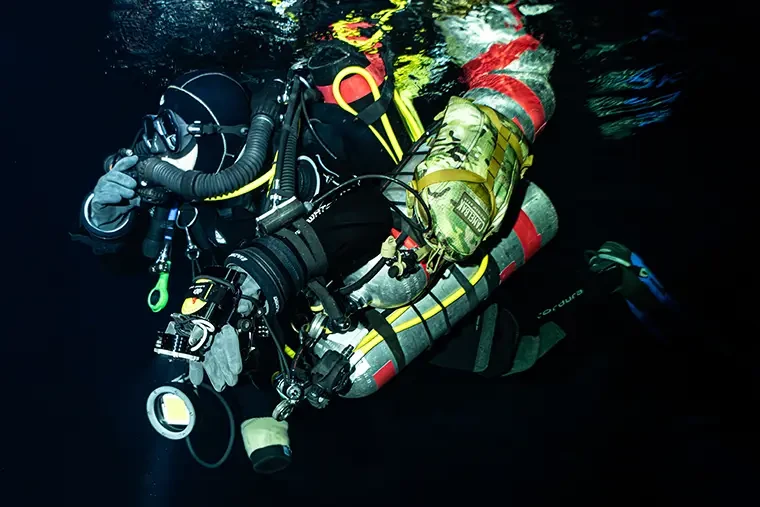
Conditions inside were harsh prior to diving. On June 16, divers moved bulky rebreathers and gear through shafts amid 100% humidity and 30 °C heat. On June 17, they entered warm 25 °C waters for dives lasting up to 10 hours.
At the 60-metre bottom, divers secured their reel as the main tunnel sloped downward at a 30 to 40-degree angle. Despite using 50,000-lumen video lights bright as daylight, the passage's ceiling and walls remained invisible even with visibility extending 100 metres.
Unique Creatures Thrive in a Delicate Ecosystem
Dragon’s Breath Cave is home to species adapted to pristine water, consistent temperature, and abyssal darkness. The most famous is the blind golden cave catfish, Clarias cavernicola, regarded as among the most isolated and rare fish on Earth.
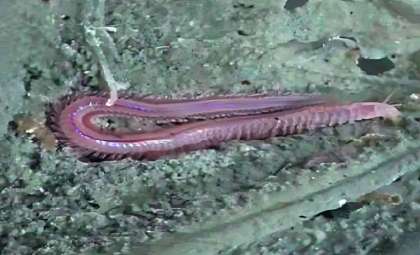
The waters also harbor eyeless white prawns and an endemic amphipod named Trogloleleupia dracospiritus, its name symbolizing the “spirit of the dragon.” These organisms exist far removed from sunlight and typical surface food webs.
Travel Namibia notes that this amphipod and much of the cave's fauna survive on bat guano trickling down to nourish the lake floor. John Irish characterized the cave as a vast but sparsely inhabited lake sheltering an unusual community in a handful of scarce, marginal habitats.
- Categories:
- Science

0 comments
Sign in to Comment