
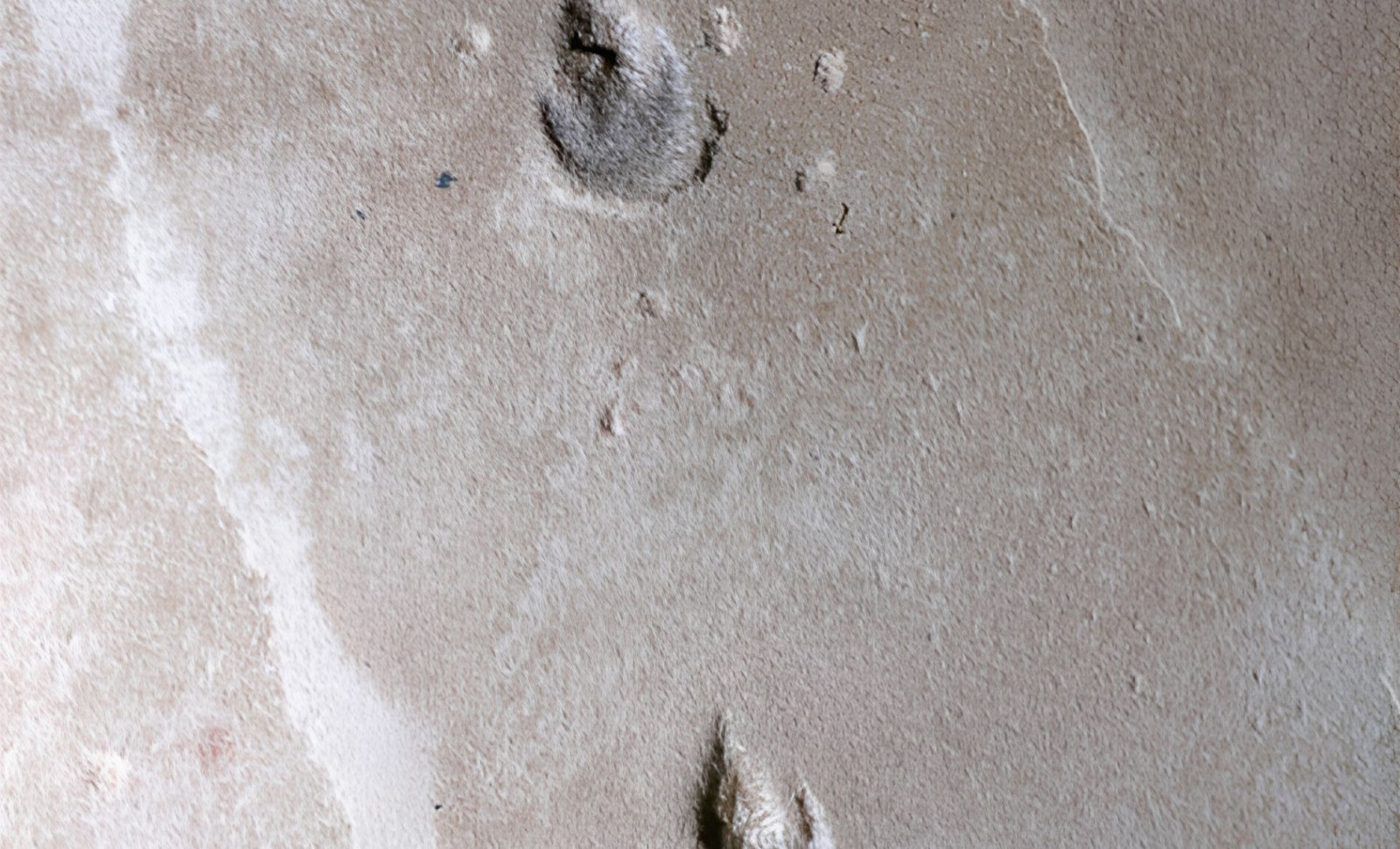
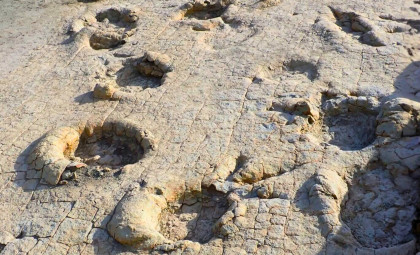
Scientists have uncovered a set of fossilized footprints in Brazil that indicate the presence of a previously unknown dinosaur species that lived in a desert environment approximately 135 million years ago. These tracks were made by a small meat-eating theropod, distinctive enough to warrant the creation of a new ichnogenus and ichnospecies: Farlowichnus rapidus.
The footprints were discovered within the Botucatu Formation, located near São Paulo, an area renowned for its preservation of ancient desert life. Despite the absence of any dinosaur bones, the footprints supplied sufficient information for researchers to identify a novel trackmaker.
The findings, detailed in Cretaceous Research, shed light on the Early Cretaceous ecosystem of the Botucatu paleodesert and showcase how trace fossils can reveal animals that left no skeletal remains.

A Compact Predator Adapted to Desert Terrain
A research team headed by paleontologist Giuseppe Leonardi from the Federal University of Rio de Janeiro analyzed multiple footprints from the formation and concluded they belonged to a small, agile carnivore roughly 1.5 meters in length.
The tracks stood out due to their unique shape and pattern. The footprint series exhibit a notably high step angle paired with long strides, which implies that this dinosaur was well-adapted for swift movement across shifting sands.
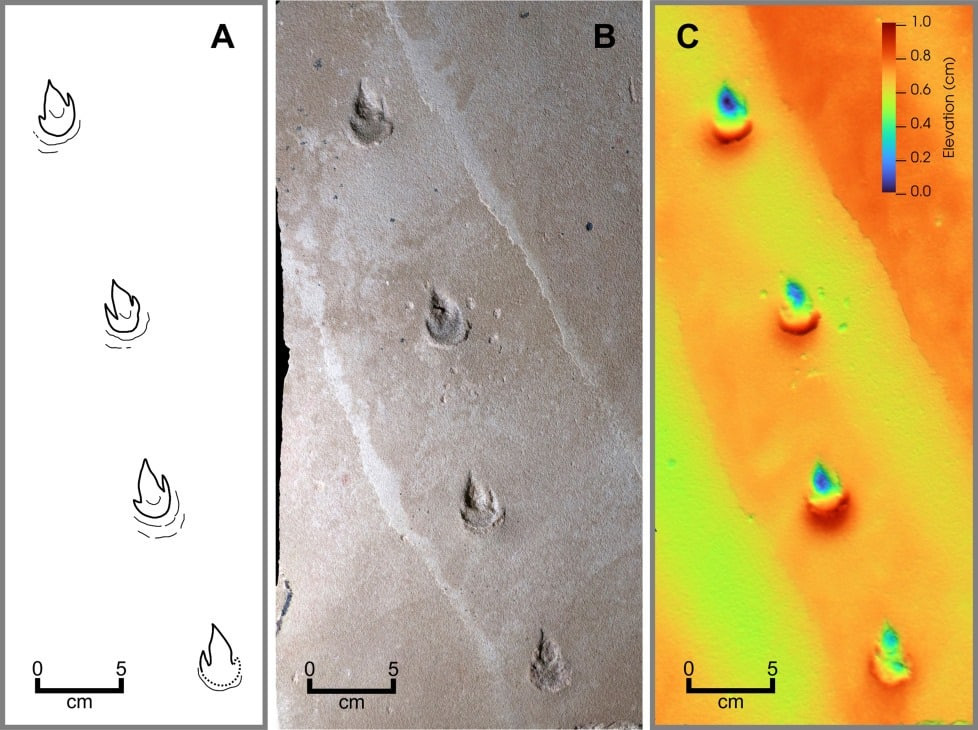
The trackway is remarkably narrow, with footprints closely aligned along the path of travel and only minor lateral deviations. There are no signs of tail drag marks, indicating the dinosaur’s nimble locomotion in the desert setting. Characteristics of these footprints differ from previously identified theropod tracks, leading to the establishment of the new ichnogenus and ichnospecies Farlowichnus rapidus.
“Among the bipedal dinosaur footprints, the most common and typical are considered theropod tracks, with long strides and high step angle and always with an acuminate termination,” they said.
Traces from the World’s Largest Known Ancient Desert
These footprints are embedded in the sandstones of the Botucatu Formation, which documents an immense prehistoric desert environment. Scientists estimate the original expanse spanned over 1.3 million square kilometers.
The study identifies the Botucatu paleodesert as the largest documented fossil desert globally. Its vast stretch constitutes one of the largest megatracksites worldwide, preserving countless traces across the ancient landscape.
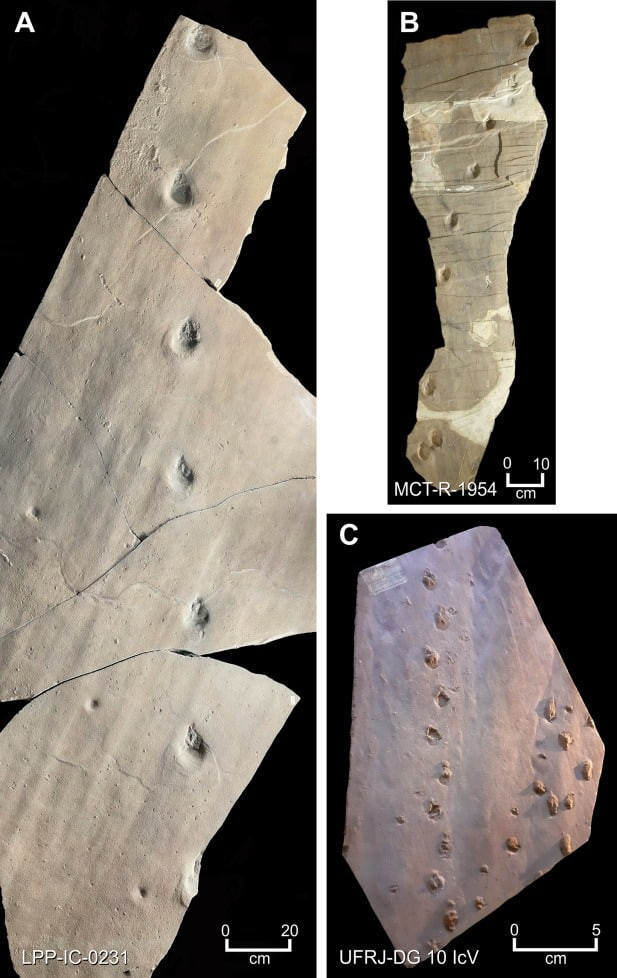
This formation has yielded a rich array of footprints, including thousands from early mammals and a rare trackway attributed to a lacertiform reptile.
Dinosaur footprints are abundant as well, mostly traced to theropods characterized by long steps and pointed toes. The newly discovered prints are distinguished by their distinctive dimensions and gait patterns within this broader group.
Honoring a Pioneer in Dinosaur Footprint Research
The genus name Farlowichnus honors Professor James Farlow of Purdue University, whose contributions have significantly advanced the study of dinosaur trace fossils and locomotion. Professor Farlow expressed his gratitude for this recognition and noted that naming species after colleagues is a well-established practice in paleontology.
“It’s not unusual to name the fossil after a colleague from around the world they want to recognize, and they chose me.” He also joked about the idea of naming a species after oneself. “I thought it would be nice if somebody sometime named something after me, but I can’t say I seriously coveted it. It would be very gauche to name something after yourself.”
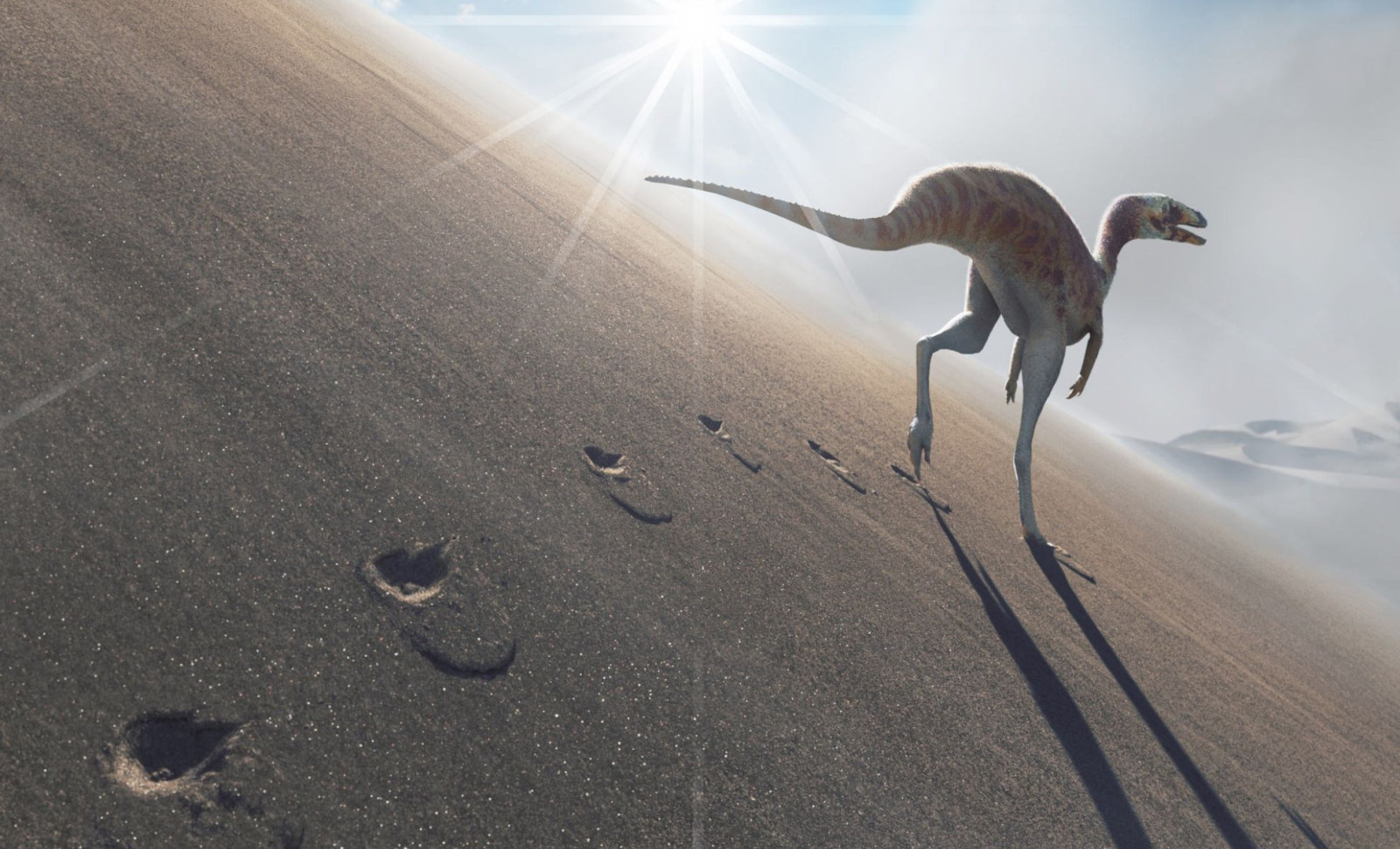
This investigation introduces a new dinosaur species identified solely through its footprints. Even after millions of years, these impressions continue to offer insights about creatures that once lived in one of the most expansive desert ecosystems in Earth’s history, the Botucatu paleodesert.
- Categories:
- Science

0 comments
Sign in to Comment