
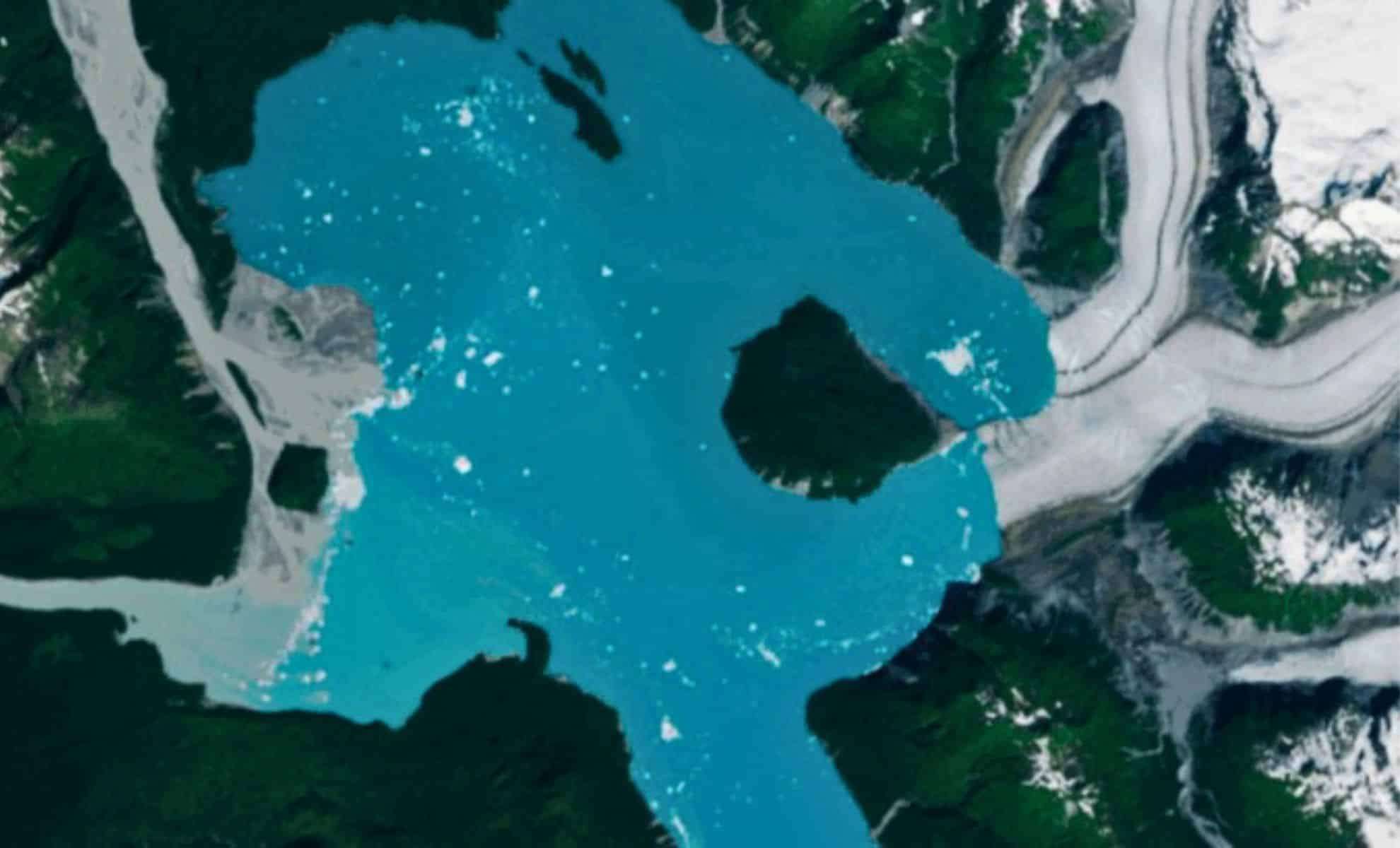
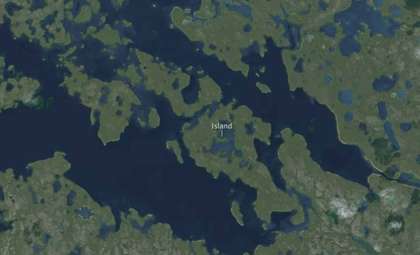
During the summer of 2025, a modest mountain previously encased within an expansive glacier in southeastern Alaska became the region's freshest island—its presence visible from orbit and verified through NASA’s satellite imagery. Named Prow Knob, this geographic feature is now completely surrounded by water following the rapid retreat of the Alsek Glacier, which had enveloped it for centuries.
Observations made between July 13 and August 6, 2025 utilized data from NASA’s Landsat 9 satellite to confirm the island's emergence. The site has been closely monitored across many years, with glaciologist Mauri Pelto from Nichols College anticipating this phenomenon as part of an ongoing melting trend. “The ice endured longer than we predicted,” Pelto shared with the NASA Earth Observatory. “But it was inevitable.”
Though this change seems abrupt, it reflects the consequences of more than a century of glacier recession in the area—a process that has grown more intense in recent times, reshaping local river systems and redrawing Alaska's shoreline.

Decades of Steady Glacier Withdrawal Revealed by Satellites
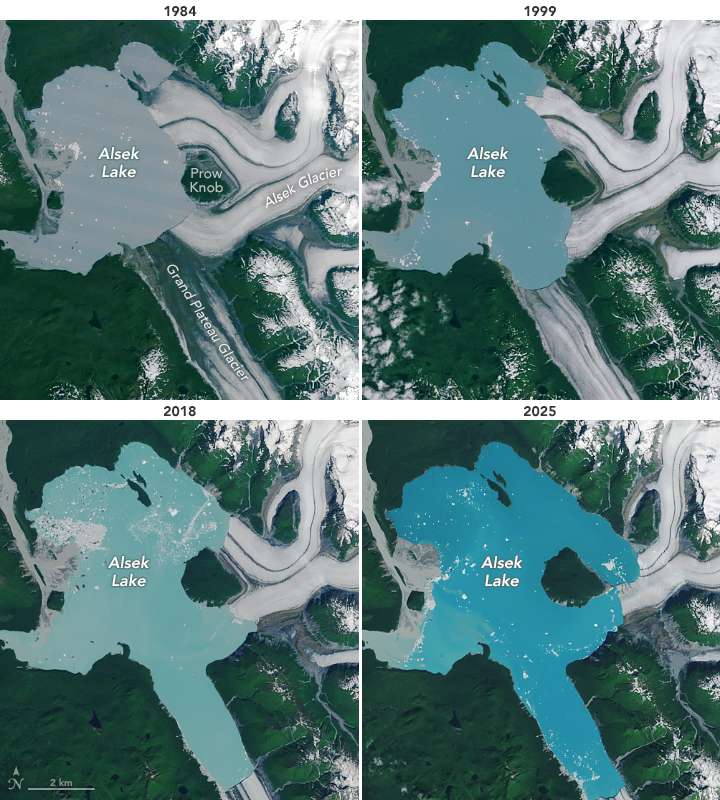
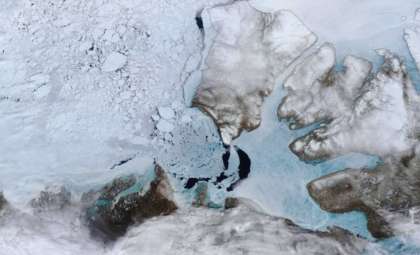
Side-by-side visuals from the NASA Earth Observatory illustrate the dramatic transformation since 1984, when Prow Knob remained firmly wrapped in ice on its eastern and southern sides. Currently, it stands as a distinct island within Alsek Lake, which has grown from approximately 45 to 75 square kilometers over the past 40 years.
Situated within Glacier Bay National Park, the Alsek Glacier has thinned progressively. Previously linked to the Grand Plateau Glacier via icy arms stretching north and south, Alsek’s loss of these ice feeders has increased its susceptibility to calving—when massive ice fragments detach and plunge into surrounding waters.
Historical aerial images held by the US Geological Survey (USGS) show the glacier retreating approximately 5 kilometers between 1894 and 1960. From that point forward, the pace of recession has quickened noticeably.
By 1999, satellite observations documented the glacier pulling back from adjacent ridges and breaking into fragmented ice tongues. By 2018, the formerly unified edge had disintegrated entirely. In the summer of 2025, the last ice connection severed, isolating Prow Knob.
Expanding Network of Lakes Alters Regional Geography
This phenomenon is not unique to Prow Knob. A 2024 USGS climate assessment highlights how southeastern Alaska is experiencing one of the Northern Hemisphere’s swiftest glacier withdrawals. Alongside the Alsek, glaciers like the Yakutat and Grand Plateau are also driving the formation of what Pelto terms a “new lake district” among the fjords.
“These aren’t isolated pools in distant valleys,” he explained to NASA. “These are expansive, rapidly growing proglacial lakes.” Together, Alsek, Harlequin, and Grand Plateau lakes have more than doubled their surface area since the early 1980s, converting former ice-covered terrain into deep water basins edging toward the coast.
As glaciers recede and lose elevation, features like the former ice-covered Prow Knob now emerge as independent islands. This change impacts more than geography; it alters water cycles, plant communities, sediment movement, and ecosystems. New coastlines develop, sediment-enriched meltwater modifies rivers, and early colonizing species move into the newly exposed land.
Broader Environmental Concerns and Risks
While the birth of new islands might seem like a fascinating geographical update, the processes behind it carry significant environmental risks. Glacier collapses often leave behind moraine-dammed lakes prone to sudden failure. These lakes can unleash powerful floods, known as glacial lake outburst floods (GLOFs), posing hazards to downstream populations.
The receding ice also disrupts climate balance by replacing reflective ice with darker water surfaces that absorb more heat—a phenomenon called albedo change that accelerates melting further.
Local wildlife adapted to cold, high-elevation glacier environments—such as ptarmigans and cold-water fish—encounter habitat loss, while new species colonize the freshly ice-free zones, potentially disrupting current food chains.
The National Park Service, responsible for Glacier Bay, confirms ongoing observation efforts. Public statements released in late August indicate that the isolation of Prow Knob as an island is permanent and serves as a stark marker of the sweeping changes underway across Arctic regions.
- Categories:
- News ,
- Climate change





0 comments
Sign in to Comment