
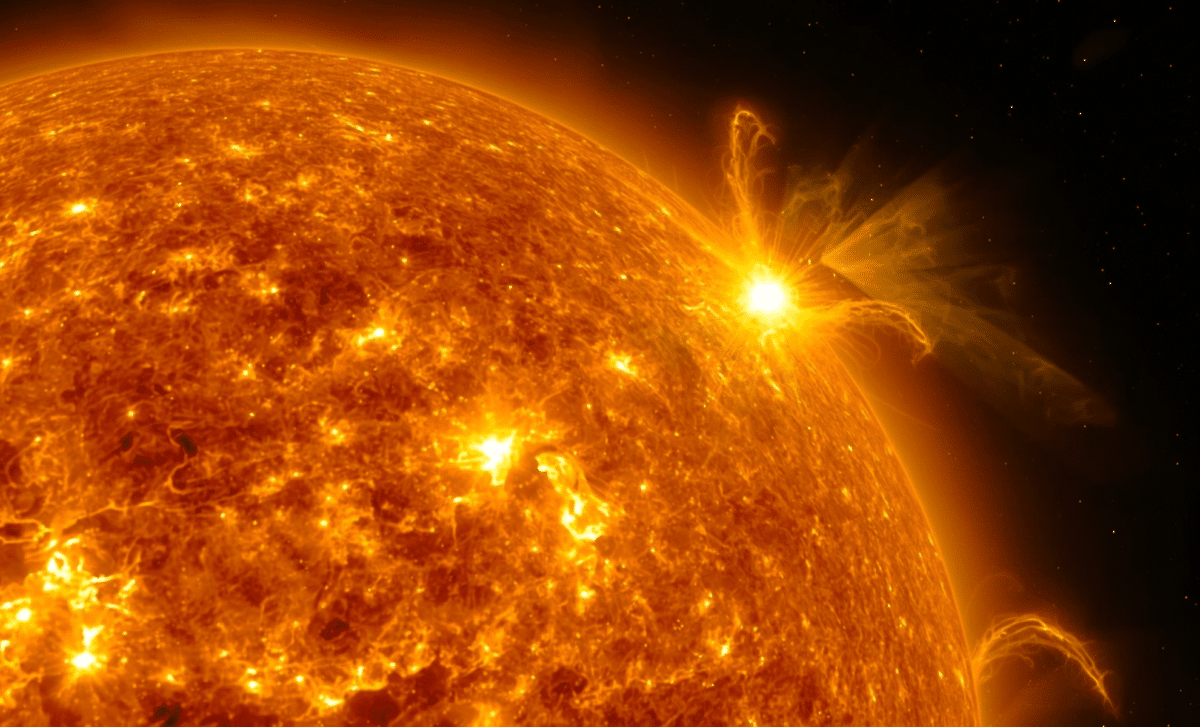
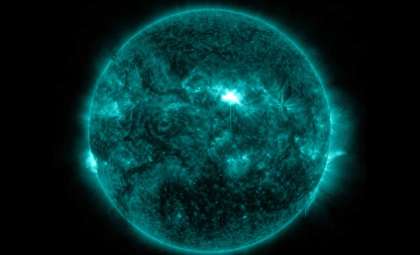
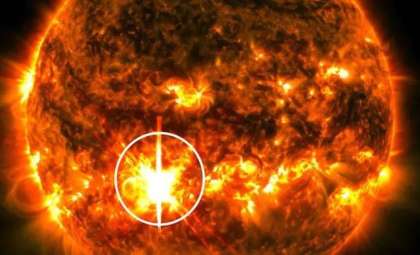
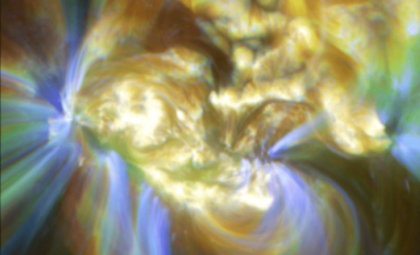
An intense X9-class solar flare has provided scientists with unprecedented insight into the buildup preceding a major solar eruption, detailed in recent findings published in Solar Physics and highlighted by Space.com. This event, which took place on October 3, 2024, was meticulously recorded by NASA’s Interface Region Imaging Spectrograph (IRIS), capturing nearly continuous data from the Sun’s atmosphere leading up to the flare.
Continuous Monitoring by IRIS
The breakthrough observation arose from a rare alignment that enabled IRIS to maintain uninterrupted surveillance of an active solar region known for frequent flares. This constant observation allowed researchers to analyze pre-eruption conditions instead of focusing solely on aftermath data. According to the study published in Solar Physics, scientists observed alterations in plasma brightness, movement, and turbulence over several hours before the flare. These variations indicated a coordinated progression rather than random noise, implying a steady buildup of magnetic tension in the region.
The active region had already been showing instability signs in preceding days, which encouraged sustained monitoring. This continuous observation was crucial since most solar flare datasets typically begin once the eruption starts, making pre-flare activity difficult to study. In this instance, the consistent coverage uncovered subtle shifts that could represent early stages of magnetic reconnection beneath the solar surface. The detailed data set is now considered exceptional in heliophysics research and provides a valuable reference for future flare studies.

Plasma Dynamics and Emerging Oscillation Patterns
Throughout the active region's evolution, researchers detected harmonized plasma behavior changes becoming more evident around three hours before the flare. Brightness steadily increased while plasma exhibited alternating movements toward and away from the observer, indicating dynamic atmospheric restructuring. Simultaneously, turbulence within the plasma escalated, signaling growing magnetic instability. These changes appeared collectively and recurred in cycles lasting several minutes. Two dominant oscillation periods were identified: one between seven to ten minutes, and another ranging from eighteen to twenty-one minutes.
These oscillations were most pronounced where opposing magnetic fields collided, a prime location for energy accumulation. Describing the surprising quality of these findings, research lead Louis Seyfritz remarked:
“I was not expecting what I found,” Louis Seyfritz, a graduate researcher at the New Jersey Institute of Technology who led the new study, told Space.com.
The detection of these organized oscillations suggests the Sun's atmosphere might exhibit a recognizable preparatory stage before large eruptions, though the underlying physical processes are still being explored.
Magnetic Stress Escalation and Eruption Precursors
In the final moments before the eruption, data reveal a transition into heightened instability. Roughly 15 to 20 minutes ahead of the flare, turbulence surged and plasma motion became increasingly erratic, signaling a critical threshold in the magnetic field’s stability. Scientists interpret this as a tipping point where built-up magnetic energy starts releasing in localized bursts prior to the main flare. Earlier oscillation patterns persisted but turned more irregular, combining with sudden fluctuations in brightness and motion.
This behavior likely marks the collapse of equilibrium in the active solar region. Seyfritz explained their motivation for selecting this event: “I chose that event because I was expecting the flare to be big enough to see those signs,” Seyfritz said. “There’s very few that reach that amount of power.” The infrequency of such powerful flares makes capturing their complete progression rare, thus making detailed cases invaluable for improving solar magnetic activity models.
Potential for Advancing Space Weather Forecasting
One key implication is that solar flares might not be entirely unpredictable. Instead, detectable atmospheric signatures could precede eruptions if verified in more cases. Researchers caution that this study represents just one flare, so additional validation is essential before establishing forecasting methods. Nevertheless, the combination of rising brightness, enhanced turbulence, and synchronized oscillations offers an intriguing target for continued study.
Should these patterns emerge consistently in other solar events, they could provide a foundation for early-warning systems capable of identifying flare-prone regions hours in advance. As Seyfritz highlighted: “If we see those oscillations happening before the flare, it can be a strong indicator that a flare is going to happen,” Seyfritz told Space.com. The next phase involves analyzing a broader range of solar events to determine if these signals are common precursors or unique to this particular flare.
- Categories:
- News




0 comments
Sign in to Comment