
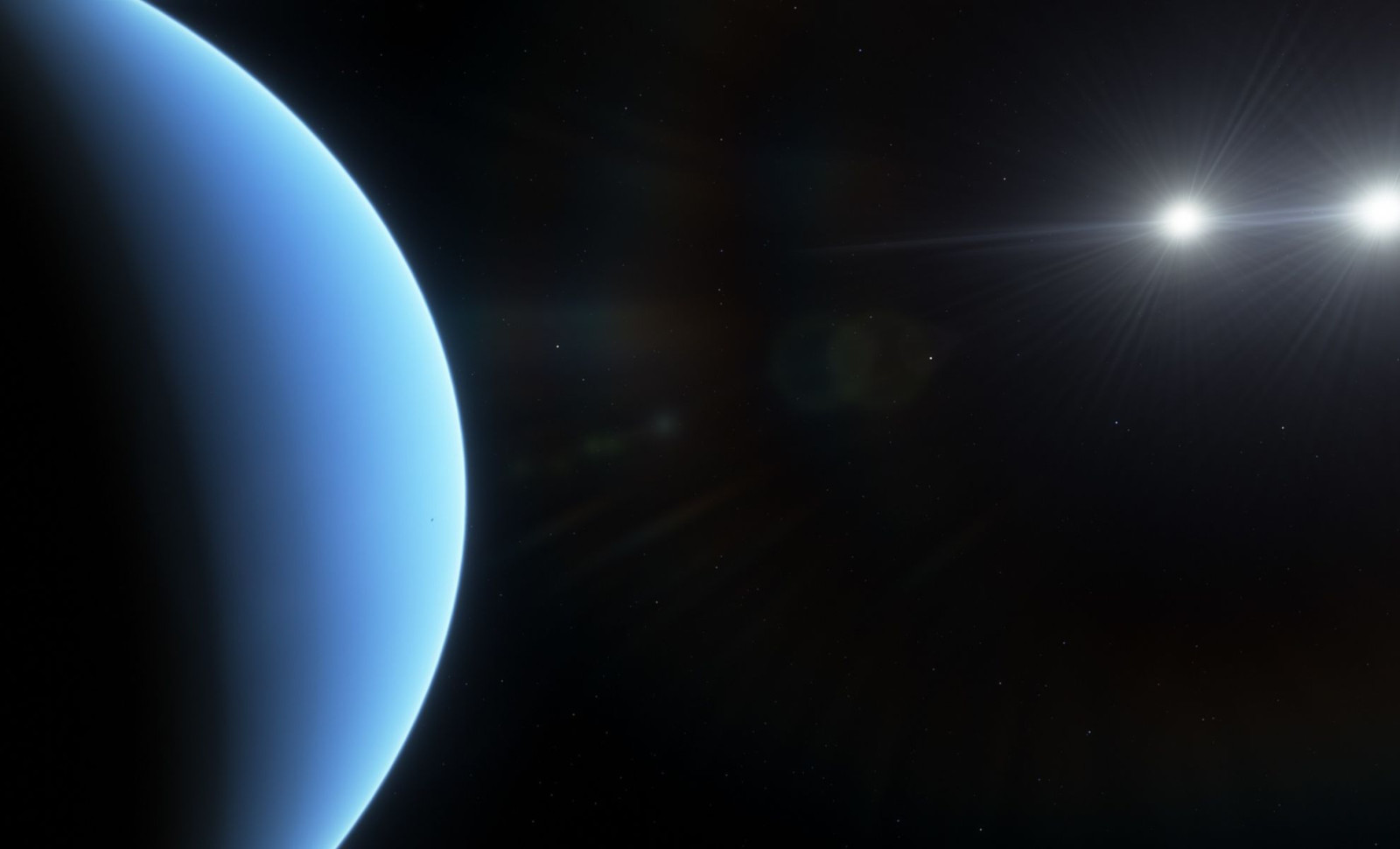
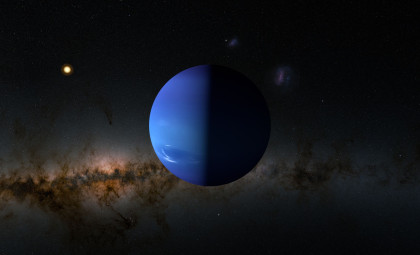
For many years, astronomers assumed that Nereid, one of Neptune’s moons, was an object captured from the Kuiper Belt. However, recent research proposes a vastly different origin: Nereid could be one of Neptune’s primordial moons.
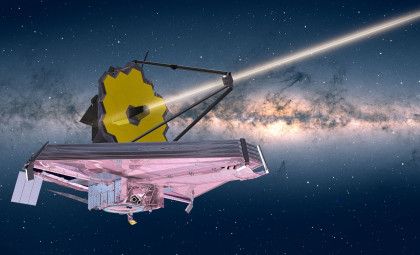
This new perspective emerges from recent data gathered by the James Webb Space Telescope (JWST) combined with simulations exploring Neptune’s formative era. The study indicates Nereid’s unusual orbital path may stem from intense gravitational disturbances early in Neptune’s history, rather than from an external capture.
This insight might reshape scientific views about one of the Solar System’s most enigmatic moons. Nereid’s unique orbit has long defied categorization, and the latest findings link its peculiar trajectory to a turbulent phase in Neptune’s past.

Nereid’s Features Uncovered by Webb
Identified in 1949 by astronomer Gerard Kuiper, Nereid remained Neptune’s sole known moon beside Triton until the Voyager 2 flyby in 1989. What distinguished Nereid was its highly eccentric orbit, completing around one revolution every 360 days. This irregular orbit led many experts to believe Nereid originated as a captured Kuiper Belt Object (KBO). The hypothesis seemed plausible, especially since Triton itself likely hails from the Kuiper Belt.
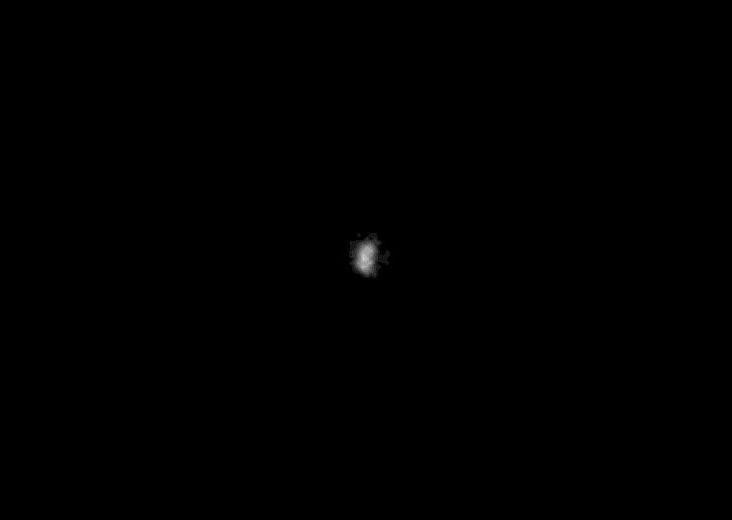
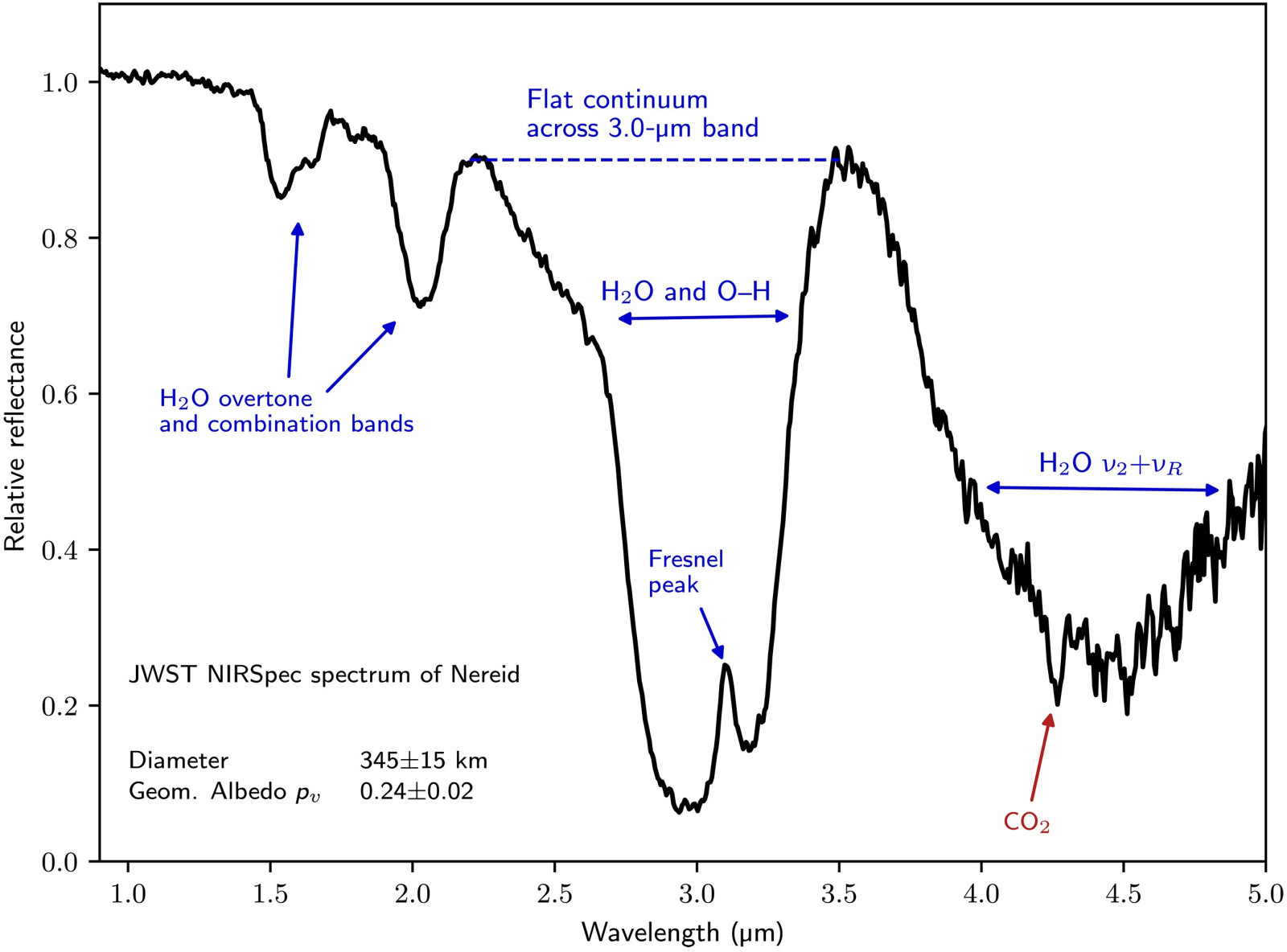
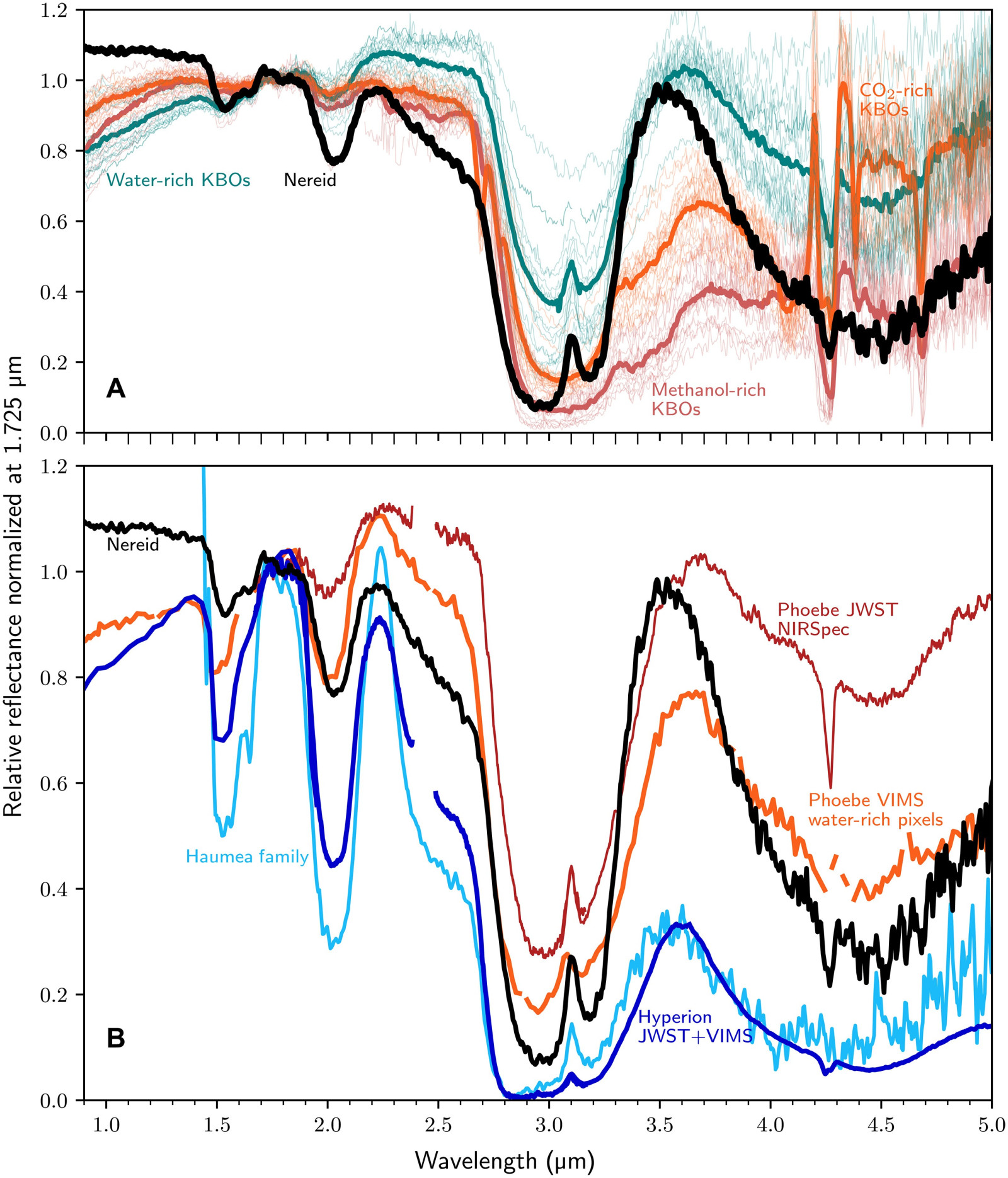
Researchers employed JWST’s infrared capabilities to reevaluate this assumption. Their analysis revealed that Nereid’s surface composition differs significantly from typical captured KBOs. A notable comparison was made with Phoebe, a Saturnian moon believed to be a captured object from the Kuiper Belt. Nereid’s water-abundant craters displayed infrared signatures unlike Phoebe’s. As the paper in Science Advances highlights:
“Nereid’s unique spectrum among outer Solar System bodies is not consistent with a scenario where Nereid is captured during the early Solar System’s dynamic instability.” The findings therefore weaken the long-standing capture hypothesis.
The Role of Triton’s Arrival
Attention then shifts to Triton, Neptune’s largest moon, known for its retrograde orbit that suggests a capture event rather than formation alongside Neptune. Scientists surmise Triton was part of a Kuiper Belt binary system, snared by Neptune’s gravity in a disruptive process.
To explore subsequent events, the team used the simulation platform REBOUND, modeling an early Neptune orbited by a collection of primordial regular moons, before introducing Triton.
These models demonstrated that Triton’s erratic orbit caused massive disruption among Neptune’s moons, driving many moons to collide or get ejected. The debris from such upheaval likely formed Neptune's rings and possibly contributed to the creation of smaller moons such as Proteus.
Could Nereid Be a Survivor of an Ancient Moon System?
Across about 20 percent of simulations, one particular moon was thrown into a stable yet highly elongated and tilted orbit by Triton’s gravity—resembling Nereid’s current trajectory.
The evidence suggests Nereid may not be a captured object but rather a native moon that was scattered into its unusual orbit during the gravitational chaos following Triton’s capture.
This research proposes that Nereid is potentially a rare remnant of Neptune’s original moons. While much of the initial satellite ensemble vanished due to collisions and ejections, Nereid appears to have endured.
- Categories:
- Astronomy


0 comments
Sign in to Comment