
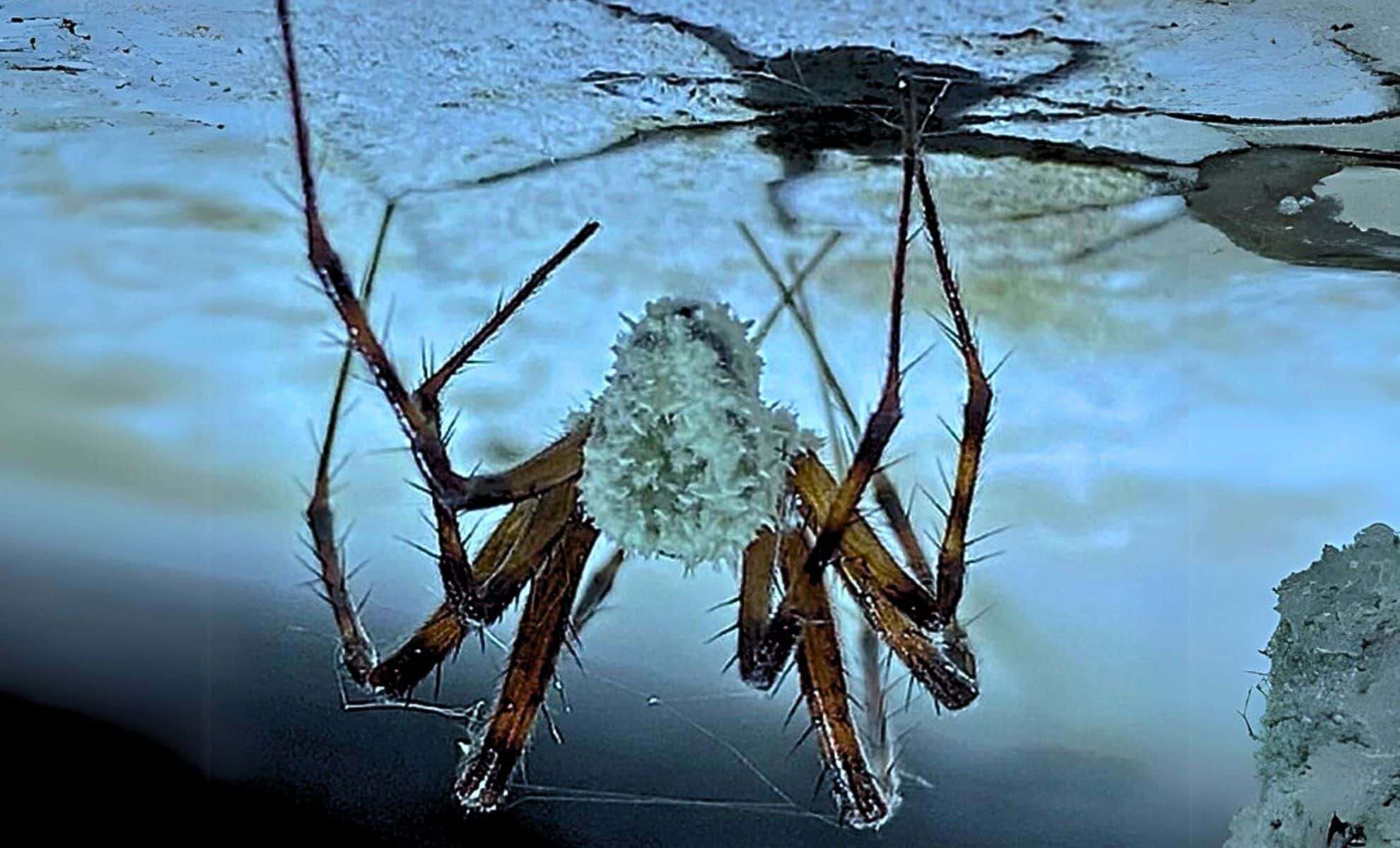
A recently identified fungal species in Northern Ireland has been observed to manipulate spiders’ behavior, effectively transforming them into “zombie-like” creatures before their eventual death. This parasitic fungus, named Gibellula attenboroughii to honor the renowned naturalist Sir David Attenborough, was detailed in a new report featured in the journal Fungal Systematics and Evolution.
An Unexpected Discovery in an Old Storage Room
The fungus was first noticed in 2021 during filming for the BBC series Winterwatch. Filmmakers spotted a shaded orbweaver spider (Metellina merianae) immobilized on the ceiling of an abandoned gunpowder storeroom. Initially dismissed as a patch of mold, further examination revealed it to be a distinct and previously unknown fungal species.
Follow-up surveys found additional infected spiders on the walls and ceilings of caves throughout Northern Ireland and the Republic of Ireland. The fungus was also seen impacting a related cave spider species, Meta menardi.

Fungus That Alters Spiders’ Behavior
Similar to the notorious Ophiocordyceps fungi that zombify ants in South American rainforest ecosystems, Gibellula attenboroughii appears to take control of its spider hosts’ actions before killing them. Infected spiders abandon their typical web locations and shelters, moving into exposed areas where they ultimately perish.
While the specific mechanism driving this behavior manipulation remains unclear, scientists hypothesize that neuroactive metabolites like dopamine might be involved. Comparable fungal compounds have been documented in insect-affecting species, supporting the idea that fungi can profoundly influence host nervous systems.
An Overlooked Fungal Presence Across the UK
Historical data indicate that Gibellula-type fungi have long been covertly infecting spider populations in England and Wales. Scientists now suspect a widespread but previously unrecognized epidemic impacting spiders throughout the British Isles, with potential but unknown effects on local ecosystems.
The study authors stress the importance of more detailed investigations. These fungi might play a critical role in regulating spider communities and could offer insights valuable to medical and biotechnological fields, as related fungal species have contributed to pharmaceutical advancements.
Expanding the Legacy of Species Named After Attenborough
This recent addition places Sir David Attenborough among a distinguished group of individuals with multiple species bearing their name. Other creatures named for him include:
- Attenborough’s long-beaked echidna (Zaglossus attenboroughi)
- The tiny orchid (Lepanthes attenboroughii)
- Attenborough’s black-eyed satyr butterfly (Euptchia attenboroughi)
- The ghost shrimp (Ctenocheloides attenboroughi)
Though Gibellula attenboroughii lacks the allure of a butterfly or echidna, its identification shines a light on the complex and eerie interactions between fungi and their hosts, sometimes culminating in chilling outcomes.
The full paper is available open access here.
- Categories:
- Science







0 comments
Sign in to Comment