
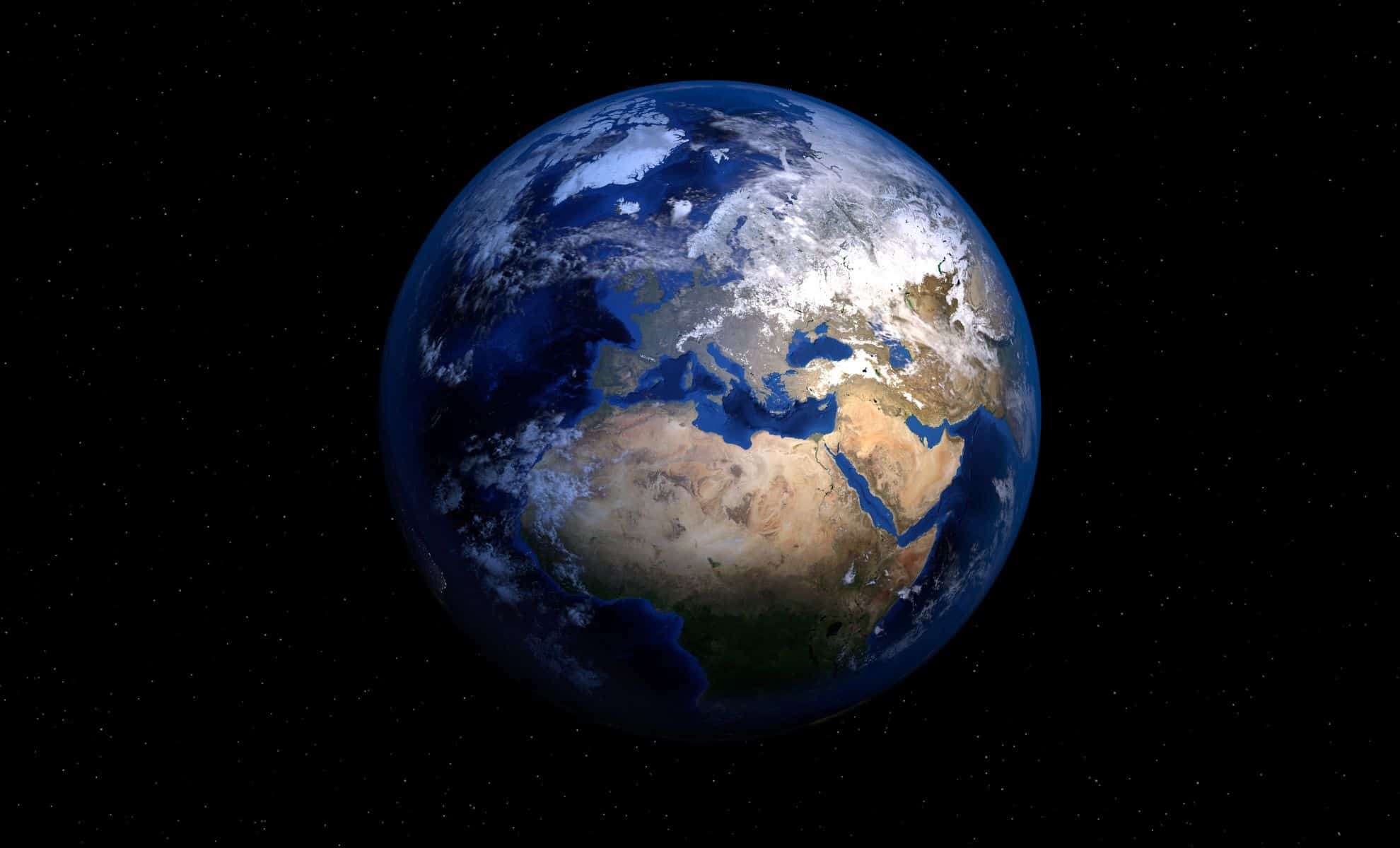
Emerging studies propose that tiny particles of cosmic dust, formed from asteroid breakups and comet debris, may have been vital in jump-starting life on our planet.
This innovative idea challenges traditional views about where life’s essential elements originated. By analyzing the influx and makeup of cosmic dust during Earth’s earliest era, researchers are gaining fresh perspectives that might transform our ideas on the planet’s earliest biological origins.
The Crucial Impact of Cosmic Dust on Early Earth’s Chemistry
For many years, scientists have examined how life could have emerged on Earth, focusing on the prebiotic chemical processes that preceded living organisms. These processes involve the creation of basic organic molecules that eventually merged into more complex compounds, paving the way for life. Yet, a persistent question remains: how did elements like phosphorus, nitrogen, carbon, and sulfur—all key for prebiotic chemistry—accumulate in sufficient amounts in early Earth’s environment?

Recent findings indicate that cosmic dust may have served as a continuous and abundant supply of these crucial elements, which were otherwise scarce in Earth’s original geology. A study highlights how dust from colliding asteroids and disintegrating comets steadily enriched Earth’s surface. Unlike larger meteors that often vaporize on atmospheric entry, microscopic cosmic dust particles can survive the descent largely intact. As researchers note, “In contrast to larger objects, the flux of cosmic dust to Earth is essentially constant on yearly timescales.”
This ongoing delivery likely played an essential role in establishing a chemically rich environment essential for life’s emergence, gradually boosting elemental concentrations in key habitats.
Continuous Supply of Key Elements Through Cosmic Dust
Cosmic dust consists of minuscule particles created when asteroids collide or comets break apart as they navigate the solar system. Larger meteorites typically burn up due to friction and heat during atmospheric entry, whereas cosmic dust grains—much smaller in size—pass through with minimal alteration, depositing primitive elements upon landing.
One defining characteristic of cosmic dust is its relentless presence. Scientists estimate that hundreds of tons of it rain down on Earth annually, a process ongoing for billions of years. This steady accumulation likely contributed significantly to supplying Earth with life-critical elements. The study mentions, “Some fraction of cosmic dust grains pass relatively gently through the Earth’s atmosphere, thereby retaining a greater fraction of primitive elements than large impactors do.”
Although cosmic dust blankets wide areas thinly, natural forces such as wind and water redistribute and concentrate particles in locales like glacial regions, deserts, and deep ocean sediments. These natural processes could have created hotspots where elemental concentrations reached levels suitable for prebiotic chemistry, particularly near melting glaciers where cosmic dust could accumulate through glacial meltwaters.
Linking Cosmic Dust to the Origin of Life
To explore cosmic dust’s potential role in life’s inception, scientists employed astrophysical simulations alongside geological models to reconstruct dust influx during Earth’s first 500 million years—the Hadean Eon. This tumultuous phase, marked by frequent asteroid impacts including the one that created the Moon, exposed Earth to abundant extraterrestrial material.
The models suggest that cosmic dust deposition rates then could have been between 100 to 10,000 times higher than today. They also identified specific environments where dust accumulated significantly. Glacial areas were found to be particularly conducive, where ice traps cosmic particles that later concentrate in sediment pools known as cryoconite holes—small ice depressions accumulating windborne debris, including cosmic dust.
“Antarctic-like ice sheets that host cryoconite sediments with high levels of cosmic dust, along with proglacial lakes, seem to provide an excellent environment to support the early stages of life,” researchers concluded. These settings could have fostered ideal conditions for early chemical reactions leading to life.
Reevaluating Established Ideas on Life’s Beginnings
This concept of cosmic dust reshapes prevailing notions that primarily credit meteorite impacts for delivering life’s components. Although meteorites have contributed organic compounds, many are destroyed by atmosphere or impact forces. Conversely, cosmic dust offered a consistent, gentle infusion of essential elements, enriching Earth’s surface over long periods.
This perspective opens questions about whether similar scenarios occur elsewhere in the solar system or beyond. Worlds such as Europa, Enceladus, and Mars might also gather cosmic dust. If dust sparked life on Earth, it enlarges the possibility that biological processes may have begun on other planets or moons.
Research on cosmic dust’s influence on prebiotic chemistry is ongoing, but current evidence is promising. As the study authors note, “There are many planetary processes that can concentrate fine-grained materials from across large surface areas to form concentrated deposits.” Thus, cosmic dust might be integral not only to Earth’s past but also to the ongoing search for extraterrestrial life.
Implications for Astrobiology’s Future
These discoveries hold profound consequences for astrobiology, the scientific pursuit studying life across the universe. Understanding cosmic dust’s contribution to life’s dawn on Earth may guide missions targeting environments on other planets. Upcoming explorations of Mars and icy moons orbiting Jupiter and Saturn will likely investigate dust compositions to seek elements and conditions reminiscent of Earth’s early life-supporting settings.
As investigations continue, they promise to illuminate the chemical and environmental factors favoring life’s emergence. By probing ancient cosmic dust deposits on Earth, scientists may unlock new clues about how living organisms began and whether similar phenomena are active elsewhere in space.
In essence, recognizing cosmic dust’s impact on life’s emergence enriches our understanding of planetary evolution. Though further research is essential, this fresh viewpoint presents cosmic dust as a fundamental ingredient fueling the origin of life on Earth—and potentially throughout the cosmos.
- Categories:
- Astronomy ,
- News ,
- Science ,
- Space ,
- Evolution





0 comments
Sign in to Comment