
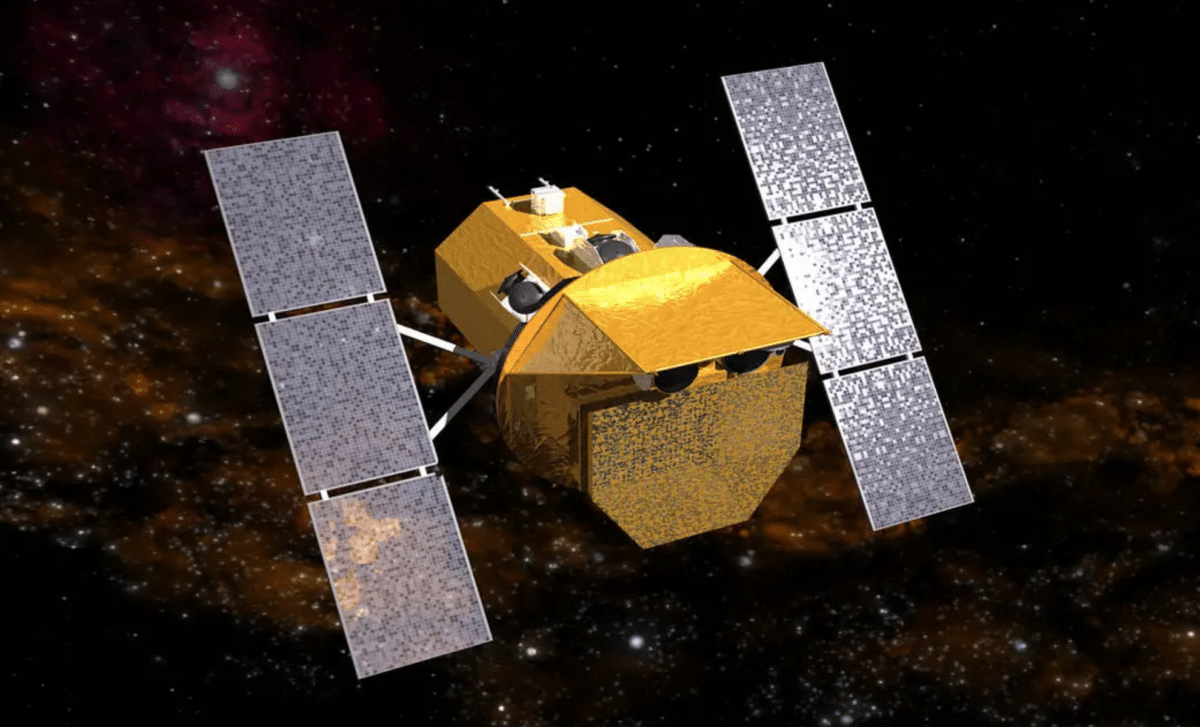
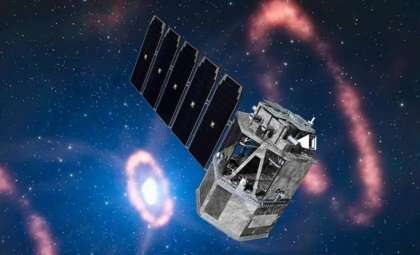
NASA is urgently working to preserve its 21-year-old Neil Gehrels Swift Observatory, tasked with investigating gamma-ray bursts—the universe's most powerful explosions. Since its 2004 launch, Swift has been monitoring the cosmos across X-ray and gamma-ray wavelengths. However, heightened solar activity has accelerated the observatory’s orbital decay, raising the risk of uncontrolled descent back into Earth's atmosphere. To prolong Swift’s mission, NASA has temporarily halted most scientific operations while gearing up for a crucial orbit-raising maneuver planned for this summer.
Operational Shift for Swift Observatory
NASA’s Swift spacecraft is at a critical juncture. Due to increased atmospheric drag reducing its orbit more rapidly, mission teams have adjusted its operation protocols. Swift’s full scientific activity is currently on hold. Principal Investigator S. Bradley Cenko from NASA’s Goddard Space Flight Center detailed,
“Normally, Swift quickly turns to view its targets — especially the fleeting, almost daily explosions called gamma-ray bursts — with multiple telescopes.”
Add Cosmo Herald as a Preferred Source

Given the need to limit spacecraft motion, Swift will focus solely on gamma-ray burst detection with its Burst Alert Telescope, while other instruments remain offline until orbit stabilization is achieved.
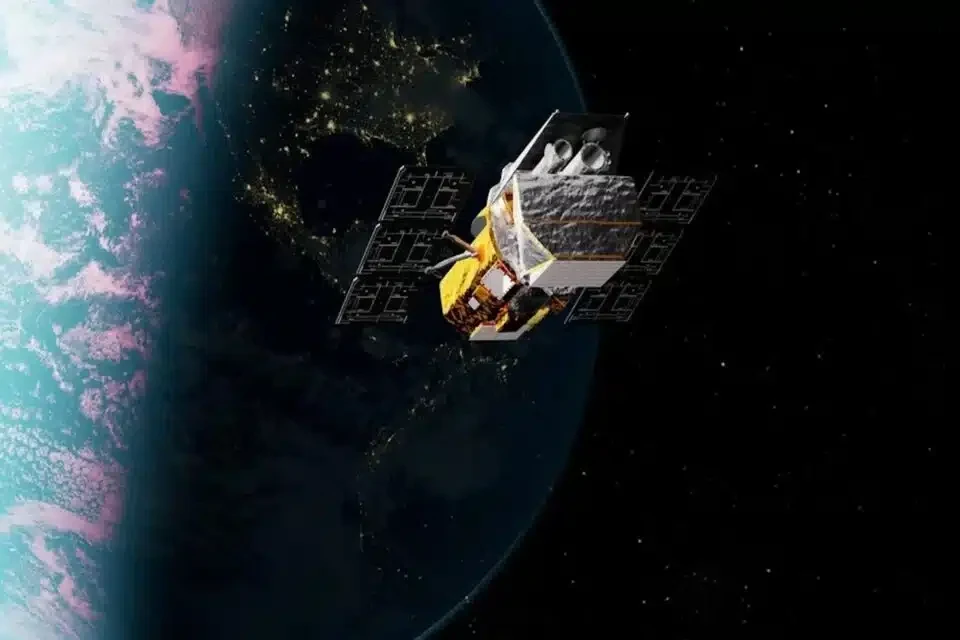
Solar-driven altitude loss has intensified atmospheric drag, steadily lowering Swift’s orbit. Current projections place a 50% chance of uncontrolled atmospheric reentry by mid-2026. NASA's upcoming reboost mission aims to counter this decline and secure Swift’s trajectory. Cenko highlighted the mission’s significance, stating,
“We anticipate the reboost mission to launch in the summer, so we’re transitioning operations now to give it the best margin we possibly can.”
Understanding the Orbital Decay Challenge
Orbital decay is a persistent obstacle for satellites, including Swift. Drag from Earth's tenuous upper atmosphere gradually saps orbital altitude. This process has worsened for Swift because enhanced solar activity causes expansion of the upper atmosphere, increasing resistance on low Earth orbit satellites. As a result, Swift’s orbit has dropped to dangerously low levels.
Swift’s systems were not engineered to handle such rapid orbital loss. Although the spacecraft’s decay has been managed over many years, the accelerated descent now demands immediate corrective actions. NASA has pursued solutions, ultimately collaborating with industry partners. The forthcoming orbital boost operation, spearheaded by Arizona-based startup Katalyst Space Technologies, is essential to avoid Swift’s premature reentry.
Saving Swift: The Upcoming Orbital Boost
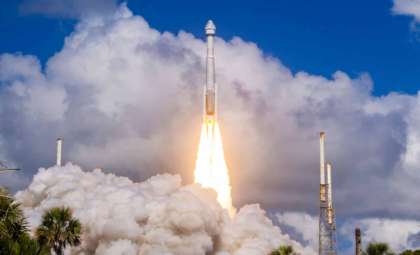
To rescue Swift, NASA awarded $30 million to Katalyst Space Technologies to design a specialized spacecraft that will perform the orbit-raising maneuver. Scheduled for launch this summer, this mission will rendezvous with Swift and adjust its altitude to safer levels. Achieving this will be critical for clarity and continuation of Swift’s astronomical observations.
This initiative exemplifies NASA’s growing partnership with the private sector to sustain aging space infrastructure. Utilizing innovative technologies from Katalyst Space Technologies, NASA aims to extend the operational life of the observatory. The success of the reboost mission represents a pivotal moment to ensure Swift remains a valuable asset in space exploration.
- Categories:
- Space







0 comments
Sign in to Comment