

New findings from Washington University in St. Louis reveal a compelling link between deep abdominal fat and the early development of Alzheimer’s disease. This discovery holds promise for identifying Alzheimer’s risk decades prior to any noticeable cognitive symptoms. Introduced at the 2024 Radiological Society of North America meeting, the study reshapes our understanding of how different fat types relate to brain health and obesity.
Understanding the impact of visceral fat on Alzheimer’s progression
Although body mass index (BMI) has traditionally been tied to dementia risk, this research suggests that where fat is stored matters greatly. The team found that visceral fat—the fat nestled around internal organs—has a far stronger association with Alzheimer’s disease than subcutaneous fat, the fat located beneath the skin.
Visceral fat was linked to the emergence of amyloid plaques, the brain protein buildups that are a signature of Alzheimer’s. Lead investigator Mahsa Dolatshahi noted, “We found that elevated levels of visceral fat in middle-aged adults correspond with amyloid deposits in the brain.”

Even though amyloid plaques don’t always cause memory decline, they serve as an important early indication of Alzheimer’s. This highlights the importance of assessing fat distribution over simply relying on BMI, which doesn’t differentiate fat types.
Insights from initial and follow-up studies
The research started by examining 32 cognitively healthy adults aged 40 to 60. Findings showed those with higher visceral fat levels had increased amyloid plaque presence and reduced cortical thickness in Alzheimer’s-sensitive brain regions.
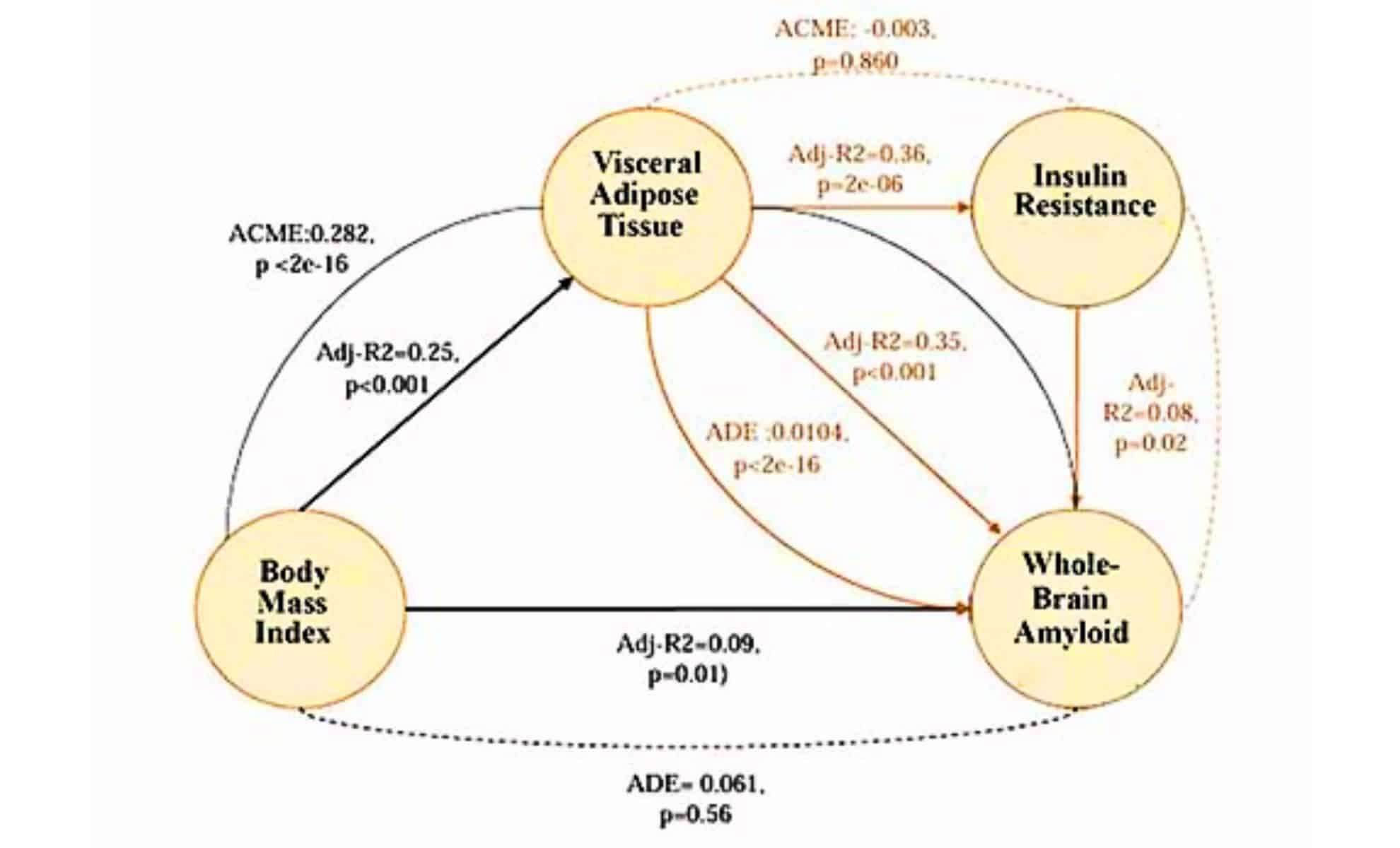
With an expanded group of 80 participants, the association between visceral fat and amyloid buildup became more evident. Remarkably, the visceral-to-subcutaneous fat ratio explained 77% of the BMI's effect on amyloid accumulation. Dolatshahi commented, “Our work is unique in establishing this connection at midlife, well before dementia symptoms typically emerge.”
Major conclusions from this research include:
- Visceral fat closely correlates with amyloid plaque buildup in the brain.
- Subcutaneous fat lacks a significant link to amyloid deposits.
- The ratio of visceral to subcutaneous fat drives 77% of BMI’s influence on amyloid accumulation.
These results emphasize that analyzing fat distribution offers better insight into Alzheimer’s risk than focusing on total body fat.
How cholesterol and insulin influence Alzheimer’s risk
The study also discovered a link between cholesterol levels and brain amyloid quantity. Participants with lower high-density lipoprotein (HDL), the so-called 'good' cholesterol, had elevated amyloid levels. Dolatshahi highlighted, “Visceral fat impacts cholesterol metabolism, underscoring the intricate ties between metabolic health and brain function.”
Interestingly, other research notes that higher HDL cholesterol might increase dementia likelihood. One recent study suggests elevated HDL could raise dementia risk by up to 42% in older adults.
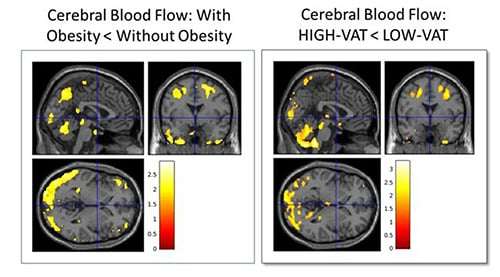
Additionally, individuals carrying more visceral fat displayed reduced insulin sensitivity, which is known to accelerate brain atrophy and cognitive impairment. Insulin resistance is increasingly recognized as a contributing factor to Alzheimer’s development.
Cholesterol and insulin dynamics linked to Alzheimer’s:
- Lower HDL cholesterol correlates with higher amyloid accumulation.
- Visceral fat associates with diminished insulin sensitivity and greater brain volume loss.
These findings align with prior studies emphasizing metabolic dysfunction, such as poor cholesterol regulation and insulin resistance, as critical in Alzheimer’s pathology.
The intricate ties between fat and cognitive health
The interaction between body fat, metabolism, and brain condition is multifaceted. While elevated BMI links to brain shrinkage and dementia, this research highlights visceral fat as a far more telling marker of Alzheimer’s risk. Future investigations will need to delve deeper into the roles of cholesterol, insulin resistance, and fat storage patterns.
As Dolatshahi summarized, “By moving beyond BMI and employing MRI-based assessments, this study sheds light on why obesity, particularly visceral fat, raises Alzheimer’s risk.” More refined fat measurement techniques could clarify how fat deposits influence cognitive decline.
This research was showcased at the Radiological Society of North America’s 2024 conference.













0 comments
Sign in to Comment