
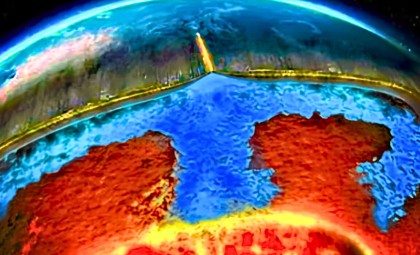
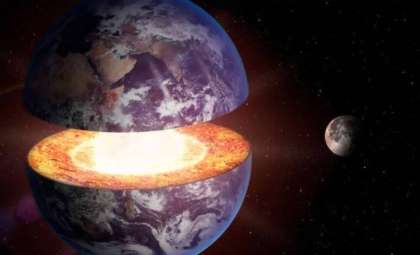
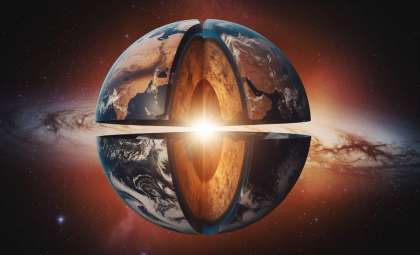
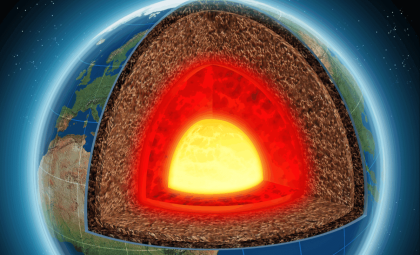
At approximately 700 kilometers beneath Earth’s surface, immense amounts of water are held within minerals exposed to extreme temperature and pressure conditions. This water isn't in liquid form but is chemically bound within the crystal lattices of deep mantle minerals, forming a significant water reserve sealed inside solid rock.
The presence of this hidden water reserve is supported by seismic wave studies, high-pressure experimental results, and the discovery of a minute mineral fragment enclosed within a diamond brought to the surface. A Science journal publication linked unusual melting phenomena near the lower mantle's upper boundary to water released from ringwoodite, a mineral that inhabits the mantle transition zone.
Ringwoodite: A Water-Bearing Mineral in Deep Earth
Ringwoodite is a dense, high-pressure variant of olivine, one of the primary minerals found in Earth’s upper mantle. It forms between depths of around 410 to 660 kilometers, where immense pressure compacts its atomic structure. This mineral's crystal framework can trap hydroxyl groups—chemical complexes containing hydrogen and oxygen—within its solid matrix.

Steven Jacobsen, a geophysicist at Northwestern University, likened ringwoodite to a sponge due to its exceptional ability to absorb hydrogen. “Ringwoodite acts like a sponge, absorbing water,” he stated in a Northwestern report. “Its unique crystal structure enables it to attract hydrogen and retain water.”
Using the term “water” here can be deceptive. This reservoir doesn’t resemble an underground sea or liquid ocean. Instead, under mantle pressures and temperatures, water molecules break apart, and hydroxyl groups become chemically integrated within minerals. The rock remains solid until pressure and temperature changes release some of this stored water.
Laboratory data indicates ringwoodite may contain upwards of one percent water by weight. If this hydration level is consistent throughout the transition zone, the water volume stored could be nearly three times the total found in Earth’s surface oceans. This reflects the potential capacity of a vast mantle layer rather than a single fluid sea beneath the surface.
Seismic Waves Reveal Partial Melting in the Mantle
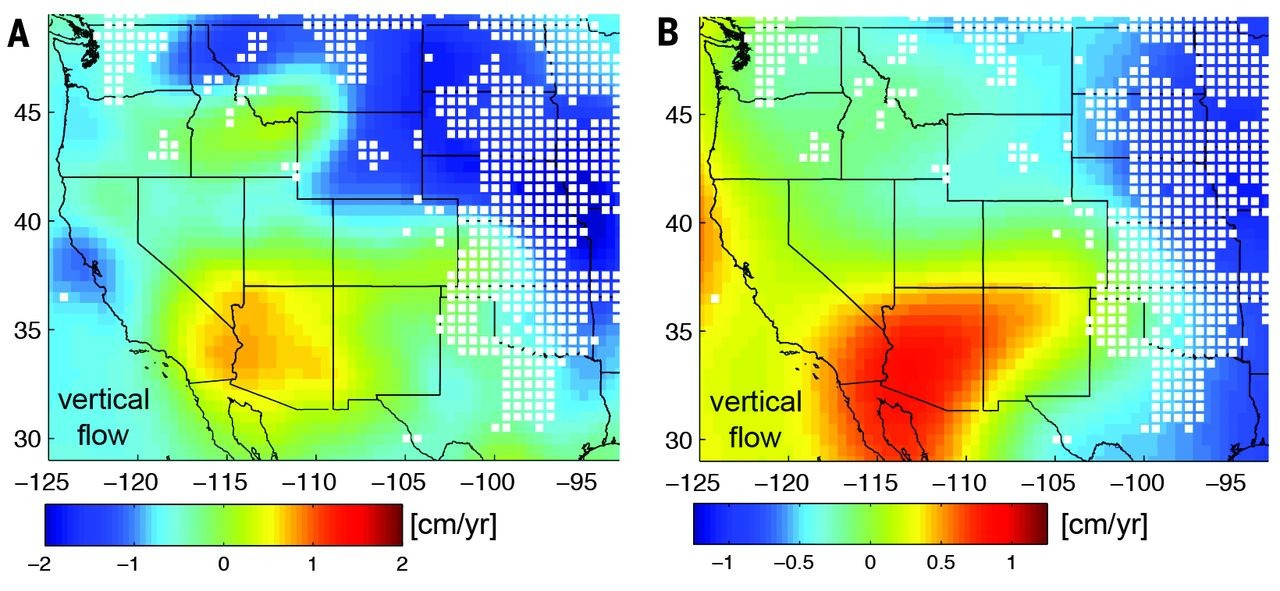
The study published in Science combined experimental findings with seismic data from the USArray, a network of over 2,000 seismic sensors across the United States. Researchers analyzed earthquake-generated waves as they passed through Earth's inner layers.
Changes in seismic wave velocities indicate variations in temperature, density, and partial melting within rocks. The team observed signs of partial melting near the transition zone’s boundary with the lower mantle, especially where mantle flow was downward.
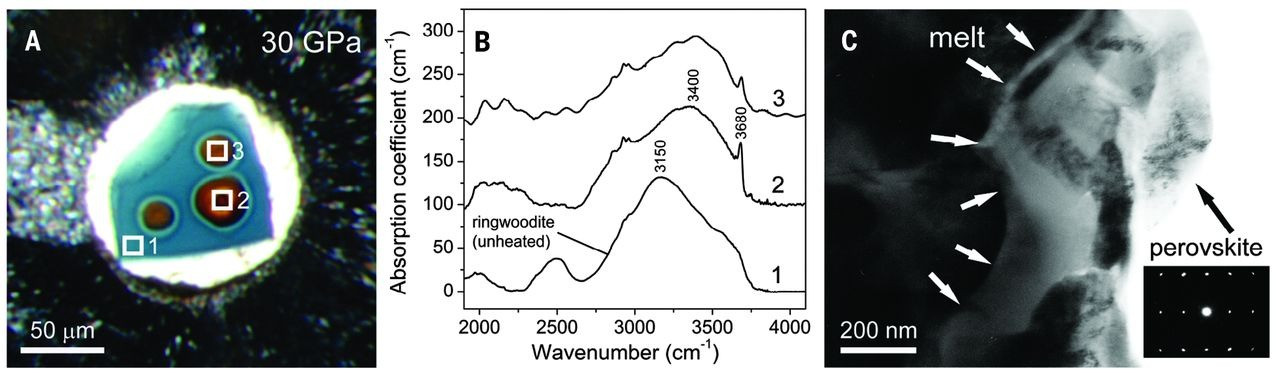
Jacobsen simulated these conditions by compressing synthetic ringwoodite between diamond anvils and heating it to mantle temperatures. This produced minor melting at pressures corresponding to the bottom edge of the transition zone, matching seismic signatures detected beneath North America.
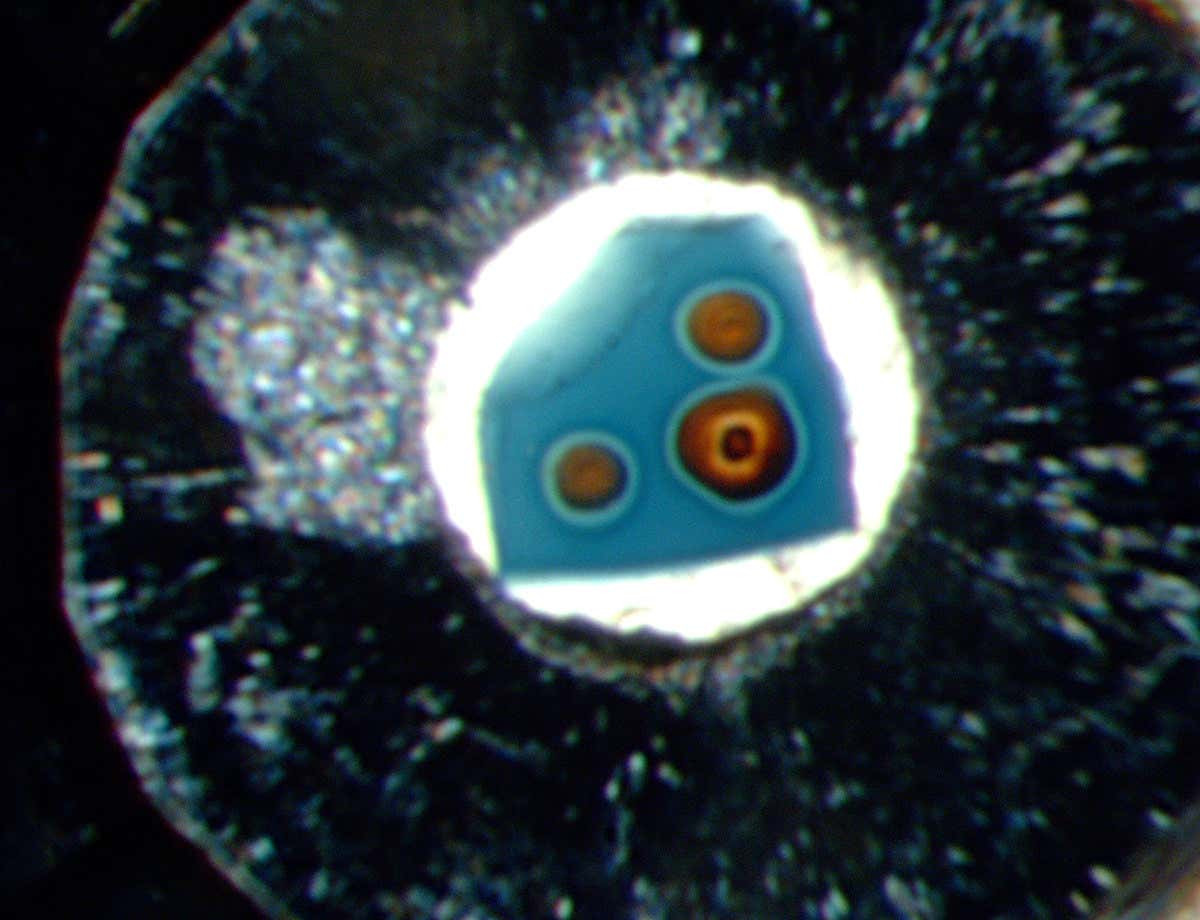
This phenomenon is known as dehydration melting. As ringwoodite descends, it transforms into minerals less capable of holding water, releasing excess hydrogen and lowering the melting point of surrounding rock.
“When water-rich rock moves from the transition zone into the lower mantle, it needs to release its H2O, triggering slight melting,” explained Brandon Schmandt, a seismologist from the University of New Mexico, in the Northwestern report. “This process is dehydration melting.”
Only a small amount of melt—around one percent—is enough to slow seismic waves detectably. The seismic observations revealed melting at depths aligned with ringwoodite’s transformation into lower mantle minerals beneath the United States.
Diamond Inclusion Yields Direct Proof of Water-Bearing Ringwoodite
Complementing these findings, a separate study unearthed a physical fragment of water-laden ringwoodite embedded within a diamond. Led by Graham Pearson of the University of Alberta, the team analyzed a minuscule diamond found in Juína, Brazil, containing microscopic ringwoodite.
Formed deep within Earth and transported to the surface via volcanic eruptions, the diamond’s robust structure shielded the inclusion during ascent. Without this protection, ringwoodite would transform into other minerals as pressures dropped, eliminating evidence for study.
Examination revealed the mineral inclusion contained about 1.5 percent water by weight, providing direct confirmation that mantle ringwoodite naturally stores water. This research appeared in Nature shortly before the lab and seismic report was published in Science.
Pearson later noted another hydrous ringwoodite crystal discovery: “Since our initial report, we have found an additional ringwoodite crystal containing water, further solidifying the evidence,” he remarked.
Frank Brenker, a geoscientist at Goethe University Frankfurt and a member of the diamond research group, emphasized that diamond inclusions reveal deep Earth materials inaccessible by drilling. These pristine samples preserve crucial data about the mineralogy and chemistry of Earth’s interior.
Together, these discoveries confirm that water is stored in the mantle transition zone—the area between the upper and lower mantle. Seismic evidence of melting, experimental validation of dehydration melting, and physical ringwoodite samples combine to show that this hidden water reservoir exists deep inside our planet.
- Categories:
- Science



0 comments
Sign in to Comment