
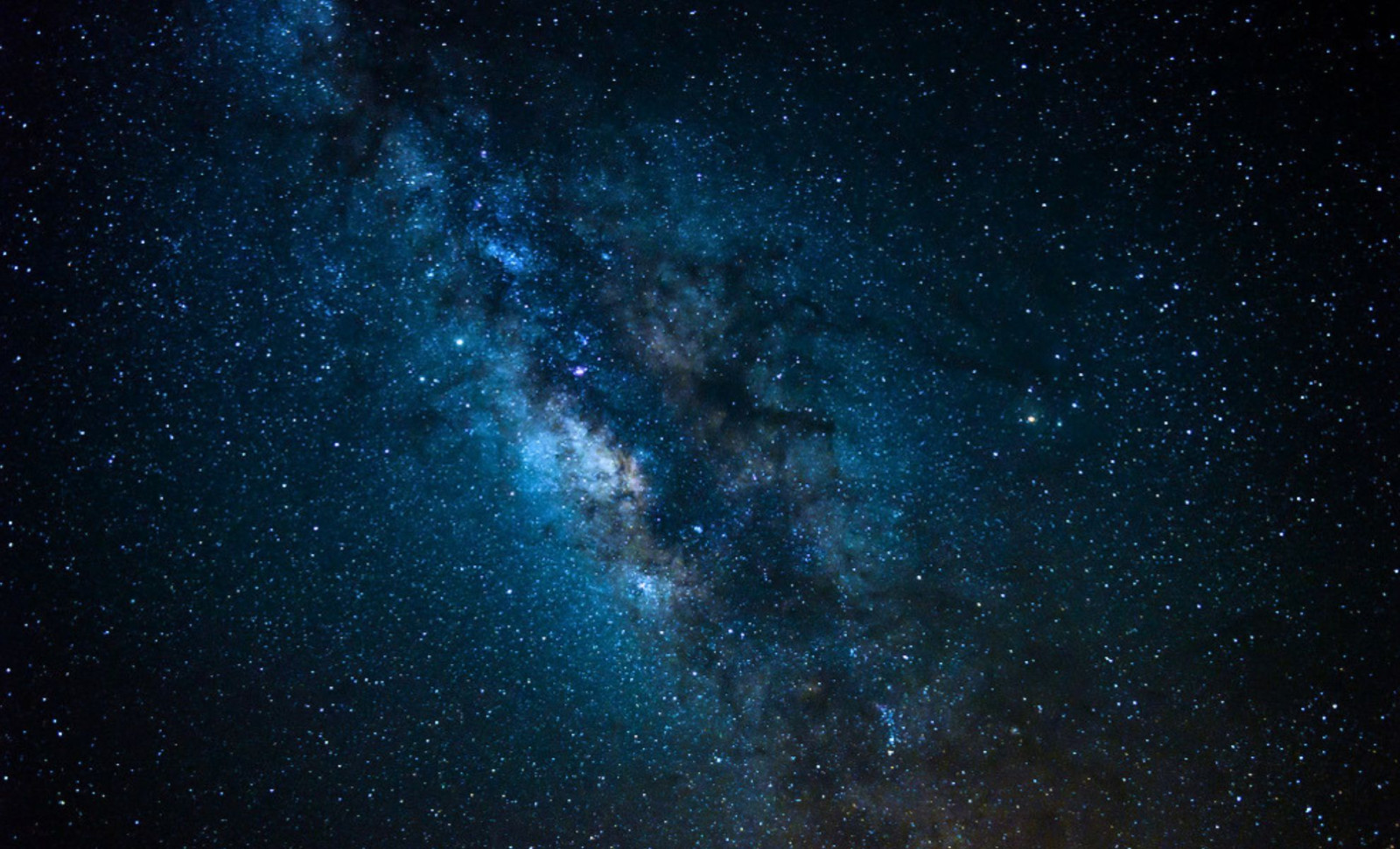
Researchers have spotted erythrulose, a naturally occurring four-carbon sugar commonly found in raspberries, within a dense cloud of gas and dust close to the Milky Way’s core. This molecule was detected in the molecular cloud G+0.693−0.027, situated roughly 26,745 light-years away from Earth, using two advanced radio telescopes located in Spain.
The paper published in Nature Astronomy marks this as the inaugural detection of a sugar molecule in the interstellar medium, the diffuse material found between stars. This breakthrough demonstrates that complex sugars can form through non-living chemical processes well before the emergence of planets or life.
Although erythrulose isn’t a sugar that makes up DNA or RNA backbones, it can transform into related sugars under certain circumstances and participate in reactions that create ribonucleotides, essential components for RNA construction. Its presence within a molecular cloud adds to mounting evidence that compounds necessary for prebiotic chemistry can originate in space.

Radio observatories pinpoint sugar’s molecular signature
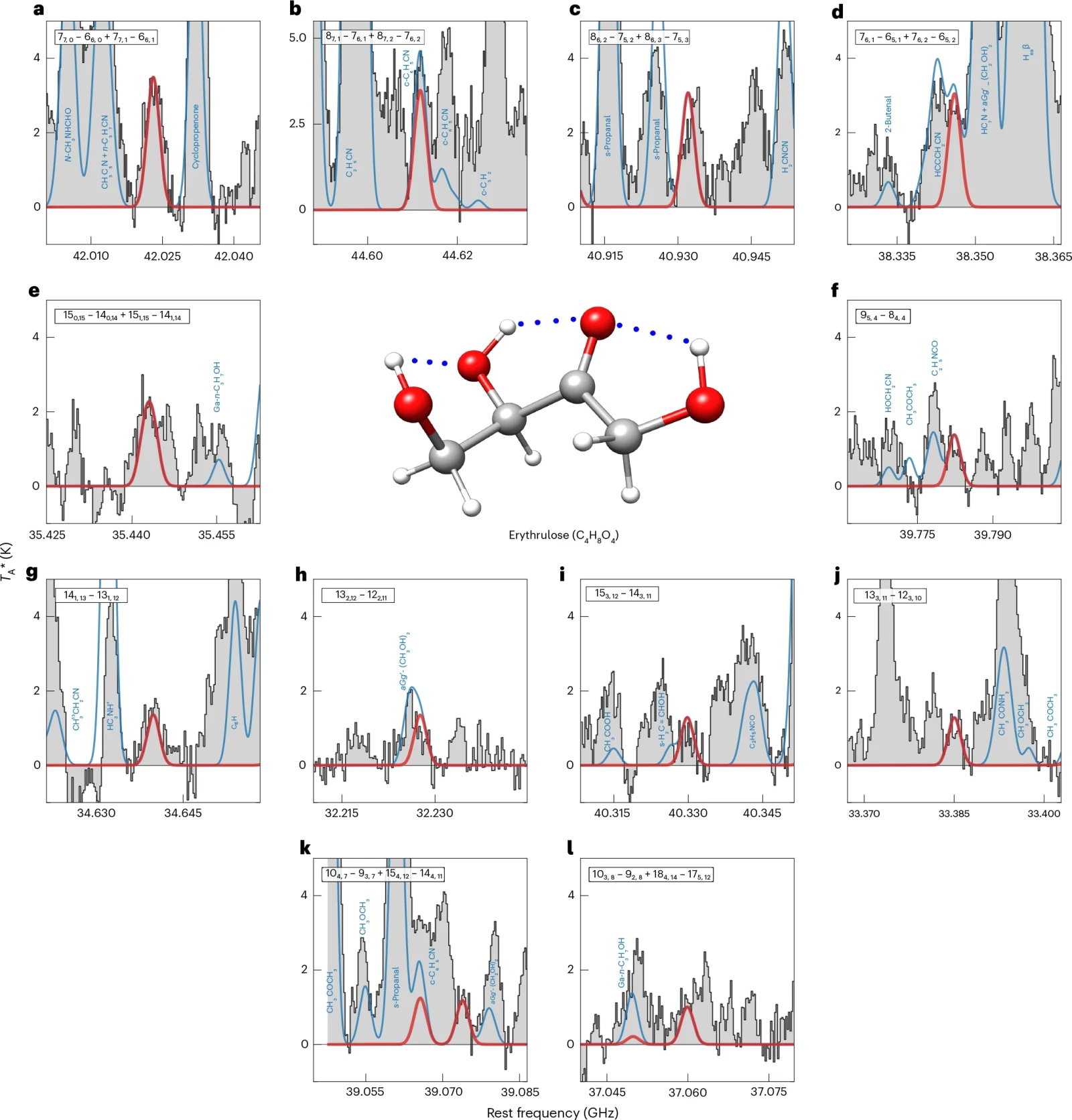
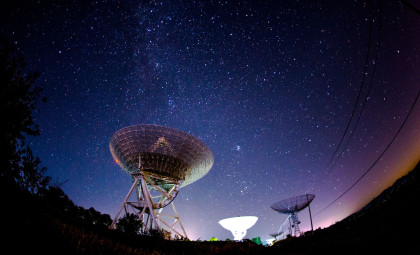
Using the Yebes 40-meter and IRAM 30-meter telescopes, astronomers detected radio emissions associated with erythrulose’s rotation. Molecules absorb and emit radio waves at characteristic frequencies, producing distinct patterns that serve as chemical fingerprints.
The scientists identified 12 emission line groups that matched both lab measurements and theoretical models for erythrulose. Because molecular clouds contain numerous compounds generating overlapping radio signals, the team vetted over 180 molecules before confirming the sugar’s spectral pattern.
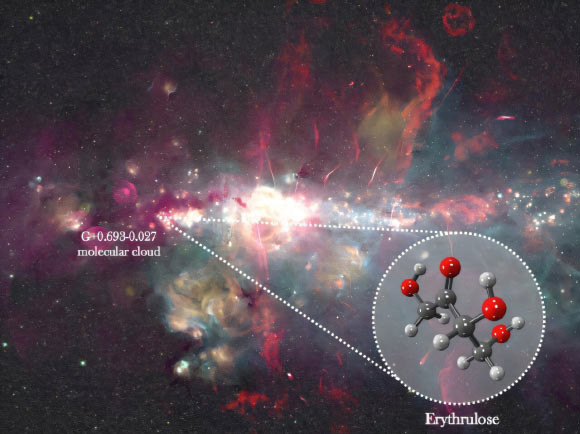
Erythrulose’s chemical formula is C4H8O4, consisting of four carbons, eight hydrogens, and four oxygens. With 14 atoms, it stands as the largest non-ring molecule detected in interstellar space. It also represents the first interstellar molecule known to contain four oxygen atoms and only the second chiral molecule observed beyond our solar system.
Chirality means the molecule exists in two mirror-image forms, just like left and right hands. This property holds significance in biology, as living organisms typically prefer one form over the other. While the observations couldn’t specify which chirality was present, they confirm that chiral molecules can develop under the harsh conditions of space.
Formation likely occurs on frozen dust grains
Chemical simulations suggest that erythrulose forms on tiny ice-coated dust particles, where molecules can accumulate and react despite the extremely cold, sparse environment. Some of the sugar then escapes from the ice into the surrounding gas, where radio telescopes detect its signature.
The formation pathway probably begins with simpler two-carbon molecules like glycolaldehyde and ethylene glycol, substances already found in space. The models indicate these smaller compounds can chemically combine on dust surfaces to build the four-carbon structure of erythrulose without any biological agents.
Interestingly, researchers found erythrulose to be at least eight times more prevalent than two similar three-carbon sugars—glyceraldehyde and dihydroxyacetone—in the same observations. Surprisingly, the smaller sugars were not detected despite sensitive searches capable of picking up faint signals.
“This discovery challenges the current astrochemical assumption that molecules grow sequentially by adding carbon atoms,” said lead researcher Izaskun Jiménez-Serra in a news report.
Different molecules might form, fragment, or reattach to icy grains at varying rates. Additionally, some molecules could cycle between gas and solid phases, possibly explaining why a larger sugar is easier to detect than simpler ones.
Interstellar sugars support ideas about life’s origins
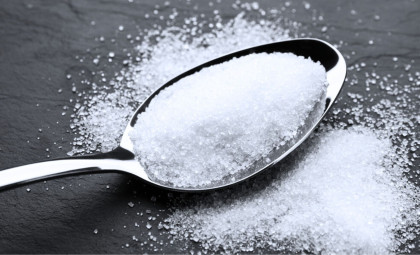
Sugars serve multiple functions in living organisms, from providing energy to forming parts of genetic molecules. For example, ribose is a sugar in RNA, and deoxyribose appears in DNA. Erythrulose has a different structure but falls within the broader family of sugars.
In aqueous environments, ketose sugars such as erythrulose can isomerize, rearranging their atoms to form related aldose sugars. This isomerization process does not alter the overall formula but changes the molecule’s arrangement. The study highlights erythrulose’s potential role in chemical mixtures used to synthesize RNA building blocks.
Previously, scientists discovered complex sugars in meteorites and asteroid Bennu samples. While glycolaldehyde was observed in space, it is not classified as a true sugar. Erythrulose stands as the first authentic sugar molecule directly detected in interstellar space.
“Detecting erythrulose is thrilling because it raises the possibility of eventually identifying other sugars like ribose, a crucial RNA component,” said co-author Carlos Briones.
Cosmic sugars may seed nascent planetary systems
Molecular clouds are cold nurseries for stars and planets. Organic molecules formed on icy dust grains can become part of protoplanetary disks and may later be preserved in comets, asteroids, and other small bodies as planets form.
Uncovering erythrulose within such a cloud confirms that complex sugars exist before planetary systems emerge. This lends support to the idea that basic organic materials can be delivered to young planets during their formation.
This discovery doesn’t claim that erythrulose sparked life on Earth or directly produced RNA, but it does identify a natural source of extraterrestrial organic compounds capable of reaching planets via comets and asteroids. The study’s models and laboratory data suggest radiation and surface chemistry create sugars in interstellar ices.
On Earth, erythrulose appears in small amounts in red raspberries and is used in sunless tanning products. Its radio signature in G+0.693−0.027 provides evidence of abiotic sugar synthesis occurring in a chilly cloud near the heart of our galaxy.
- Categories:
- Science





0 comments
Sign in to Comment