
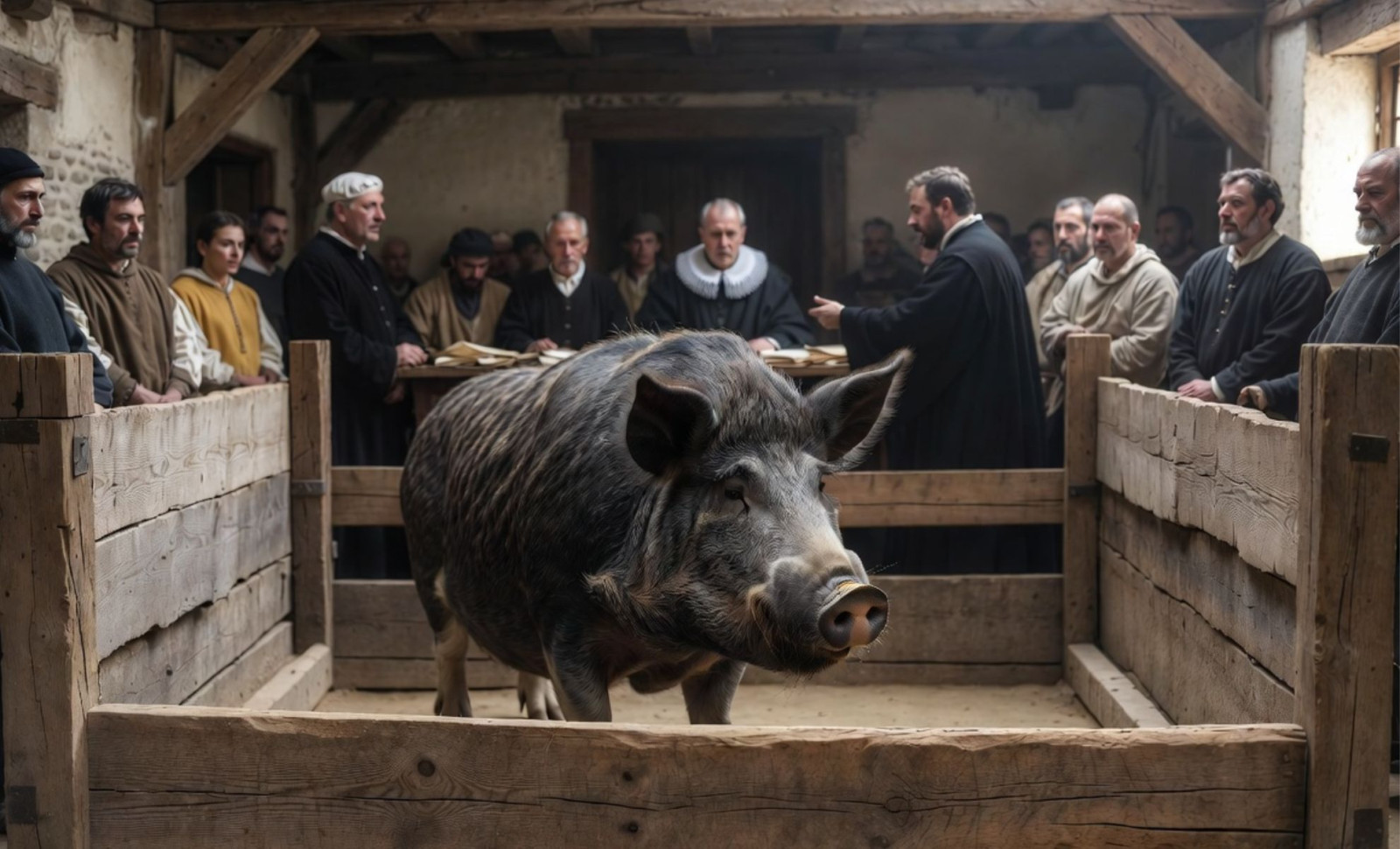
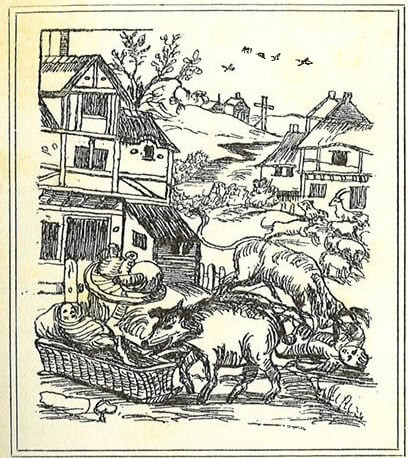
On January 10, 1457, the court in Savigny-sur-Étang deliberated over the fate of a sow and her six piglets, found near the body of a five-year-old boy named Jehan Martin. Witnesses testified that the sow and her offspring were stained with the child’s blood and had been feeding on his remains. The sow was condemned to death, while the piglets were considered separately due to uncertain involvement in the incident.
This trial was part of more than 200 recorded animal trials across premodern Europe. Various animals, including horses, dogs, donkeys, insects, and snails, faced legal action, with domestic pigs being the most frequent defendants. Research published in the journal Sophia reveals that pigs made up over a quarter of nonhuman trials and more than half of all animal-related legal cases in medieval France.
These trials took place within formal legal frameworks instead of informal retribution. Courts heard witnesses, recognized appropriate jurisdiction, and issued formal verdicts. The Savigny case involved a complete legal team, including a judge, prosecutor, legal advisor, court clerk, witnesses, and an executioner, firmly embedding it in Burgundy’s judicial system.

Structured Procedures Governed Medieval Pig Trials
The court records from Savigny detail the involvement of key officials such as Judge Nicolas Quarroillon and prosecutor Huguenin Martin, acting for Katherine de Barnault, Lady of Savigny. A legal counselor affiliated with the Duke of Burgundy and a public notary who preserved the documentation are also mentioned, illustrating that medieval pig trials operated through the same judicial personnel and formalities as human cases.
The animals themselves were not individually named in the historical record. Historian Sven Gins assigned the sow the fictional name “Sustitia,” blending Latin terms for pig and justice, during his study. He clarified that this name was his own creation, absent from the original court documentation.
The trial carefully differentiated types of evidence. While the sow received a sentence to be hanged upside down, the piglets were not automatically condemned. Since the court lacked proof they had harmed the child, it gave Jehan Bailly, their caretaker, a chance to assume responsibility for their conduct.
Bailly declined this offer. Consequently, the court placed the piglets under the supervision of the Lady of Savigny as opposed to sentencing them to death. This action reveals the court’s practice of evaluating each animal individually, rather than condemning them as a collective.
Unrestricted Pigs Posed Real Threats in Medieval Communities
Pigs were widely kept in medieval towns and villages because they provided meat and helped dispose of food waste. Many were permitted to roam freely through streets, yards, and communal areas in search of scraps, bringing these strong animals into frequent contact with humans, including children.
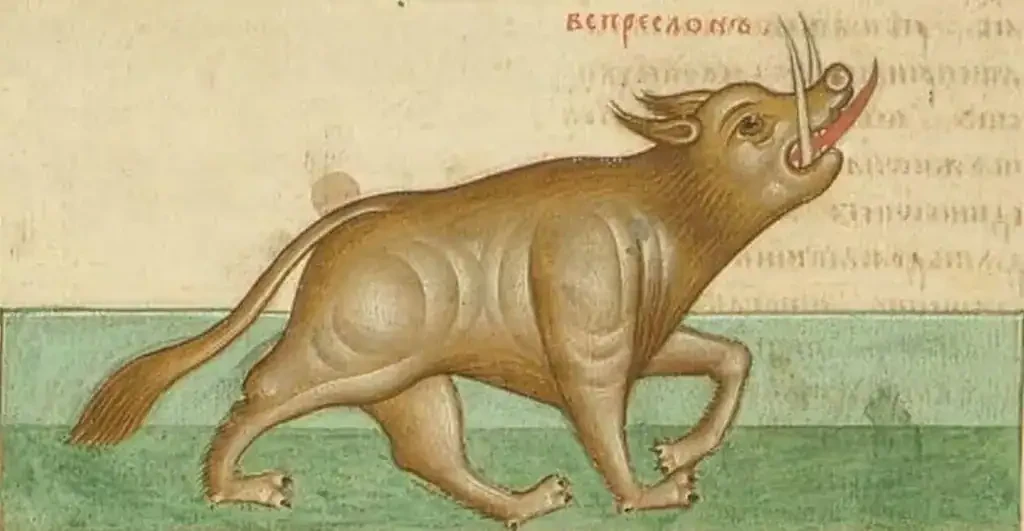
The Popular Science report on pig trials in France notes that medieval pigs resembled wild boars more so than today’s farmed breeds. Their natural strength, powerful teeth, and omnivorous appetite made them capable of inflicting serious harm. Accounts of children being killed by pigs reflect a genuine and recognized hazard in everyday medieval life.
Similar instances were reported across France. For example, in 1379, pigs in Saint-Marcel-lès-Jussey were implicated following the death of a swineherd’s child. Another case from 1386 involved a sow in Falaise accused of killing a boy. The Falaise pig was notably outfitted in human clothes before its public execution—a detail that became one of the most famous stories linked to animal trials in medieval France.
The presence of livestock inside communities also raised the issue of human oversight. Courts could inquire whether owners had allowed animals to roam dangerously, whether warnings had been overlooked, or whether a third party caused the harm. These trials created official records and provided authorities with a legal process for uncovering the truth.
Variations in the Form of Animal Legal Proceedings
Animal prosecutions did not always follow a uniform process. Secular courts typically handled cases involving individual domestic animals accused of injuring or killing people. These trials often involved pigs, horses, dogs, or cattle, potentially resulting in execution, seizure, or other directives regarding the animal.
By contrast, church courts addressed different concerns. Ecclesiastical tribunals sometimes prosecuted groups of insects or other creatures blamed for damaging crops and threatening the community’s welfare. Such cases occasionally involved legal representatives and religious edicts demanding the animals’ removal from certain areas.
Gins warns against viewing these animal trials as a single tradition. Their methods varied depending on the type of animal, offence, time, place, and legal authority. Some addressed specific fatal attacks, while others dealt with widespread infestations that couldn’t realistically be prosecuted on an individual basis.
Historians have suggested multiple motivations behind these trials, including religious beliefs, revenge, deterrence, maintaining public order, and managing dangerous animals. However, the Sophia study dismisses a one-size-fits-all explanation, instead describing these trials as "local experiments" where Christian societies used legal systems to negotiate human-animal relationships.
The Role of Pig Trials in Reinforcing Human Legal Authority
At Savigny, the sow was prosecuted for behavior that modern law would not consider criminal, as contemporary definitions of guilt require cognitive awareness and intent. Medieval judicial systems allowed punishment without these modern criteria of legal personhood.
This did not equate the pigs with humans. The human actors were documented with names, professions, and social ranks, while the animals remained unnamed property under ownership and control. The surviving piglets’ transfer to the Lady of Savigny further emphasizes their legal status as possessions.
Gins introduces the concept of Homo Legifer, or “Legislative Human,” highlighting the idea that humans distinguish themselves through creating and enforcing moral laws. In this context, bringing animals before the court reinforced the divide, placing animals under human-established legal authority.
The study relates this framework to human exceptionalism, which asserts humans hold a unique status because of their capacity for reason, morality, and justice. The Savigny trial provided a method to document the child’s death, assess the animals involved, and enforce a public judgment under Burgundy’s established legal system.
- Categories:
- News







0 comments
Sign in to Comment