
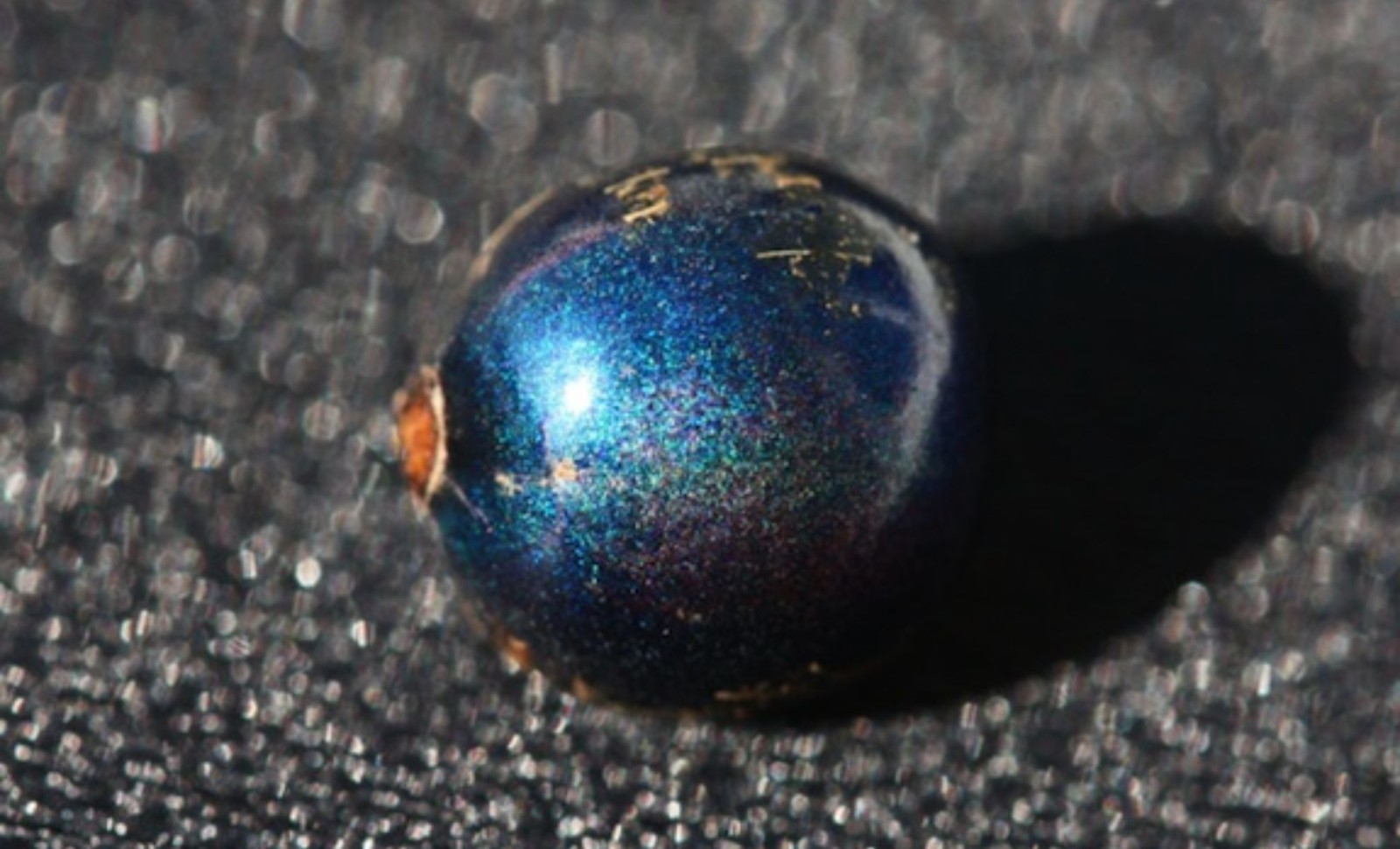
Deep within the rainforests of Australia and Southeast Asia grows a remarkable tree known as the blue quandong, or Elaeocarpus angustifolius. Its fruit dazzles with an intense cobalt shade that often makes observers question whether it has been artificially colored.
Surprisingly, this striking blue does not come from traditional pigments. Rather, it arises from a fascinating natural process known as structural coloration, as revealed by research featured in the Proceedings of the National Academy of Sciences.
Structural Coloration: The Quandong’s Visual Mastery
The blue quandong fruit is a wonder of natural optics, shimmering with a vividly intense blue hue yet containing no blue pigment, unlike familiar fruits such as blueberries. The PNAS study confirms that attempts to extract any pigment producing this hue were unsuccessful.

“We realized that there are loads of blue pigments in nature, as well as ‘tricks,’ or ways that nature makes blues without pigments,” study co-author and University of Bristol physicist Rox Middleton.
When researchers tried pigment extraction, all they found was a faint gray. The vibrant blue is produced by the fruit’s microstructural design: layers of tiny structures in its skin that selectively reflect and magnify specific wavelengths of light.
“They [the colorants] scatter blue and UV and they let the other colors pass through without absorption,” explained Middleton “That’s why it’s so important that there are dark pigments underneath to ‘mop up’ the rest of the light. If there was a bright pigment or white scattering material underneath, that light would come through, and the color would look mixed or washed out.”
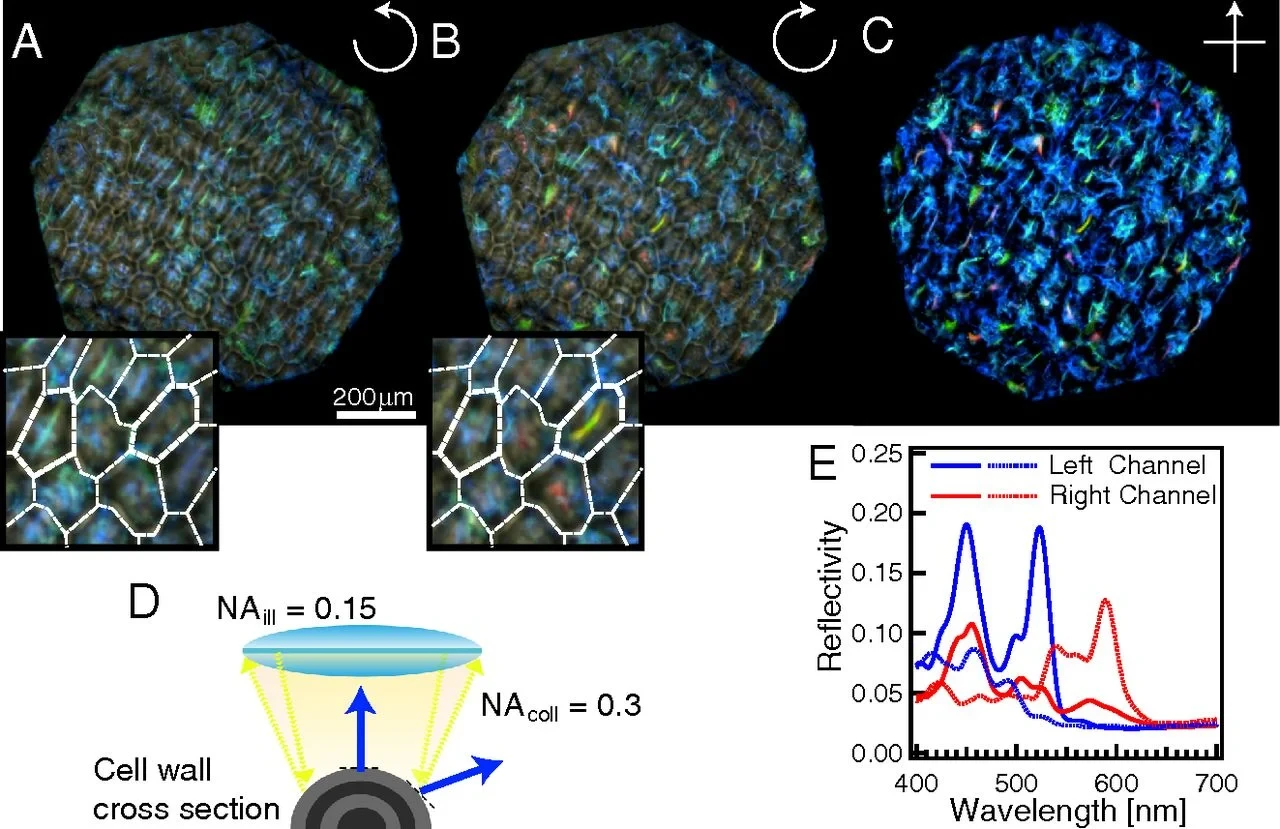
Why the Blue Hue? Drawing Birds in the Dense Forest
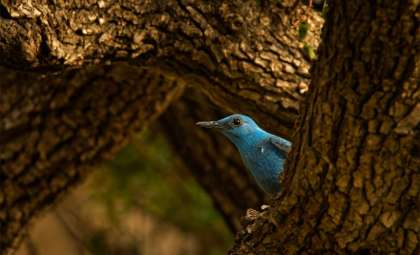
Why would this fruit adopt such a vivid blue color amid the jungle greenery? The answer lies in its strategy for survival. Unlike many fruits that utilize reds or oranges to signal ripeness, this fruit leverages its striking shade to attract birds, creatures with keen color vision extending into ultraviolet ranges. This allows the fruit to remain highly visible even in the rainforest’s dim undergrowth.
By catching the attention of birds, the fruit ensures its seeds are dispersed far and wide after being consumed, fostering the species’ continued growth. This vivid color stands as an effective long-range visual cue in nature’s marketing tactics.
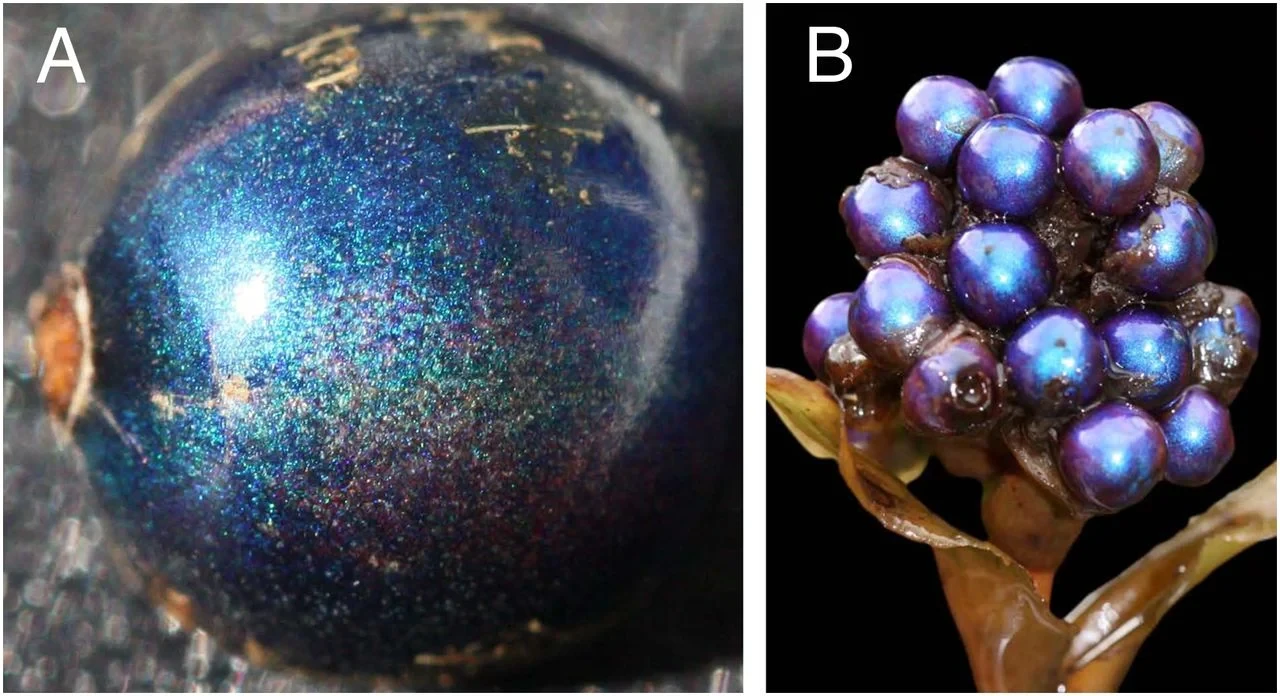
Rethinking Color Creation: From Pigments to Physical Structures
Historically, scientists have credited pigments, such as anthocyanins, with generating the bright colors of ripe fruits and flowers designed to attract animals. Forbes highlights how this extraordinary fruit challenges this notion by showing that structural coloration—using the physical architecture of the surface to manipulate light—can produce hues that are equally or more vivid.
The tree’s approach to color production through structural means may have evolutionary benefits by reducing the energy and chemical cost associated with pigment synthesis. This optical strategy could represent a more sustainable adaptation for plants facing resource constraints in their ecosystems.
- Categories:
- Nature






0 comments
Sign in to Comment