
Recent investigations suggest that some of the massive black holes detected by the James Webb Space Telescope (JWST) in the early cosmos might have been overestimated in size. The study proposes that relatively smaller black holes undergoing rapid growth could emit signals deceptively indicating greater mass.
Since the start of its mission, JWST has spotted black holes residing in galaxies formed within the universe's first billion years. These objects are identified by the radiation emitted as matter falls toward them, heating up in the process.
Typically, black hole mass is inferred by analyzing the velocity of gas orbiting nearby—the faster the gas moves, the stronger the gravitational pull, implying a larger black hole. This long-standing approach yielded puzzling results as some early universe black holes appeared far larger relative to their host galaxies than those in the local universe.

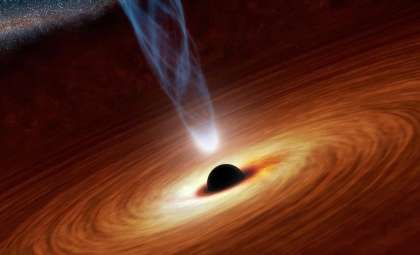
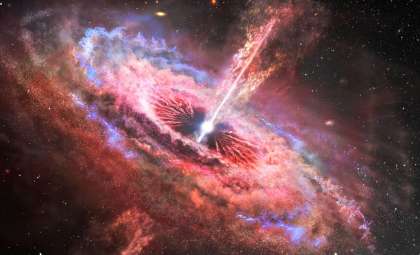
Adding to the enigma, many of these distant black holes exhibit nearly undetectable levels of X-ray radiation. Normally, active black holes emit X-rays from a zone of highly energized plasma called the corona, which lies above the spinning accretion disk. The scarcity of X-ray signals raised doubts about the accuracy of their initially calculated enormous masses.
Introducing a New Perspective on Early Black Hole Dimensions
An international research team led by Alessandro Trinca from the INAF Astronomical Observatory of Rome explored whether the unconventional feeding mechanisms of these black holes could clarify the conflicting observations. Published on June 19 in Astronomy & Astrophysics, their model integrates super-Eddington accretion theories with sophisticated simulations of accretion disk light signatures.
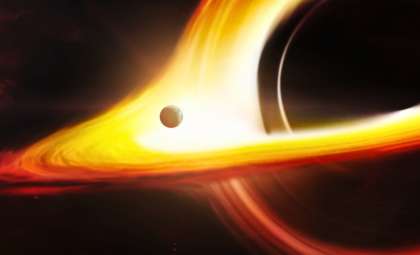
Super-Eddington accretion describes a regime where black holes ingest matter faster than the theoretical cap set by radiation pressure, leading to unique alterations in emitted radiation due to the intense inflow of material.
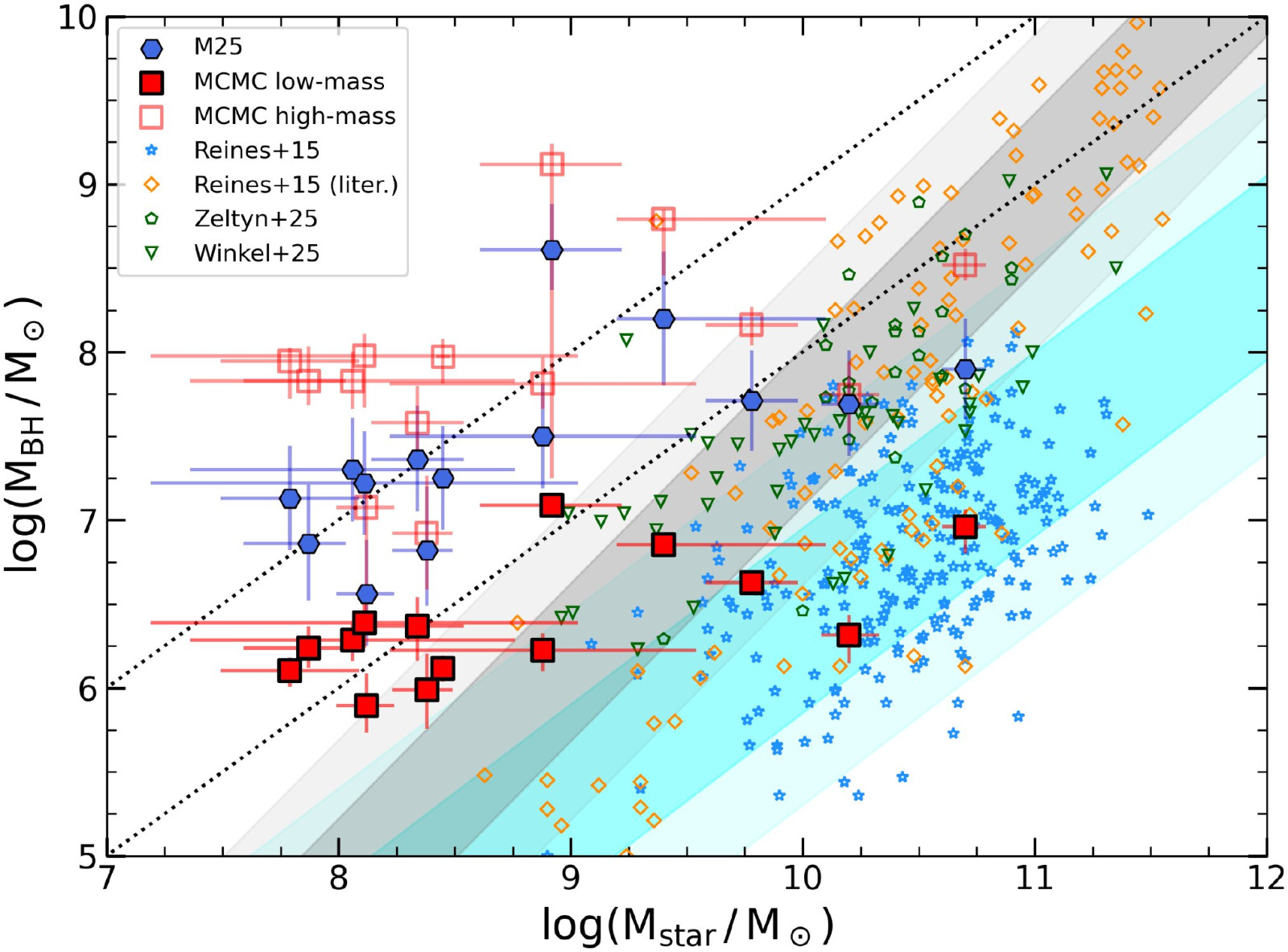
The researchers suggest this scenario accounts for both the faint X-ray emissions and unexpectedly high mass estimates. Variations in emission lines, which track gas movement around these black holes, could mislead astronomers into overcalculating their true masses.
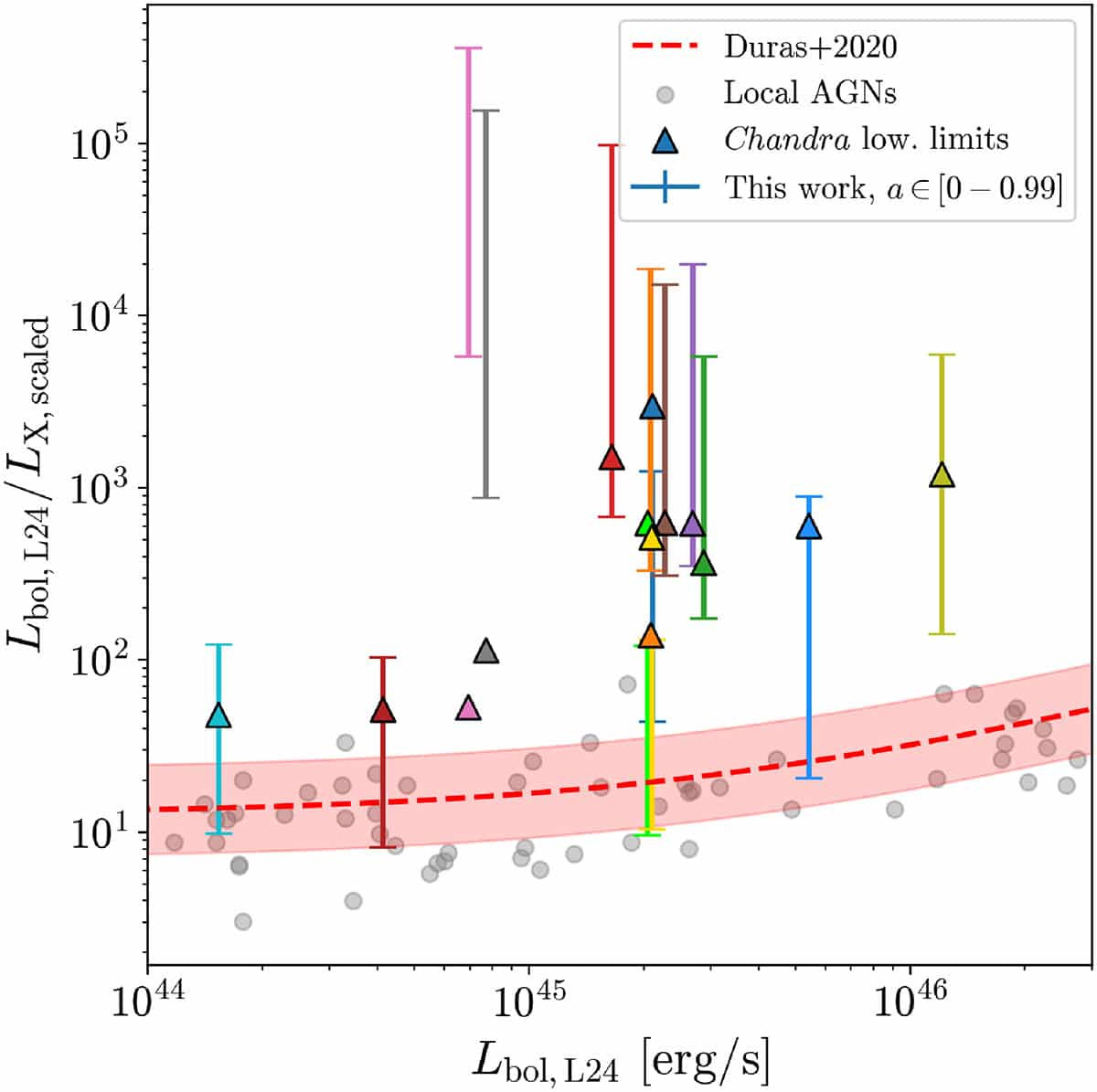
Applying the model to 14 previously studied black holes lacking X-ray detection, they found dual explanations for each case.
Rapidly Feeding Small Black Holes Mimic Giants
One possibility describes genuinely huge but mostly dormant black holes containing vast amounts of mass but feasting on limited material, resulting in subdued radiation.
The alternative scenario posits smaller black holes undergoing vigorous super-Eddington growth. This model naturally explains low X-ray output, as intense accretion can inhibit the formation of the hot corona needed to generate X-rays.
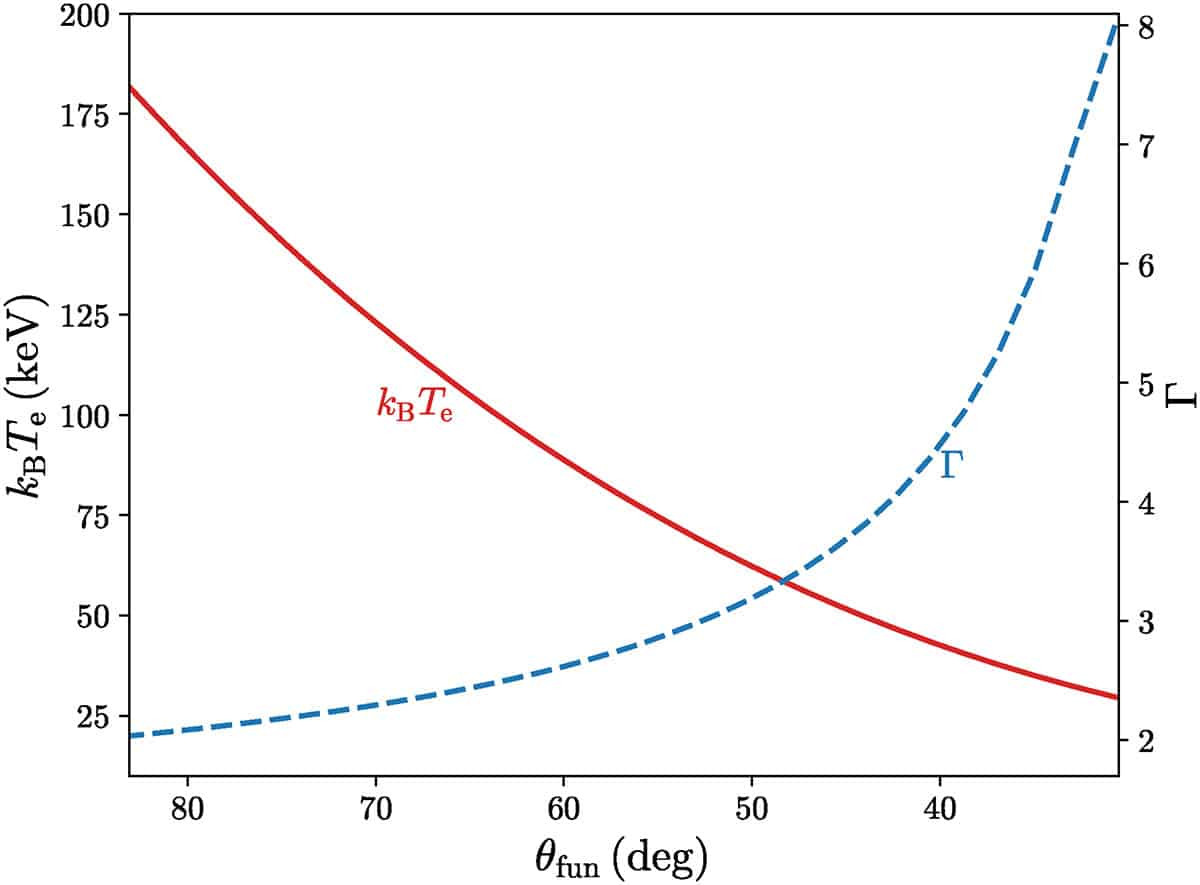
Statistical analysis favored the latter for nearly all 14 studied sources. The authors noted that highly accreting systems tend to produce a redder intrinsic spectrum, consistent with other observed characteristics.
This finding offers a compelling solution to a key puzzle in black hole evolution. If these early black holes are actually smaller but growing rapidly, the need to invoke extremely accelerated growth rates to explain their masses diminishes.
Upcoming Observations Could Provide Definitive Answers
The study's authors emphasize that their model does not rule out all alternatives for the missing X-ray emissions. It doesn’t consider the potential presence of thick gas clouds that might absorb X-rays before detection. They caution that:
“It should also be emphasized that our results assume the absence of extremely high gas column densities capable of absorbing the X-ray emission from the AGN.” This means additional observations will be needed to separate the different possible scenarios.
Future research harnessing detailed spectral data across various wavelengths will improve accuracy in black hole mass and accretion rate calculations. These insights will enhance our understanding of the distant black holes revealed by the JWST.
- Categories:
- Physics




0 comments
Sign in to Comment