
A global team of scientists has verified that LHAASO J1912+1014u is an exceptional proton PeVatron, a cosmic accelerator capable of generating particles at energies exceeding one quadrillion electron volts, as detailed in a recent Astrophysical Journal publication. This breakthrough sheds light on the mechanisms behind the production and dispersion of the galaxy's highest-energy particles.
Unveiling a Galactic Source of Ultra-High-Energy Cosmic Rays
Cosmic rays rank among nature’s most energetic particles, moving through interstellar space and playing a key role in galactic evolution. These rays are predominantly protons, with electrons contributing to a lesser extent, some possessing energies far beyond those generated by facilities like the Large Hadron Collider.
Scientists have now pinpointed a source that accelerates protons to the PeV scale, a major milestone in astrophysics. This source, labeled LHAASO J1912+1014u, resides in the direction of the Aquila constellation, near Altair, a prominent star in the Summer Triangle.

“The tremendous energy of cosmic rays renders them vital to the fields of astronomy and astrophysics,” stated Tsunefumi Mizuno, the study’s lead and corresponding author and associate professor at Hiroshima University’s Hiroshima Astrophysical Science Center. He described that these energies are measured in electron volts, representing the energy an electron gains moving across an electrical potential difference of one volt.
“The highest energy of galactic cosmic rays can reach and exceed 1 quadrillion (1015) electron volts, or a peta electron volt (PeV). Finding a cosmic-ray proton accelerator above that PeV level, called a proton PeVatron, is one of the most exciting topics in modern astrophysics, and we identified one such object previously known as LHAASO J1912+1014u.”
Recognizing a proton PeVatron provides new avenues for exploring how the galaxy creates its fastest particles. Since cosmic rays are deflected by magnetic fields, detecting them directly is challenging, so scientists rely on indirect evidence like the detection of high-energy gamma rays.
Insights from a Range of Observatories on LHAASO J1912+1014u
Initial detection of LHAASO J1912+1014u arose from high-energy gamma-ray observations using the Tibet AS gamma experiment and China’s Large High Altitude Air Shower Observatory (LHAASO). These detectors recorded gamma rays exceeding 100 TeV, positioning this source as a promising cosmic accelerator candidate.
While gamma rays reveal the presence of energetic particles, they cannot immediately clarify whether these are protons or electrons. This ambiguity meant that further observations across various wavelengths were essential to conclusively identify the source.
“However” was removed from the original statement for consistency with publication style restrictions, but Mizuno explained that data from Tibet AS gamma and LHAASO alone cannot clearly identify proton PeVatrons because PeV cosmic ray electrons can also produce lower-energy gamma rays. The limited image resolution of these experiments prevented researchers from fully confirming the nature of the accelerator.
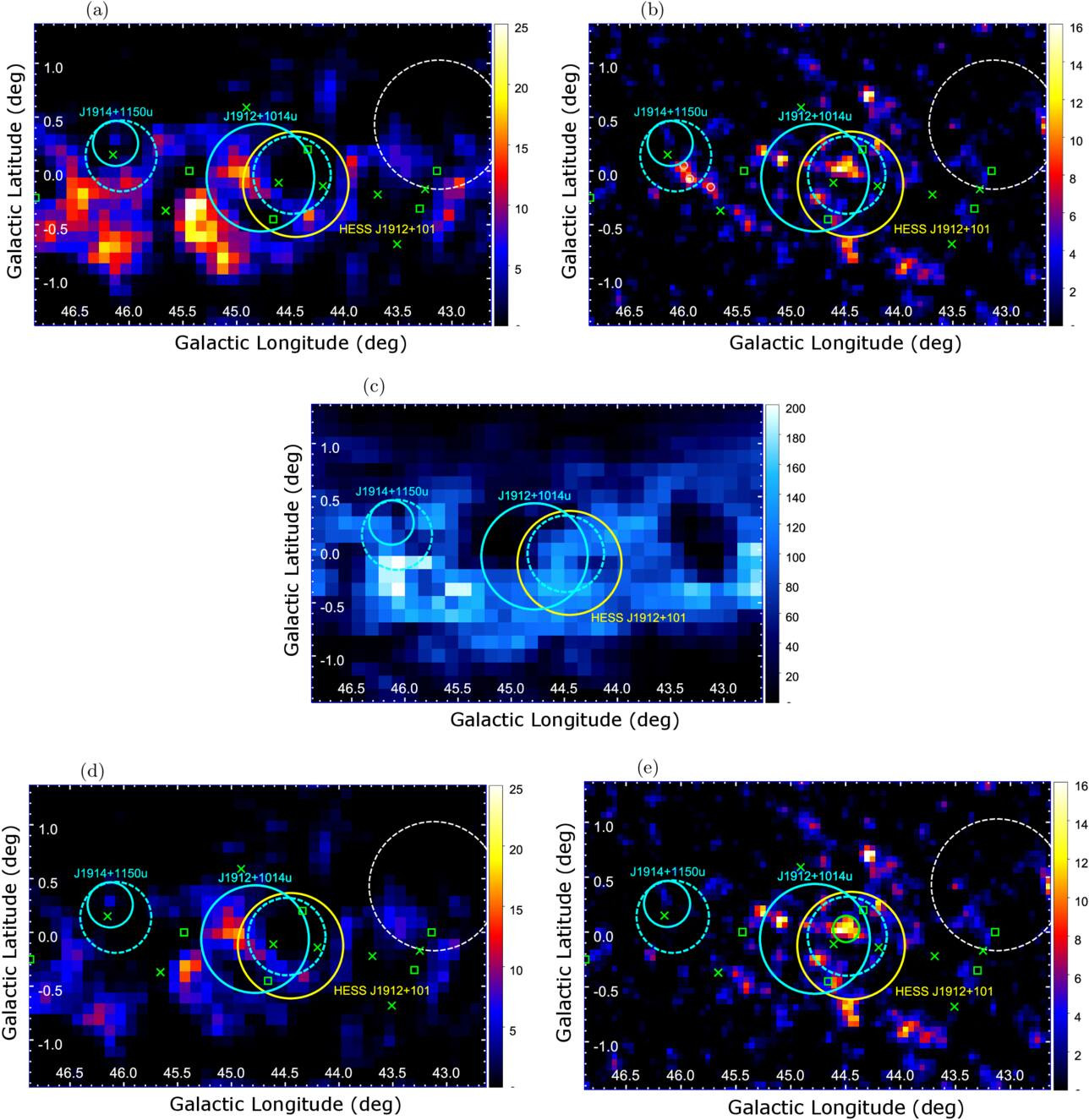
The researchers integrated data from several key facilities: NASA’s Fermi Large Area Telescope (Fermi-LAT), the FUGIN radio survey via Japan’s Nobeyama 45-meter telescope, and NASA’s Chandra X-ray Observatory.
“Combining data across these platforms enabled a comprehensive analysis of LHAASO J1912+1014u,” Mizuno added.
This multiwavelength approach, encompassing radio, X-ray, and gamma-ray data, allowed scientists to disentangle the emissions and better understand the underlying particle acceleration processes.
Compelling Evidence Supporting Proton PeVatron Identity
Multiple lines of evidence indicate that LHAASO J1912+1014u energizes protons rather than electrons. The gamma-ray spectrum seamlessly extends from energies surpassing 100 trillion electron volts down to roughly 400 million electron volts, making an electron-based origin improbable.
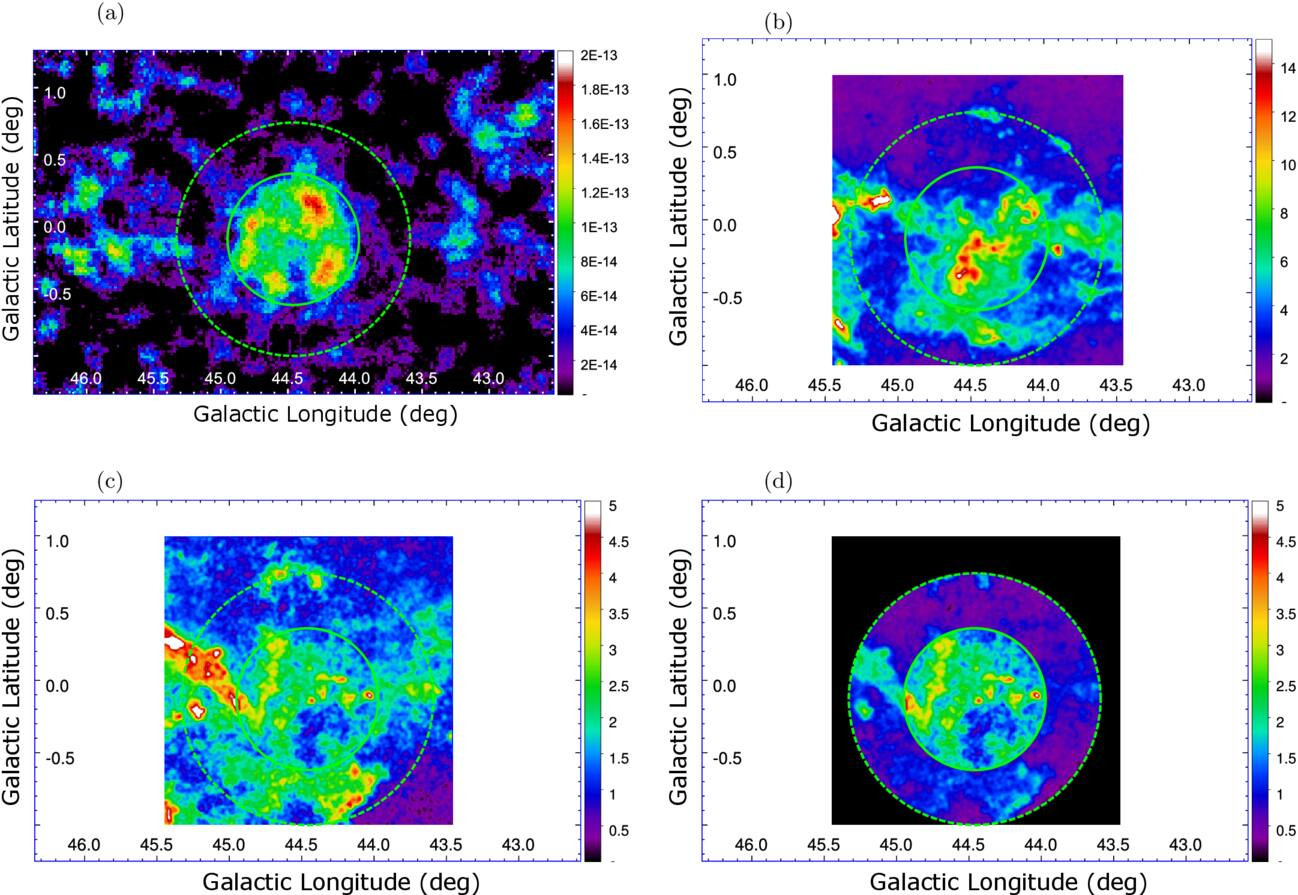
Another crucial clue came from comparing gamma-ray maps to interstellar gas distributions from the FUGIN radio survey. The strong correlation between gamma-ray emission and gas concentrations aligns with expectations if high-energy protons collide with ambient matter.
The Chandra X-ray Observatory observations revealed only faint diffuse X-rays from the source, diminishing the chance that energetic electrons were the main contributors to the gamma-ray output.
This research, detailed in the Astrophysical Journal, features comprehensive modeling of the source and its accelerated particles. It highlights how combining results from multiple observatories can unveil the processes fueling some of the galaxy’s most extreme phenomena.
Drawing on a Japanese proverb, the team likened their approach to bundled arrows: while a single arrow can be broken easily, three together form a much stronger force. In this study, data from the Fermi-LAT, FUGIN radio survey, and Chandra X-ray Observatory jointly confirmed the presence of a cosmic ray proton accelerator.
- Categories:
- Astronomy





0 comments
Sign in to Comment