
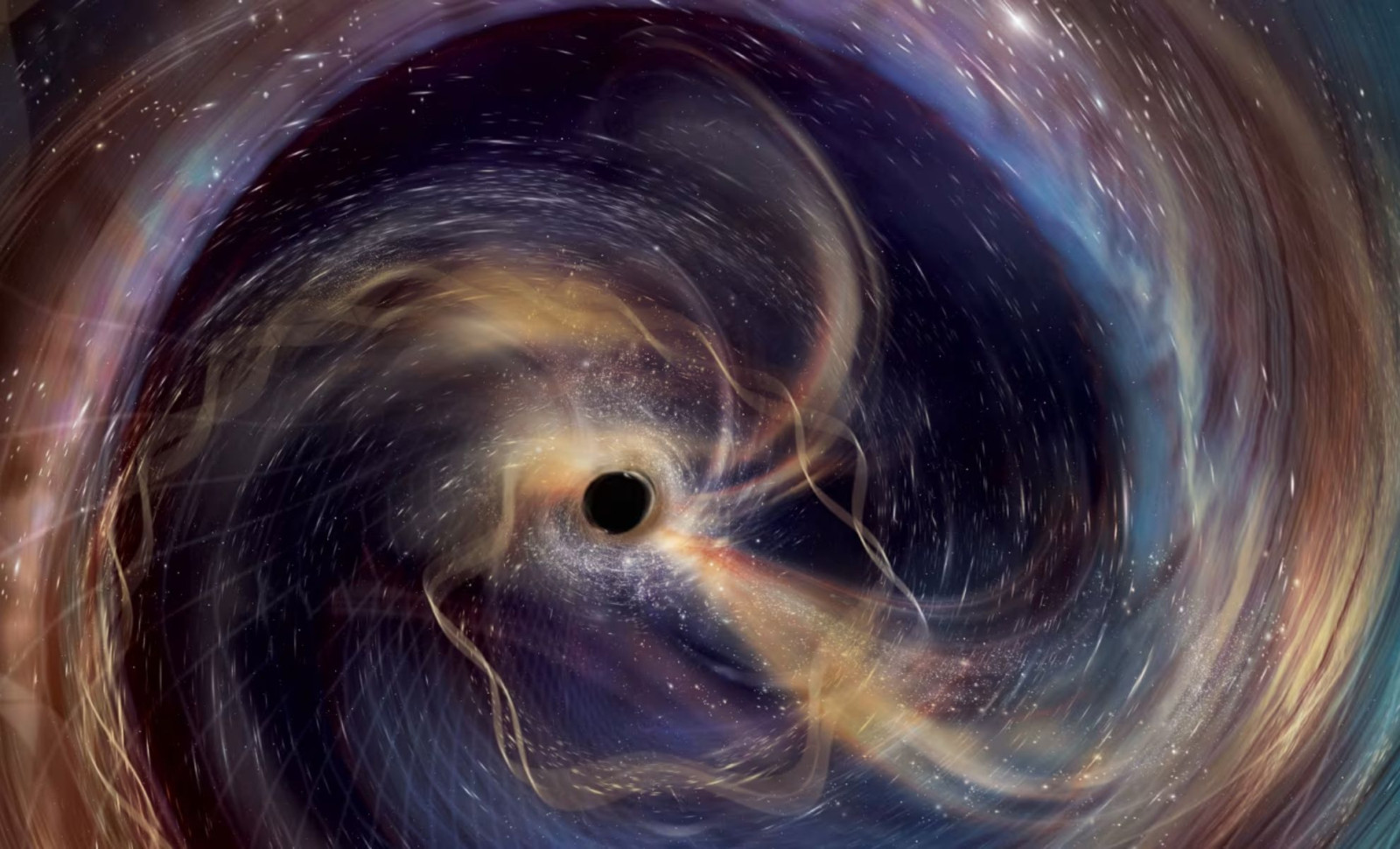
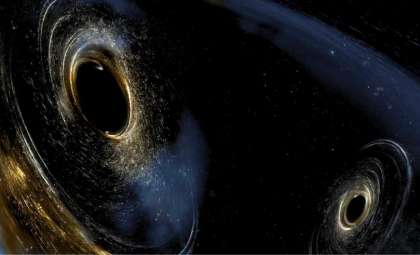
For the first time, researchers have successfully retrieved data from the vicinity of a newly formed black hole’s event horizon by analyzing the most powerful gravitational-wave signal recorded to date. The findings, published in Nature Astronomy, reveal an innovative approach to studying one of the universe’s most extreme environments through observations of the binary black hole collision known as GW250114.
Led by experts from the ARC Centre of Excellence for Gravitational Wave Discovery (OzGrav) and the Australian National University, the study demonstrates that gravitational-wave signals hold far richer information than previously recognized. Revisiting the groundbreaking GW250114 event, the international collaboration identified subtle characteristics that depict events occurring just beyond the event horizon moments after the two black holes coalesced.
An Unprecedented Wave Signals More Insights Than Anticipated
Captured in 2025 by the Laser Interferometer Gravitational-Wave Observatory (LIGO) in the US, GW250114 stands as the loudest binary black hole merger ever detected. Its remarkable intensity enabled scientists to observe nuances inaccessible through weaker signals.

Dr. Ling Sun highlighted that this event’s signal was roughly three times stronger than the initial gravitational-wave detection recorded ten years prior.
“We studied GW250114, the loudest binary black hole signal observed to date, about three times louder than the first gravitational-wave signal detected a decade ago,” Sun said. “Our analysis shows that this exceptionally loud signal can be used as a powerful probe of the remnant black hole’s horizon, allowing us to measure its two fundamental properties: rotation frequency and surface gravity.”
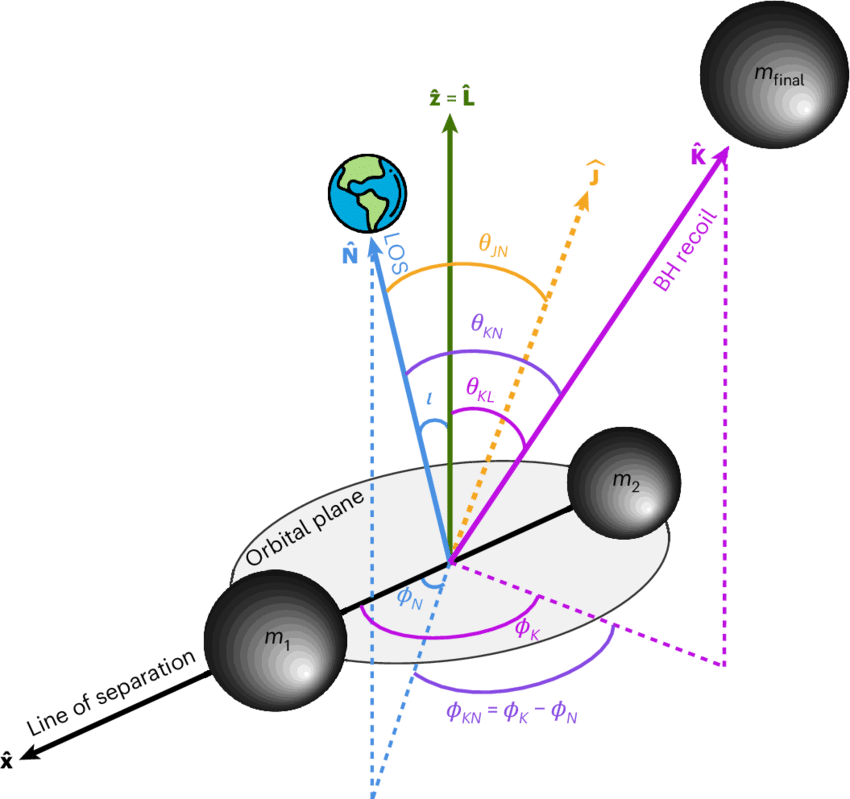
By analyzing portions of the signal previously overlooked in this manner, the researchers successfully gauged the black hole’s rotation frequency and surface gravity.
Unveiling Subtle Waves Near the Black Hole’s Boundary
Instead of concentrating solely on the most prominent component of the gravitational-wave signal, the team isolated a fainter element called direct waves. According to the published study, this aspect of the waveform had been poorly characterized until now.
Neil Lu, a doctoral researcher at OzGrav and Australian National University, noted that the new analytical technique enabled them to distinguish this concealed signal from the overall gravitational-wave pattern.
“We measured the last sound the black holes made when they crashed. Hidden within that signal is a small component, called direct waves, that had not previously been well understood,” Lu explained. “Our new analysis allows us to decipher this component and extract unique information from close to the event horizon.”
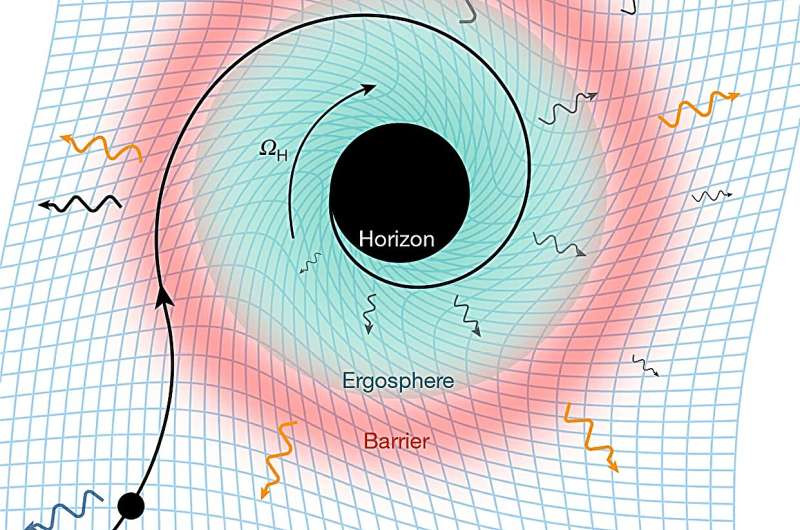
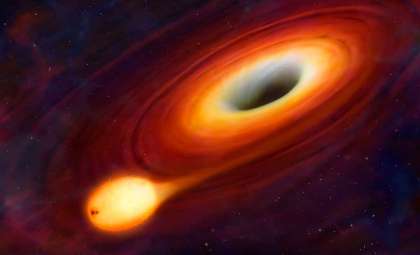
The event horizon marks the threshold surrounding a black hole where the velocity needed to escape surpasses the speed of light. Since no entity can travel faster than light, anything crossing this boundary becomes irrevocably trapped.
Innovative Means to Investigate Black Hole Physics
This breakthrough sheds light on the region just beyond the event horizon where the principles of general relativity and quantum mechanics overlap. Nature Astronomy highlights that the method developed in this study will empower scientists to probe gravitational dynamics at black hole edges in upcoming gravitational-wave detections.
Moreover, the approach offers the potential to examine frame dragging, an effect in which a rotating black hole twists the fabric of spacetime around it, preventing objects from remaining still relative to a distant vantage point. Lu believes this marks only the initial step toward deeper insights achievable with this analytical strategy.
“These measurements mark a first step toward future tests of general relativity with direct waves,” he added.
- Categories:
- Physics




0 comments
Sign in to Comment