
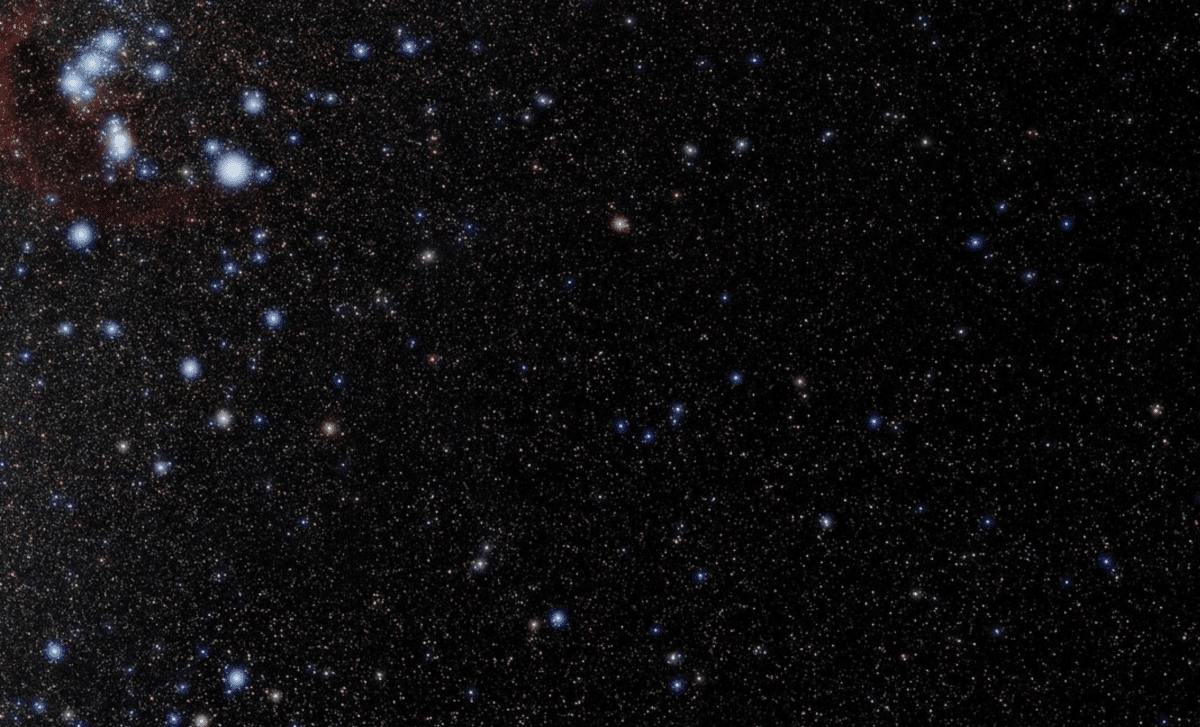
Historical astronomers frequently noted Theta Eridani as a brilliant star visible in the night sky, yet current observations show it as relatively dim with an apparent magnitude near 2.9. This discrepancy has confounded scientists for over a hundred years. Recently published research on arXiv offers a compelling explanation: a rare mass transfer episode within a tight binary system might have temporarily amplified the star’s brightness for several centuries before dimming to the levels seen today.
Centuries-Old Observations Defy Contemporary Measurements
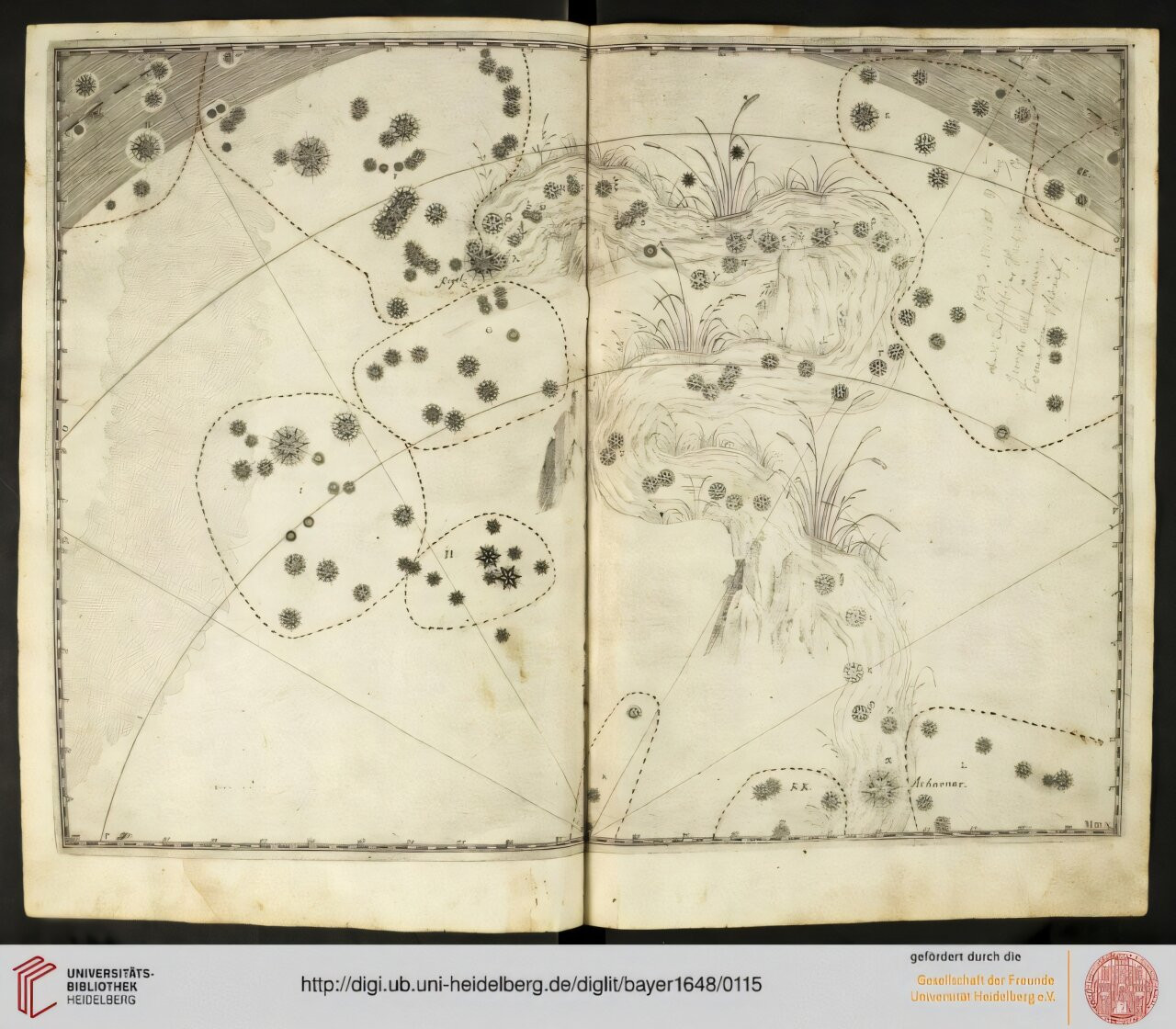
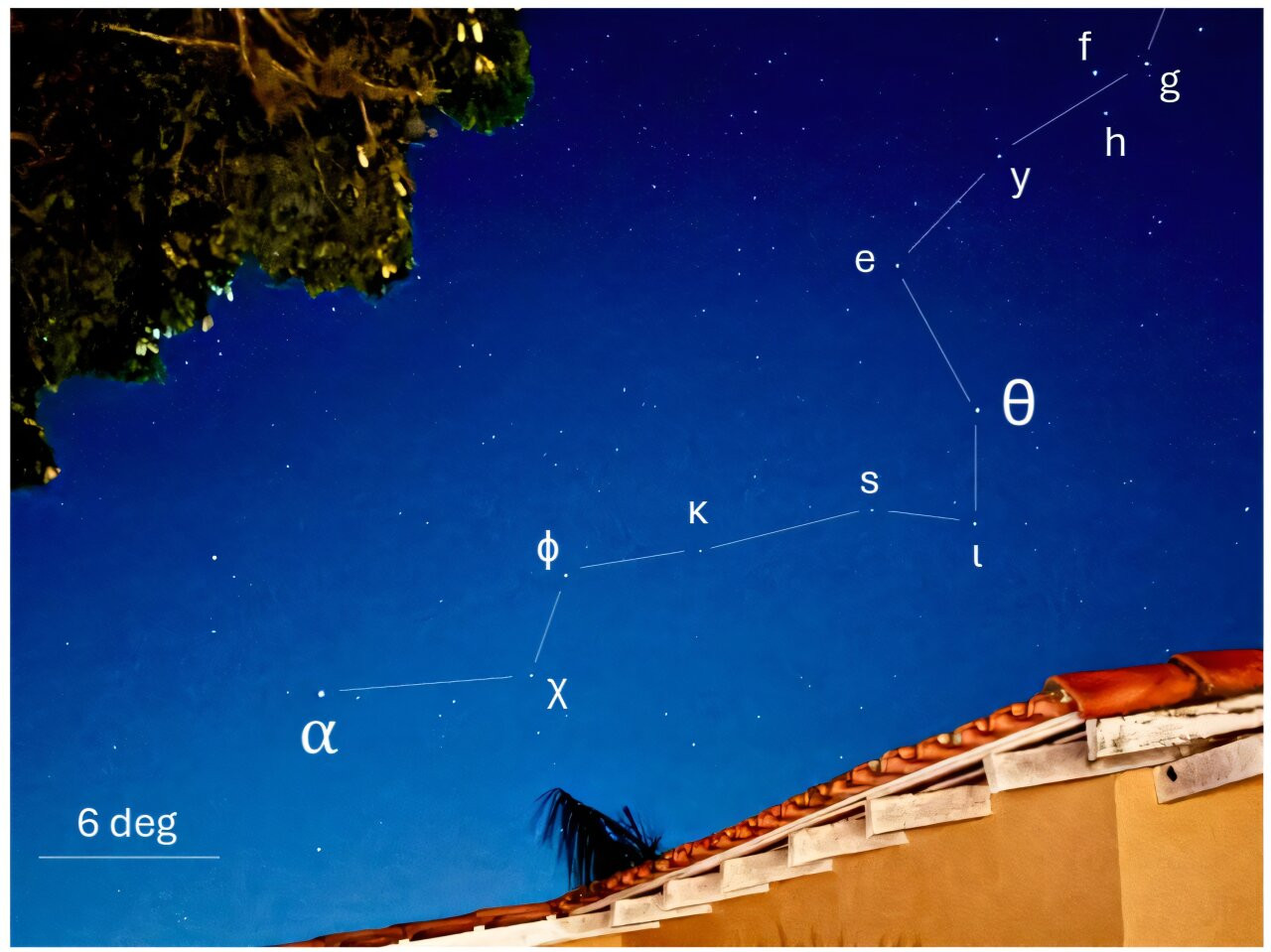
For over two millennia, astronomical records have consistently described Theta Eridani as exceptionally luminous, conflicting with modern data. As early as 129 B.C., Hipparchus referred to this star as “the brightest and preceding and southernmost of all in the River.” Over 200 years later, Ptolemy ranked it among the 13 brightest stars in his renowned Almagest. Centuries on, the Persian astronomer al-Sufi also listed the star at magnitude 1, suggesting its brilliance was well-known across generations.
However, in 1603, Frederick de Houtman catalogued the star with a magnitude of 3, aligning with its current appearance. This stark shift generated debate over whether ancient astronomers mistakened it for another star, errors in their manuscripts, or atmospheric effects skewed their observations. Given the consistent accounts spanning centuries, these explanations have struggled to gain acceptance, motivating researchers to seek a physical phenomenon that could explain the star’s prolonged brightness variations.

Insights From a Tight Binary System Offer a Solution
The recent paper on arXiv analyzes the star system’s architecture rather than disputing historical records. Observations reveal that Theta Eridani is a triple star system, featuring a closely bound binary pair alongside a more remote companion. Utilizing interferometry, spectroscopy, and satellite photometry, scientists Idel Waisberg and Boaz Katz determined the inner binary stars orbit each other at just 0.083 astronomical units, about one-fifth the orbital distance of Mercury to our Sun.
Both stars have masses slightly more than twice that of the Sun, and their orbit is presently near perfect circularity. After assessing other long-held alternative theories—including confusion with Alpha Eridani, transcription errors in ancient texts, and atmospheric interference—the researchers concluded these explanations fall short. As stated in the study,
“… we find no convincing reason to refute the fact that Theta Eridani was visually brighter by about a factor of ten between about 2,000 and 1,000 years ago.”
Instead of dismissing ancient observations, the team emphasizes their validity, supported by independent historical sources spanning many centuries and cultures.
A Stellar Mass Transfer Event Could Account for the Brightness Spike
The suggested scenario focuses on a critical evolutionary phase of one star in the inner binary. One star has depleted hydrogen fuel in its core and is advancing toward a subsequent evolutionary stage. At this time, both stars have expanded to nearly 80% of their Roche lobe—the gravitational limit where material can spill from one star to its companion. In such a precarious state, minor expansions can cause significant interactions. The team proposes that the larger star might have once surpassed its Roche lobe during a possibly more eccentric orbit, triggering mass transfer onto its partner.
This exchange would have liberated substantial gravitational energy, creating a sustained luminosity increase rather than a transient outburst. Unlike typical stellar flares lasting days or years, this heightened glow could have persisted for centuries, consistent with ancient records describing Theta Eridani as exceptionally bright. With time, the transfer of mass would smooth the orbit into the nearly circular path observed today.
Ancient Astronomy Gains Validation Through Modern Findings
Confirming this hypothesis would unite historical stellar observations with contemporary astrophysical theory. Ancient naked-eye estimations often face skepticism due to their subjective nature. However, consistent magnitude assessments by Hipparchus, Ptolemy, and al-Sufi across different eras and cultures bolster confidence in the observations. This model provides a viable physical process to explain a star that no longer shines as it once did. The authors emphasize,
“This strengthens the case that the apparent brightening was real and not due to an error by three different ancient observers, as has been commonly claimed in the past.”
Remaining questions involve the peak brightness and longevity of such mass transfer events, prompting calls for further study of similar binary systems. Large-scale photometric surveys could uncover other stars undergoing comparable phases, helping verify whether prolonged brightening caused by mass transfer is more widespread. If supported, Theta Eridani could stand as a prime example of ancient astronomers accurately capturing a genuine stellar phenomenon that modern science is only now able to explain.
- Categories:
- Astronomy











0 comments
Sign in to Comment