
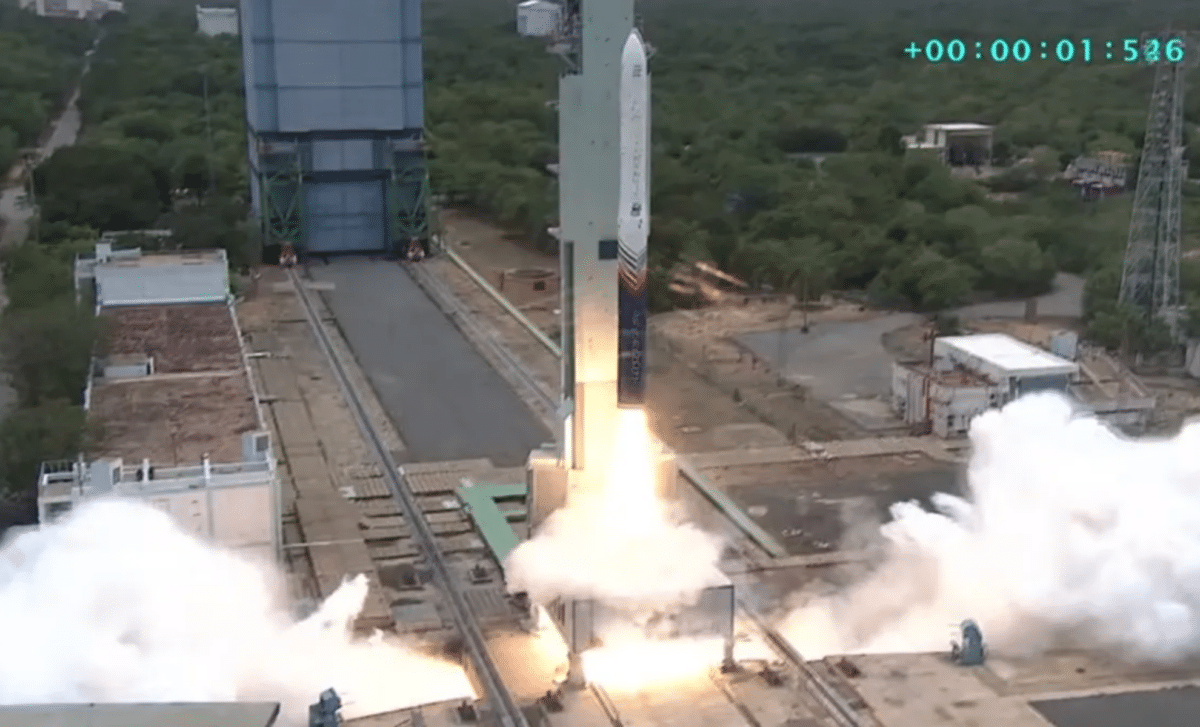
India has achieved a significant advancement in space exploration as Skyroot Aerospace successfully deployed its Vikram-1 rocket during the Mission Aagaman mission, becoming the country's first entirely privately developed rocket to reach orbit. This milestone signals a new era for India's commercial space sector, proving that private enterprises can now build and operate launch vehicles capable of orbital missions.
Startup Skyroot Aerospace Launches Vikram-1 into Orbit
The triumphant launch of Vikram-1 establishes Skyroot Aerospace as a rising private player in the international space launch market. The mission aimed to demonstrate the company's ability to carry out orbital launches and to showcase the private sector's role in India's space landscape, traditionally dominated by government agencies.
Founded by ex-engineers from the Indian Space Research Organisation (ISRO), Skyroot Aerospace specializes in building small satellite launch vehicles tailored to meet the demands of the commercial space sector. Their efforts reflect global industry trends, where privately owned firms innovate in rocket technology, satellite fabrication, and mission services.

Mission Aagaman culminates years of research, rigorous testing, and substantial investment, establishing an autonomous private launch capacity in India. This positions India alongside a select group of nations with active private orbital launch providers.
The launch also signifies the evolving space industry dynamic, with private firms increasingly partnering alongside governmental bodies to broaden access to orbit.
Co-founder Naga Bharath Daka and other leaders at Skyroot bring prior experience from India's government space missions, blending public expertise with private innovation.
ORBIT ACHIEVED. 🚀
— Skyroot Aerospace (@SkyrootA) July 18, 2026
Vikram-1 Test Flight-1 has reached orbit. India's first privately developed orbital rocket has completed its final burn and injected its payloads into a ~450 km orbit, making India the third country in the world with private orbital launch capability.…
Expanding Satellite Market Drives Skyroot's Ambitions
Vikram-1's success is just the beginning, as Skyroot aims to capitalize on the surging demand for satellite-based technologies such as communication networks, Earth imaging, and data analytics.
Skyroot executive Chandana emphasized the growth prospects, stating, “The need for satellite-enabled services will keep rising, presenting a significant opportunity for Skyroot.” Like co-founder Naga Bharath Daka, Chandana brings her background from the Indian Space Research Organisation to the private sector.
This outlook aligns with a global shift where smaller satellites and commercial space missions are generating fresh demand for affordable, flexible launch services. Providers compete to offer viable options for satellite deployments.
The accomplishment of Vikram-1 lays the groundwork for Skyroot’s ongoing projects and India’s goal to emerge as a key player in the international commercial space arena. The company is working on a series of launchers crafted to accommodate various payload sizes with plans to continue building on this initial orbital success.
Private Space Ventures Reshape India's Launch Landscape
Skyroot Aerospace’s achievement arrives amid significant shifts in the global rocket industry, where private companies across the U.S., Europe, and Asia are launching new vehicles to vie for commercial contracts and government clients.
Historically, India’s space efforts relied primarily on ISRO for both satellite launches and exploration missions. The rise of private firms is transforming India’s space ecosystem by enabling a broader range of participants in orbital operations.
Space.com highlighted this launch as a landmark in India's commercial space journey, with Skyroot as the pioneer completing an entirely private orbital mission.
This success is expected to stimulate further investments in India’s space startups and foster collaborations among private companies, research institutions, and international stakeholders. Developing a vibrant private launch market could elevate India’s role in the global space sector.
A Historic Launch That Could Define India's Orbital Future
Mission Aagaman stands as a pivotal milestone in India’s space ambitions, showcasing private industry’s ability to handle complex orbital technology once reserved for government agencies.
CEO Pawan Kumar Chandana and the team have demonstrated India’s advanced technological prowess. Moving forward, the challenge for Skyroot Aerospace is to evolve this success into consistent, competitive commercial launch operations.
Bhatt emphasized the launch's significance in a post-flight statement:
“The successful orbital launch of Skyroot Aerospace’s Vikram-1 (Mission Aagaman) is a defining milestone for India’s space journey,” Bhatt said in an emailed statement shortly after the mission wrapped up. “By executing the nation’s first fully private orbital flight, Skyroot has shattered legacy boundaries, demonstrating that our domestic industry is primed to handle end-to-end space missions.”
Next steps for Skyroot involve scaling its launch cadence, boosting reliability, and expanding its reach in the global small satellite launch market.
With the Vikram-1 achievement, India's private space sector has transitioned from aspiration to tangible success, opening new pathways for commercial orbital access.
- Categories:
- Space











0 comments
Sign in to Comment