
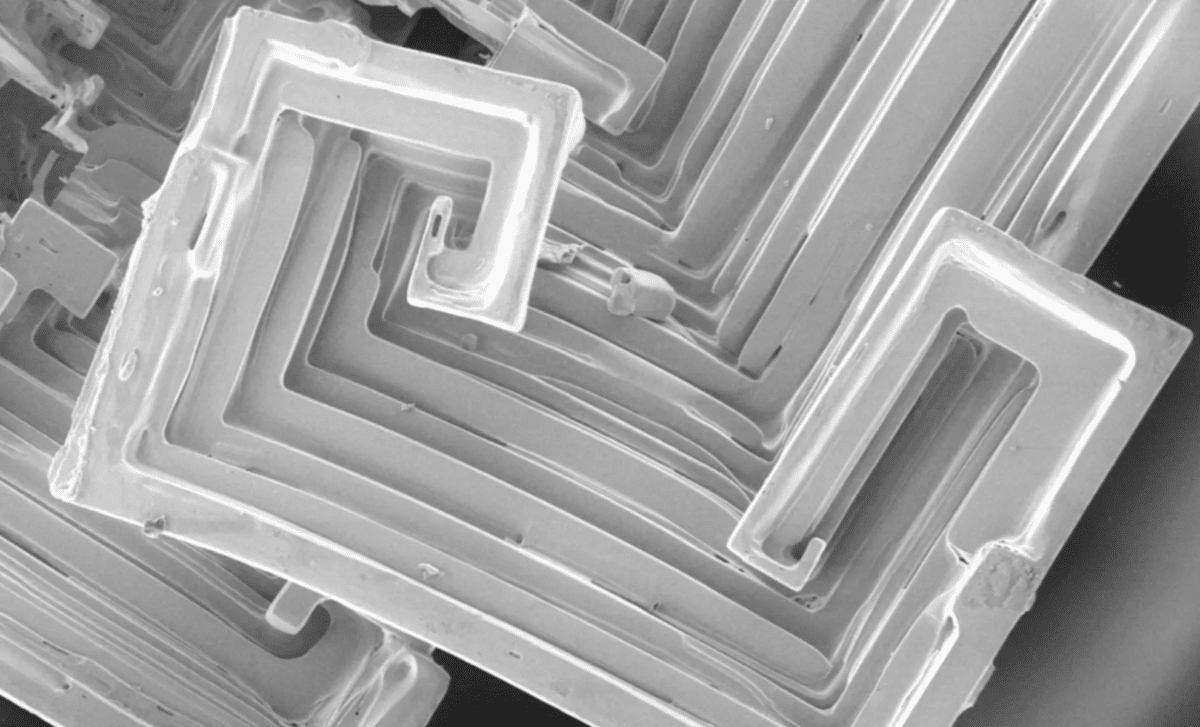
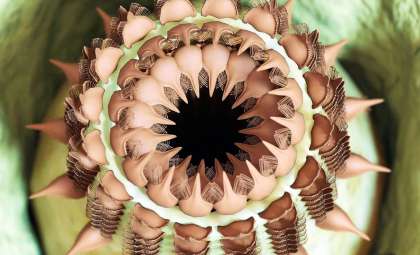
NASA astronaut Don Pettit captured a striking image aboard the International Space Station showcasing a rare hopper crystal structure formed under microgravity. This unique observation provides new perspectives on material growth when Earth’s gravity is minimized.
Unique Crystal Geometry Emerges in Orbit
The fascinating structure documented by Don Pettit is a type of potassium chloride crystal that developed during experiments aboard the International Space Station aimed at studying material behavior in space.
On our planet, gravity plays a major role in crystal growth by influencing fluid flow and molecular distribution. In contrast, the station’s microgravity environment reduces these effects, allowing alternative physical mechanisms to take center stage.
As a result, the crystal exhibits an unfamiliar shape quite distinct from Earth-grown counterparts.
The image drew attention because the formation resembles a meticulously crafted geometric design rather than a typical mineral structure.
Researchers analyze such patterns to understand how atoms and molecules self-organize when freed from gravitational constraints.
This work also advances knowledge about manufacturing materials in space-based laboratories.
Microgravity experiments uncover phenomena that are hidden under standard Earth lab conditions.

According to LiveScience, this crystal formation highlights how everyday chemicals can reveal surprising properties in extraterrestrial environments.
The findings emphasize how altering physical forces can lead common reactions to produce novel outcomes.
Scanning electron microscope look at the hopper crystals I grew on ISS. These are potassium chloride crystals exhibiting a relatively rare "scroll" morphology with step-like structures under weightless conditions. https://t.co/1yVkiH63UC pic.twitter.com/P01hPKBkSR
— Don Pettit (@astro_Pettit) July 18, 2026
How Microgravity Influences Crystal Growth
The formation of crystals depends on particle movement, temperature, fluid dynamics, and the forces applied to the materials. On Earth, gravity induces convection currents that guide the movement of dissolved materials during crystal development. In orbit, the reduction of these currents allows other forces to shape the crystal’s final form.
Scientists can observe molecular behaviors typically masked by constant gravity.
This results in a clearer insight into the subtle forces driving crystal evolution.
Materials scientist Marla Geha Wilson pointed out that "Forces other than gravity become much more noticeable," emphasizing the shift in dominant influences.
Such conditions enable researchers to study surface formation and particle arrangement over time more effectively. These insights could inform future production techniques in space, where precise environmental control may facilitate the creation of sophisticated materials.
Ongoing experiments on the International Space Station investigate the responses of metals, proteins, and crystals to low-gravity settings.
The unusual form of the potassium chloride crystal serves as a vivid example of how familiar substances can behave differently beyond Earth.
Unexpected Findings from a Basic Chemical in Space
The crystal in question stems from potassium chloride, a widely used and simple compound in science and industry.
Its role in this space study highlights how researchers employ basic materials to explore complex physical phenomena.
The significance lies in the contrast between the compound's simplicity and the surprising geometry it forms in orbit. Many space investigations focus on straightforward substances that unveil critical insights under altered conditions.
This crystal experiment also embodies the curiosity that drives scientists engaged in space research.
Wilson expressed her enthusiasm for observing everyday materials reacting to space environments, stating,
“I love seeing videos of how things behave in space,” she said.
She added, “Who would think that something as simple as potassium chloride could still be super cool?”
Such discoveries help bridge the gap between space exploration and fundamental science.
A tiny crystal formed inside a spacecraft offers insights into the forces influencing matter throughout the cosmos.
This experiment underscores the International Space Station as a vital research hub for studying phenomena impossible to replicate fully on Earth.
Implications for Future Space Science
This remarkable crystal formation contributes to a broader initiative to comprehend material behavior beyond our planet.
With upcoming missions venturing further into space, it's crucial to deepen our understanding of how physical processes evolve over extended periods in microgravity.
These studies could drive advancements in medicine, manufacturing, and spacecraft design. The International Space Station remains a unique platform where scientists can isolate variables difficult to analyze on Earth.
Photographs like Pettit’s crystal image spotlight the groundbreaking scientific work unfolding in orbit.
They reveal that space research extends beyond colossal celestial events to include small-scale experiments that unlock essential aspects of matter.
The unusual potassium chloride crystal may seem modest, yet it encapsulates years of progress in mastering controlled physical environments.
As material studies in space continue, researchers anticipate discovering more unexpected formations and phenomena. The tiny crystal captured above Earth exemplifies how microgravity transforms our understanding of common elements.
- Categories:
- News



0 comments
Sign in to Comment