

Researchers utilizing the Large Hadron Collider (LHC) have gained fresh perspectives on the universe's infancy by examining the behavior and evolution of an uncommon state of matter under extreme environments. Published in Physical Review Letters, these results deliver novel data on the quark-gluon plasma, an ultra-hot, dense form of matter that permeated the cosmos instantly after the Big Bang.
Simulating the Universe’s First Instants in the Lab
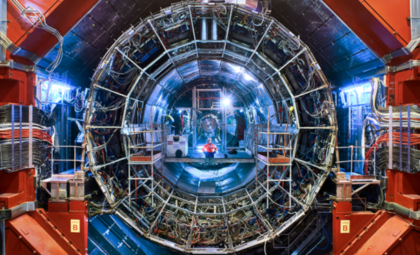
The quark-gluon plasma predates the formation of protons and neutrons, existing during a period when the universe rapidly expanded, composed mainly of fundamental particles. To study this primordial phase, scientists replicate comparable conditions within the LHC, where collisions involving heavy ions produce temperatures exceeding those inside stars.
These ultra-energetic impacts allow physicists to observe how quarks and gluons—the components of protons and neutrons—behave outside their usual bound state. Although the resulting plasma only endures for a fraction of a second, its characteristics hold vital clues about the fundamental physics shaping the infancy of the cosmos.

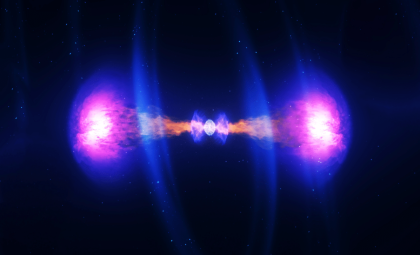
The current investigation centers on a feature called the quark-gluon plasma diffusion wake, a distinct pattern formed as energetic particles traverse the plasma. Analyzing this pattern enables scientists to understand how energy and momentum propagate through this extraordinary matter.
Utilizing data from particle collisions at the LHC, the research team explored the plasma’s reaction to disturbances, offering an enhanced understanding of the internal processes governing this ephemeral cosmic state.
Unveiling Invisible Movements Within the Quark-gluon Plasma
The diffusion wake phenomenon presents a method for probing the transport characteristics of the quark-gluon plasma. Much like how a moving object disturbs water, particles moving through this plasma generate observable effects that shed light on the medium’s behavior.
Scientists at the University of Illinois Chicago (UIC) led the interpretation of these signals. According to team leader Raghunath Pradhan, the findings could revolutionize the understanding of this uncommon state of matter.
“Observing and quantifying the quark-gluon plasma diffusion wake opens the door to the new precision characterization of the properties and dynamics of the quark-gluon plasma, and promises new insights into the evolution of the early universe,” team leader Raghunath Pradhan of the University of Illinois Chicago (UIC) said in a statement.
These insights go beyond merely confirming the plasma’s presence, enabling researchers to chart its behaviors at a more profound scale. Learning how it transfers energy, moves, and reacts to external particles assists scientists in reconstructing conditions present less than one microsecond after the Big Bang.
The results, featured in Physical Review Letters , contribute to ongoing research unraveling the universe’s most powerful interactions. This effort fuses experimental findings from the world’s premier particle accelerator with theoretical models explaining matter’s response to extreme temperature and pressure.
A Longstanding Quest to Decode Cosmic Beginnings
This research marks a significant step in the prolonged scientific journey probing the universe’s origins. Ever since it was established that the cosmos began in an intensely hot and dense state, scientists have strived to recreate and scrutinize these early circumstances on Earth.
Managed by the European Organization for Nuclear Research (CERN), the LHC serves as a crucial apparatus for this endeavor. By propelling particles close to light speed, it initiates collisions that briefly mirror the scorching conditions of the Big Bang’s first moments.
Every experiment offers a progressively clearer image of how fundamental matter evolved prior to forming the familiar structures that populate the universe today. Studying diffusion wakes contributes a fresh approach to analyzing how the quark-gluon plasma manages energy and interacts.
Upcoming experiments at the LHC and other high-energy physics centers aim to extend this technique, allowing comparison between varying collision environments and refinement of early universe models. These studies promise to illuminate the transformation from a quark-gluon filled universe to the realm of atoms, stars, and galaxies.
The recent discoveries highlight how Earth-based experiments can investigate phenomena from billions of years ago. By examining minute traces remaining in particle collisions, researchers continue to uncover the physical mechanisms that shaped cosmic evolution.
- Categories:
- Astronomy


0 comments
Sign in to Comment