
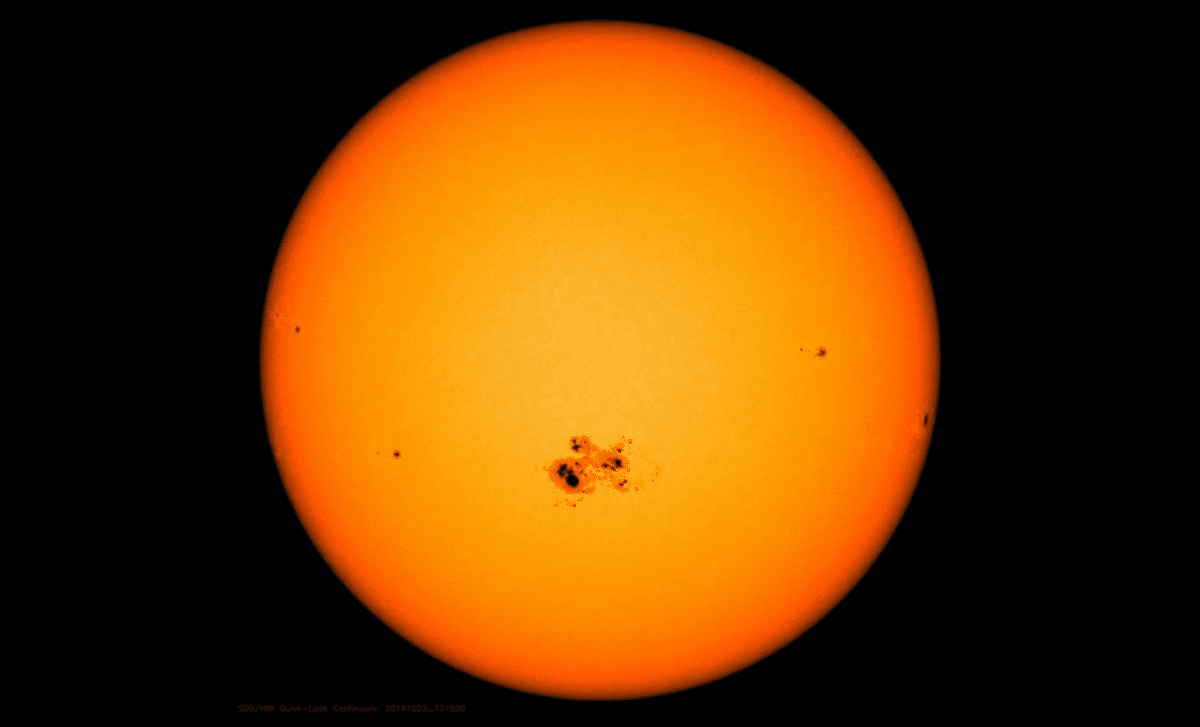
A novel technique has been unveiled by scientists to anticipate the intensity of the sun’s upcoming activity cycle well in advance, as reported by the Royal Astronomical Society. This innovative approach hinges on detecting a crucial turning point in solar behavior, potentially providing up to seven years of advance notice before periods of heightened space weather begin.
Decoding the Sun’s Activity with a Fresh Perspective
The sun’s activity ebbs and flows in an approximately 11-year cycle, governed by fluctuations in its magnetic field. Throughout this cycle, variations in sunspot numbers serve as markers, correlating with dramatic solar events like intense solar flares and coronal mass ejections. These phenomena can unleash bursts of radiation and charged particles that impact satellites, global positioning systems, communication lines, and power grids on Earth.
Forecasting the intensity of each solar cycle remains challenging, as every cycle exhibits unique characteristics; some bring severe solar disturbances, while others are notably mild. Current models rely on observing solar minimum phases—the quieter intervals between cycles—to produce more accurate forecasts.

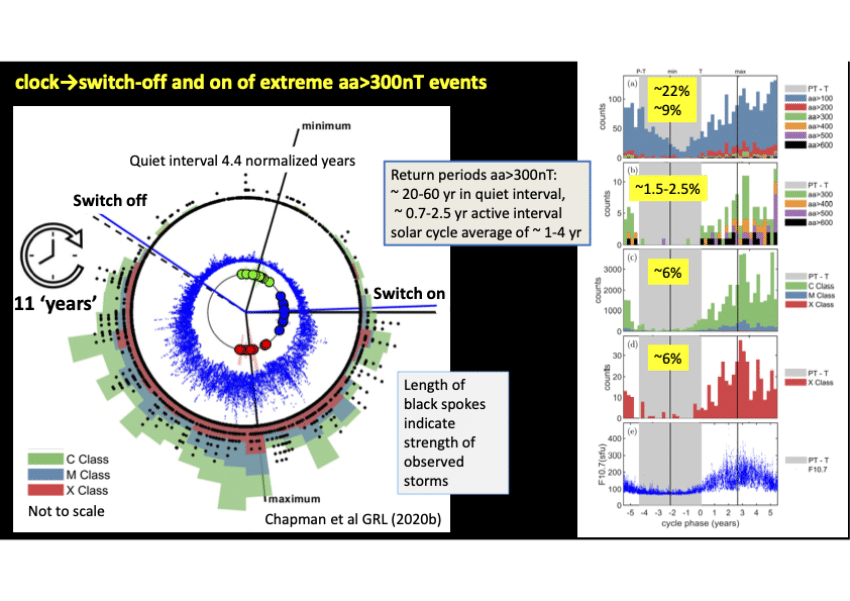
A team from the University of Warwick introduces an alternative by pinpointing a distinctive moment in each cycle when the most severe solar storms suddenly vanish. Termed the “switch-off” point, this phase emerges consistently within solar cycles and carries predictive information about the forthcoming cycle’s strength.
This breakthrough follows the research led by Professor Sandra Chapman, head of the Centre for Fusion, Space and Astrophysics at Warwick. Her team developed the “sunclock”, a novel framework that transforms the sun’s irregular activity timeline into a standardized clock, revealing subtle patterns that conventional methods miss.
Unlocking the Solar “Switch-Off” for Forecasting
The approach centers on counting sunspots present at the switch-off juncture, which shows a strong correlation with the peak sunspot count of the subsequent cycle.
Chapman elaborates that the sun’s quiet period isn’t a gradual decline but rather a sudden cessation of extreme space weather events at a defined stage in every cycle. "By tracking this switch-off, we’ve uncovered a novel way to gauge the vigor of the next solar cycle," she states.
This method extends the lead time for predictions beyond many existing models, enabling scientists to project the upcoming solar maximum years before it arrives.
Preliminary forecasts for Solar Cycle 26 indicate a moderate activity cycle with an estimated peak sunspot count between 100 and 120. This would position it close to or slightly below the level of Solar Cycle 25. However, since the current cycle has yet to reach its switch-off point, these predictions remain tentative.
More accurate assessments are expected once Solar Cycle 25 hits this milestone, shifting reliance from projections to observation.
Validating the Method with Solar Cycle 25
This forecasting technique gained credibility after accurately signaling that Solar Cycle 25 would exceed earlier strength estimates, marked by numerous significant solar storms approaching its maximum.
In May 2024, Earth experienced intense geomagnetic storms following the eruption of large sunspot groups. These disturbances rank among the most powerful recorded in over twenty years.
The storms triggered spectacular auroras, making the Northern Lights visible in unexpected southern regions of the United Kingdom. These occurrences underscore how solar changes can rapidly impact Earth's space environment.
Details of the study were showcased at the Royal Astronomical Society’s National Astronomy Meeting in Birmingham, emphasizing how this approach could enhance long-term space weather preparedness.
Improved forecasts will aid satellite operators, electrical grid managers, and communication providers in anticipating periods of elevated solar activity, allowing extended lead time for risk mitigation and operational adjustments.
New Insights Into the Sun’s Magnetic Mechanism
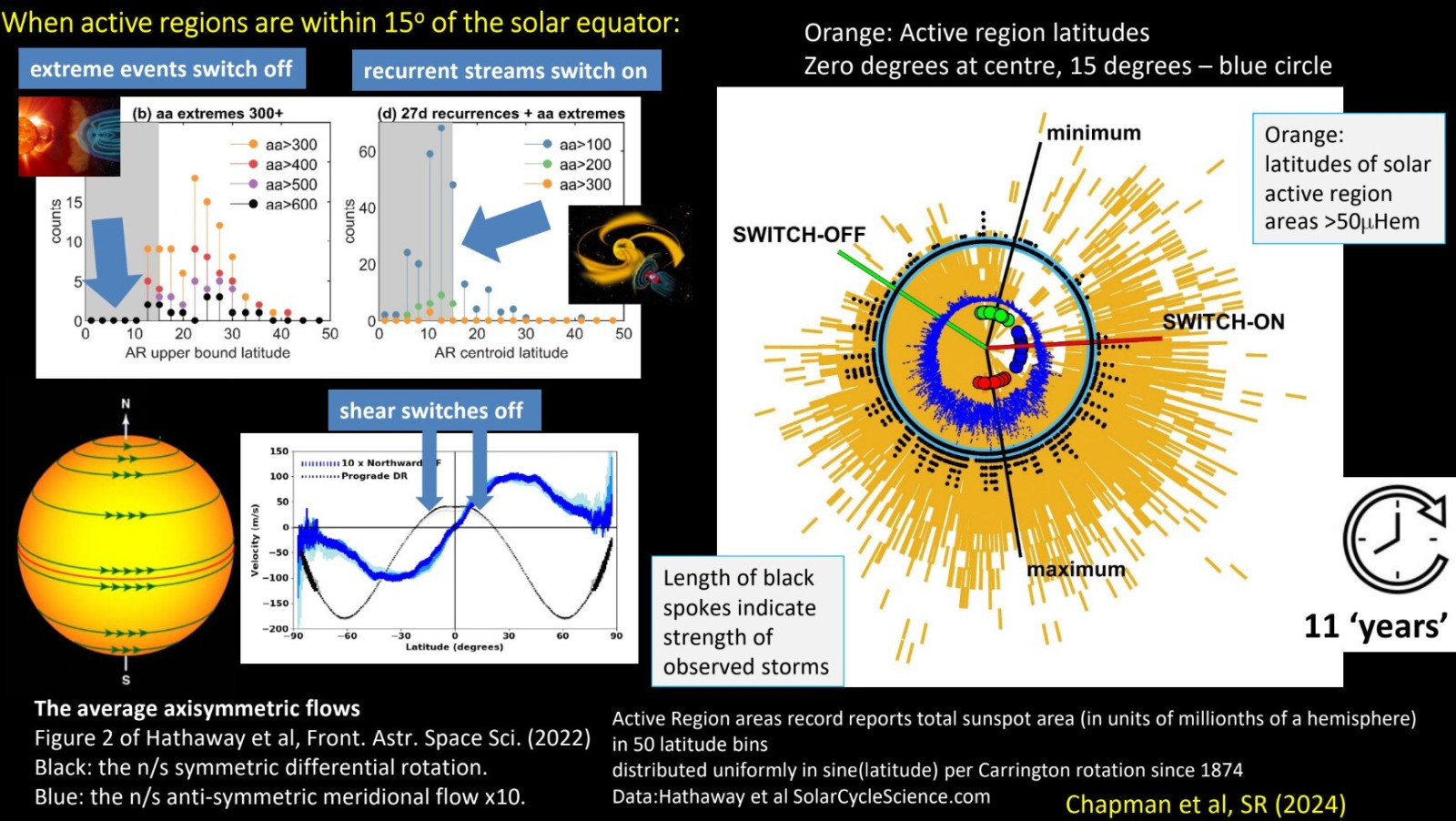
The findings also shed light on the solar dynamo, the internal engine generating the sun's magnetic field that governs sunspot emergence and cyclical solar behavior observed historically.
The switch-off moment likely marks when the magnetic conditions shaping the upcoming cycle begin to establish. Gaining a clearer understanding of this process could refine models predicting the sun’s long-term dynamics.
Chapman notes, "We anticipate reaching the switch-off point for Solar Cycle 25 in about two years. Currently, predictions rely on estimations, but after we observe it directly, we can confidently forecast Solar Cycle 26's trajectory.
"This will yield approximately seven years’ advanced notice of cycle strength."
Ongoing observations of Solar Cycle 25 will validate the accuracy of this predictive method. If the connection between the switch-off point and cycle intensity remains reliable, it could become a powerful instrument for long-term solar activity forecasting.
- Categories:
- Space








0 comments
Sign in to Comment