
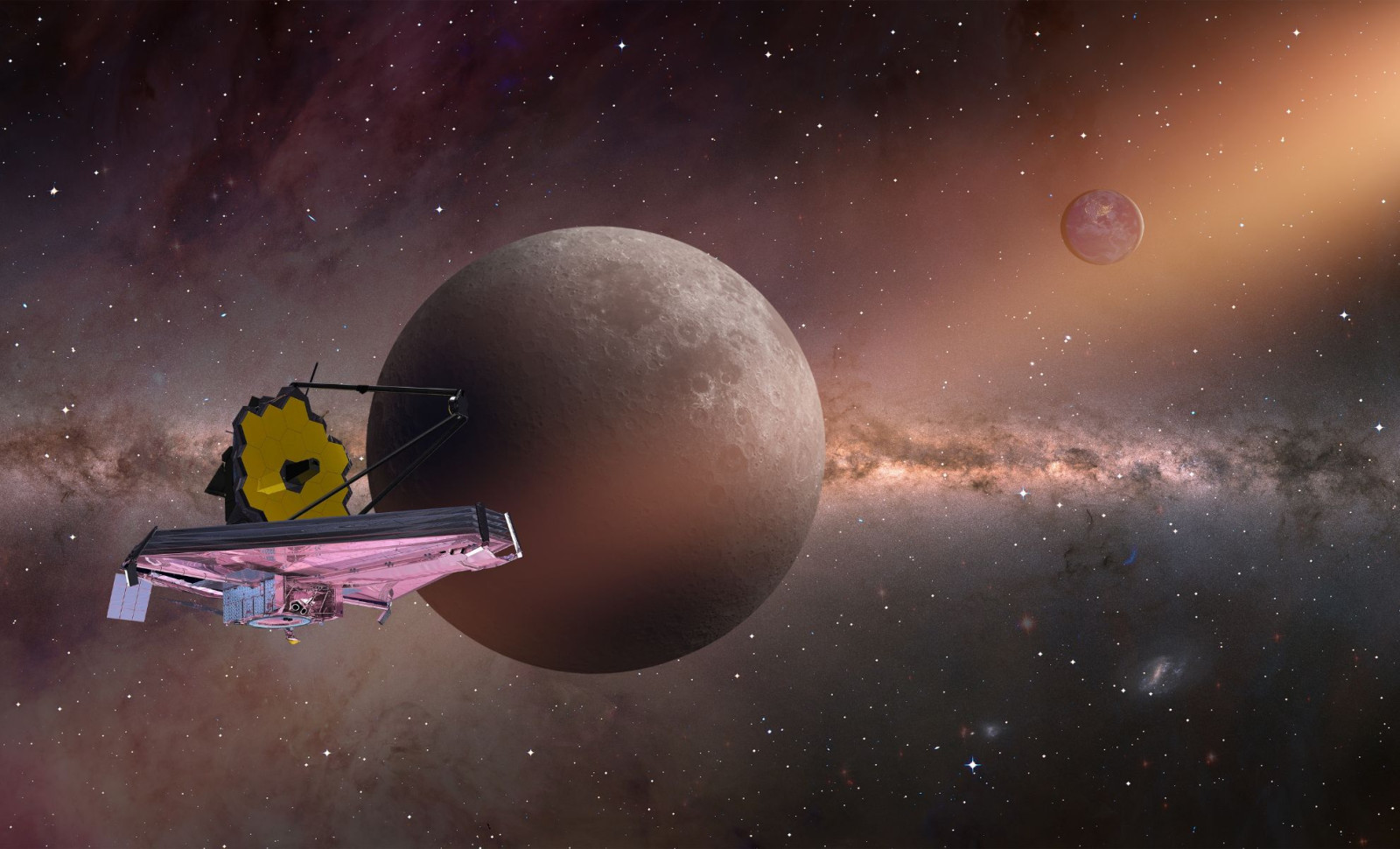
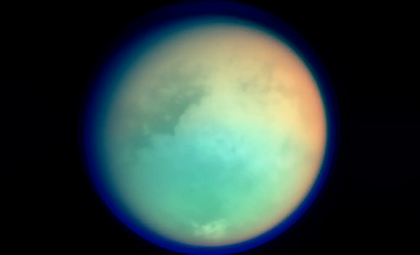
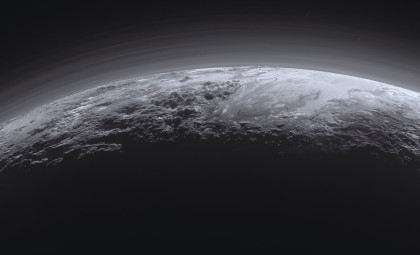
The James Webb Space Telescope (JWST) has detected an unusual infrared pattern appearing on Saturn’s moon Titan as well as the dwarf planet Pluto. This signal likely originates from an unidentified molecule or a set of related substances, although its exact nature remains a mystery.
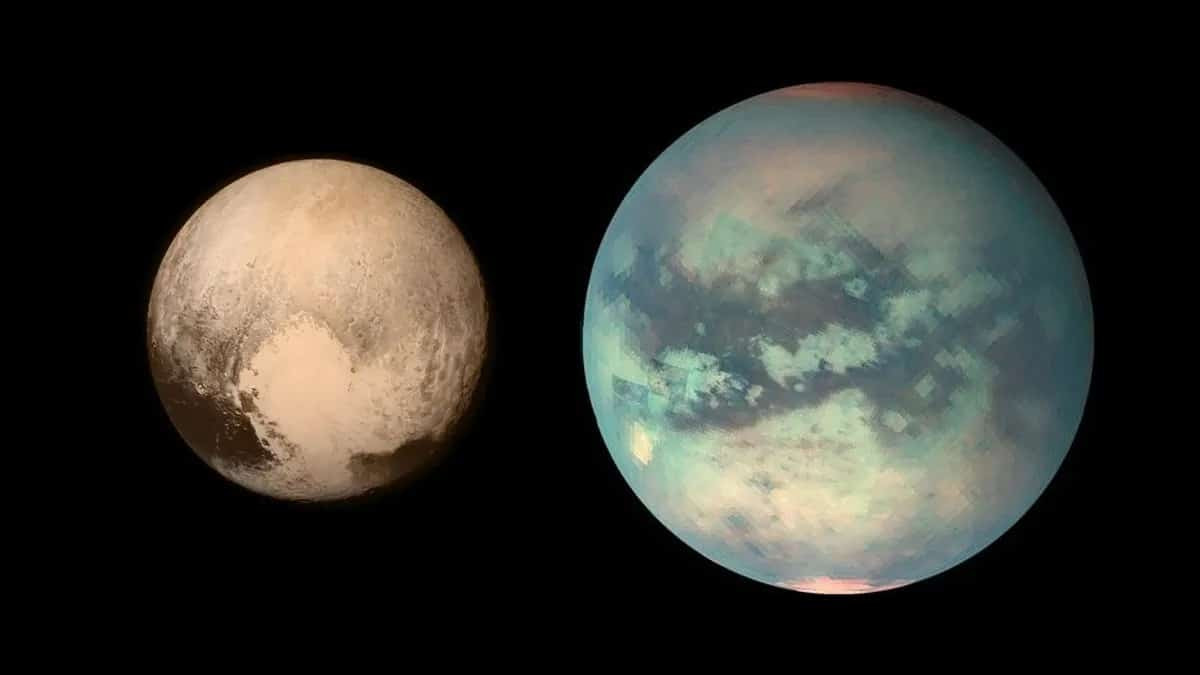
This finding is intriguing because Titan and Pluto represent vastly different environments. Titan features a dense atmosphere cloaked in haze, methane lakes, and organic sand dunes, while Pluto is an icy world with a thin atmosphere located beyond Neptune. Despite these differences, both exhibit the same spectral feature. Researchers analyzing JWST’s infrared data identified a signature unmatched by any known molecules in current databases.
An Enigmatic Signal Detected on Two Distinct Celestial Bodies
Further investigation of JWST data taken from Pluto in May 2023 revealed the presence of the identical unexplained spectral characteristic.

“It’s rather mysterious,” said Bruno Bézard, a planetary scientist at the Paris Observatory who led the study. “We cannot say what it is.”
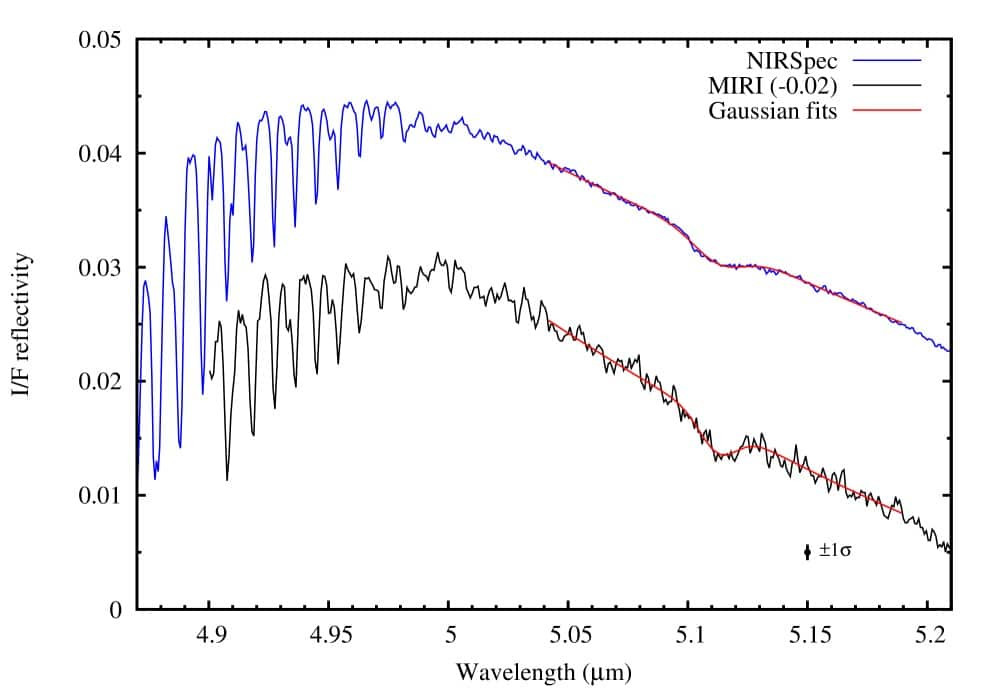
Spectroscopy allows scientists to determine material composition by analyzing light absorption patterns—each molecule leaves a unique 'fingerprint'. In this case, the detected signature does not correspond to any compounds currently cataloged.
The team confirmed the anomaly was not due to instrumental errors. The published research shows this absorption feature appeared consistently in data from both JWST’s Near-Infrared Spectrograph (NIRSpec) and Mid-Infrared Instrument (MIRI), validating the signal’s authenticity. To expand the search, Bézard reached out to collaborator Emmanuel Lellouch, who had independently examined JWST observations of Pluto.
“I asked him, ‘Do you also have a signature [on Pluto] at this exact wavelength?'” Bézard told Space.com. “So we looked, and we found that it is present there.” Finding the same infrared pattern on Pluto suggests that both worlds may host a similar surface chemistry, despite their very different environments.
Organic Compounds Generated by Solar Radiation and Methane Reactions
Researchers believe this spectral feature is not related to biological activity. Instead, it likely stems from complex organic chemical processes occurring on Titan over billions of years.
Both Titan and Pluto have atmospheres primarily composed of nitrogen and methane. Ultraviolet radiation breaks apart these molecules into reactive fragments, which can combine to form increasingly complex organic compounds. Some of these materials then settle onto the surface as a form of chemical frost, detectable by JWST.
Several indications point to the compound’s surface origin. On Titan, the mysterious absorption weakens when observations shift from the center to the limb of the moon’s disk.
“This is what you expect if it comes from the surface,” Bézard explained.

Comparisons to atmospheric carbon monoxide on Titan reinforce these findings; carbon monoxide maintains a fairly constant presence across the moon’s disk, unlike the fluctuating unknown signal, indicating the observed feature likely resides mostly on the surface rather than in the atmosphere.
Pluto’s extremely thin atmosphere is insufficient to account for the observed infrared absorption, further pointing to surface ices as the source. One candidate molecule group is allenes, hydrocarbons known to absorb light near five microns—the same range as the unidentified signal. However, many allene variants remain poorly characterized, preventing definitive identification.
Upcoming Titan Studies May Reveal the Mystery’s Origin
Ongoing JWST observations will map the distribution of this enigmatic compound across Titan’s surface. These maps might link the feature to specific regions, such as Titan’s widespread organic-rich dunes where airborne particles gradually accumulate.
Additionally, NASA’s Dragonfly mission, set to launch in 2028 and arrive in the mid-2030s, could provide breakthrough data. Unlike JWST, Dragonfly will carry onboard instrumentation including a mass spectrometer capable of directly measuring surface molecules.
“It’s always exciting when you discover something that was not seen before,” Bézard said. “It’s really the nicest part of our job.”
He also emphasized that Dragonfly’s measurements could clarify which organic substances exist on Titan, offering targets for laboratory tests on Earth.
- Categories:
- Space









0 comments
Sign in to Comment