
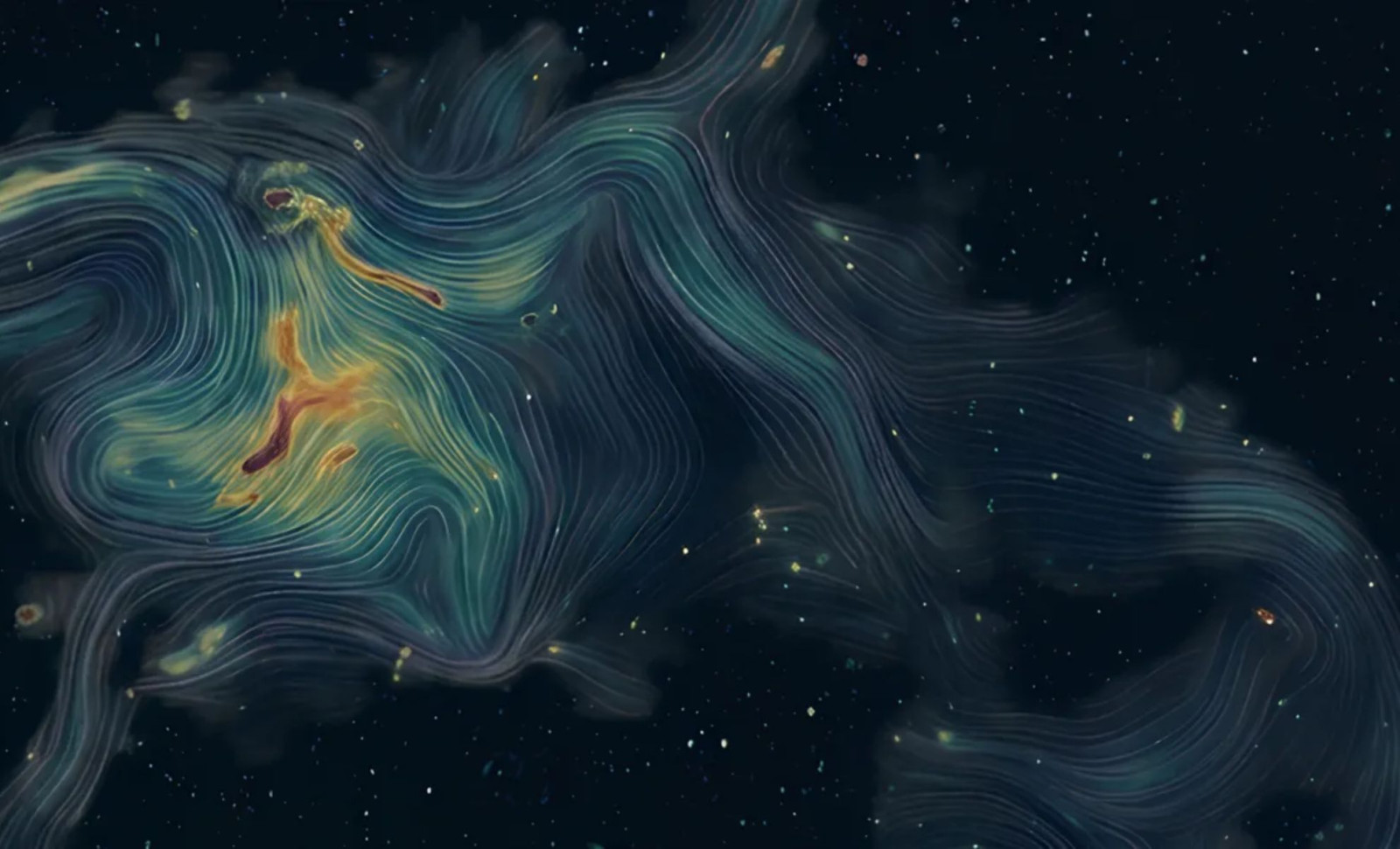
For the first time, scientists have reconstructed the magnetic field layout within a galaxy cluster, exposing the unseen frameworks that influence some of the universe’s vastest structures. This innovative research, shared through arXiv, introduces a novel approach to studying the evolution of magnetic fields in colossal galaxy clusters.
Illuminating the Invisible Forces Governing Galaxy Clusters
Galaxy clusters rank among the universe’s largest gravitationally bound entities, comprising numerous galaxies, immense reservoirs of hot gas, dark matter, and intricate magnetic systems. Although astronomers have acknowledged the presence of magnetic fields throughout these enormous areas, constructing a direct map of their spatial configuration has proven extremely difficult.
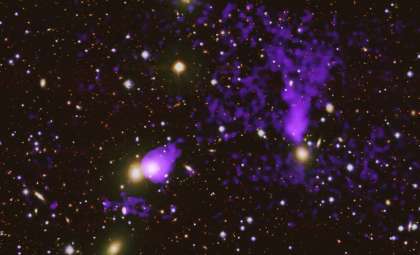
This latest model centers on the Abell 2142 galaxy cluster, a colossal assembly located about 1.2 billion light-years away from our planet. The team integrated sensitive radio data to track faint emissions from energetic electrons interacting with the cluster’s magnetic environment.

The result reveals an intricate depiction of magnetic field line layouts across this vast cosmic structure. Observations highlight patterns intertwined with the internal gas dynamics, indicating that the magnetic landscape is dynamic and sculpted by turbulent processes during cluster formation.
Published on arXiv, this study marks significant progress toward linking cosmic magnetism, gas movement, and the development of large-scale cosmic architectures.
Tracing Hidden Cosmic Structures Through Radio Waves
The primary obstacle tackled in this work is the exceptionally weak radio signals produced by electrons as they traverse low-strength magnetic fields. Capturing these faint signals demands cutting-edge radio instruments capable of distinguishing them from ambient noise.
Researchers employed detailed radio imaging techniques to examine diffused emissions enveloping the galaxy cluster. These emissions, termed radio halos and related features, shed light on particle behavior and magnetic field distribution within the cluster.
“Obtaining very sensitive images of galaxy clusters at radio wavelengths is crucial to understanding how electrons are accelerated to relativistic speeds and magnetic fields are amplified on large cosmic scales,” team leader Andrea Botteon, of the Italian National Institute for Astrophysics (INAF), said in a statement. “The complexity of these studies is due to the elusiveness of the radio signal from electrons moving in very weak magnetic fields. We believe that the mechanism that ‘turns on’ these gigantic radio emissions is linked to the formation process of galaxy clusters.”
These observations enabled the team to go beyond merely detecting magnetic activity and to reconstruct its spatial configuration. Their map reveals areas where magnetic fields are coherently aligned, providing fresh insights into how these invisible forces mold themselves in response to internal cluster dynamics.
Magnetic Field Patterns Linked to Cosmic Structure Formation
The magnetic field map indicates a strong correlation between the field’s morphology and the physical motions occurring in the cluster. As galaxies collide and massive gas clouds interact, these phenomena continually reshape the magnetic framework over vast periods.
“The coherence of the magnetic field lines observed in some regions of the cluster suggests that the morphology of the field is intimately linked to the dynamics of the gas in which it resides, where it can be ‘stretched’ or ‘compressed’ by the motions associated with the formation of the cluster itself,” Botteon said.
This relationship enhances scientists’ grasp of cluster evolution, revealing how colossal flows of matter, turbulence, and shocks impact both gas distribution and magnetic field intensity.
Additionally, the findings provide new perspectives on the origins of large-scale radio emissions. By analyzing these emissions, astronomers can better understand particle acceleration and the growth of cosmic magnetic fields.
Paving the Way for Future Cosmic Magnetism Maps
Being able to visualize magnetic field structures in clusters unlocks new avenues for upcoming astronomical surveys. Future radio observatories, equipped with even more sensitive technology, could extend this mapping approach to a broader range of galaxy clusters.
Unraveling cosmic magnetic fields remains a major frontier because these invisible forces govern matter movement and energetic particle propagation across immense distances. Detailed magnetic cartography will improve comprehension of galaxy cluster histories and the mechanisms shaping them.
This pioneering reconstruction demonstrates that radio astronomy is key to revealing unseen cosmic aspects unreachable by visible light. As observational tools advance, astronomers anticipate constructing an expansive overview of magnetic force evolution since the universe’s infancy.
These novel insights from arXiv shed light on the hidden magnetic frameworks entwining galaxy clusters and represent a crucial advance in decoding the powerful forces defining the universe’s largest structures.
- Categories:
- Astronomy









0 comments
Sign in to Comment