
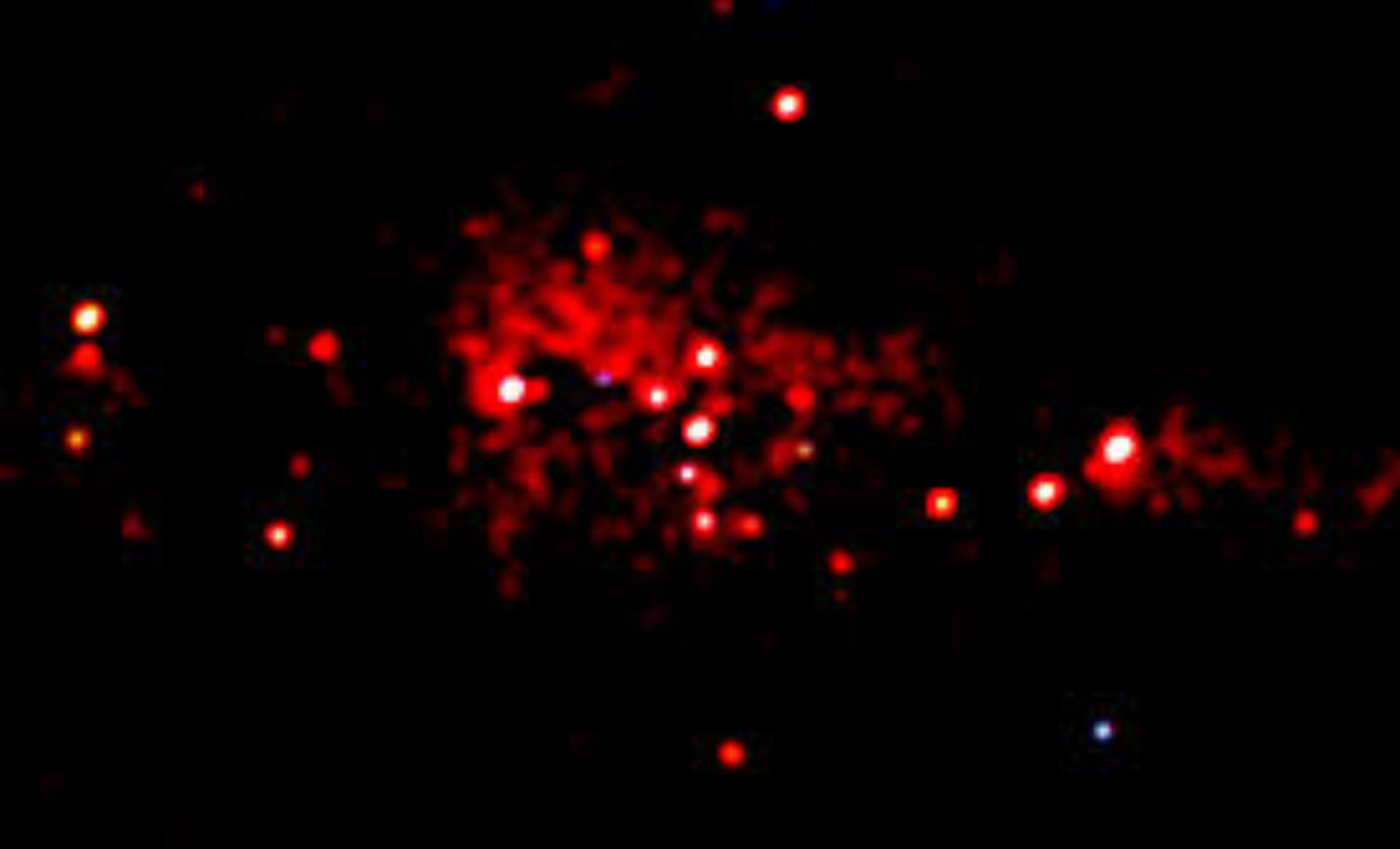
Researchers have made the most detailed observations yet of X-4, an ultraluminous X-ray source nestled in the Whale galaxy, revealing dramatic fluctuations over both brief and extended periods. These findings imply that the source is powered by super-Eddington accretion, though the nature of its central compact object remains unidentified.
Ultraluminous X-ray sources, or ULXs, rank among the universe's most intense X-ray emitters. The study centers on X-4, one of eight ULXs identified in NGC 4631, commonly called the Whale galaxy. Situated roughly 24.45 million light-years away, this galaxy's active star formation regions provide an excellent environment to investigate these powerful X-ray sources.
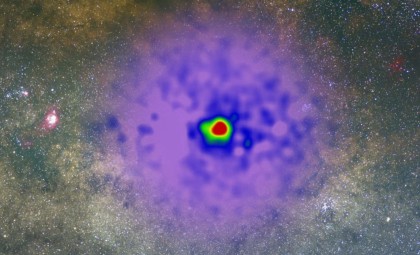
The recent arXiv publication points out that X-4 is distinctive due to its surrounding highly uneven bubble nebula, likely energized by jet activity or shock waves from outflows.

An Enigmatic Cosmic Phenomenon Defies Expectations
To decode the behavior of X-4, a research group led by Sinan Allak at the Institute for Astronomy and Astrophysics in Tübingen analyzed archival observations from Chandra, XMM-Newton, and Swift/XRT. Combining data spanning several years enabled the team to monitor X-4’s variability from annual down to seconds timescales.
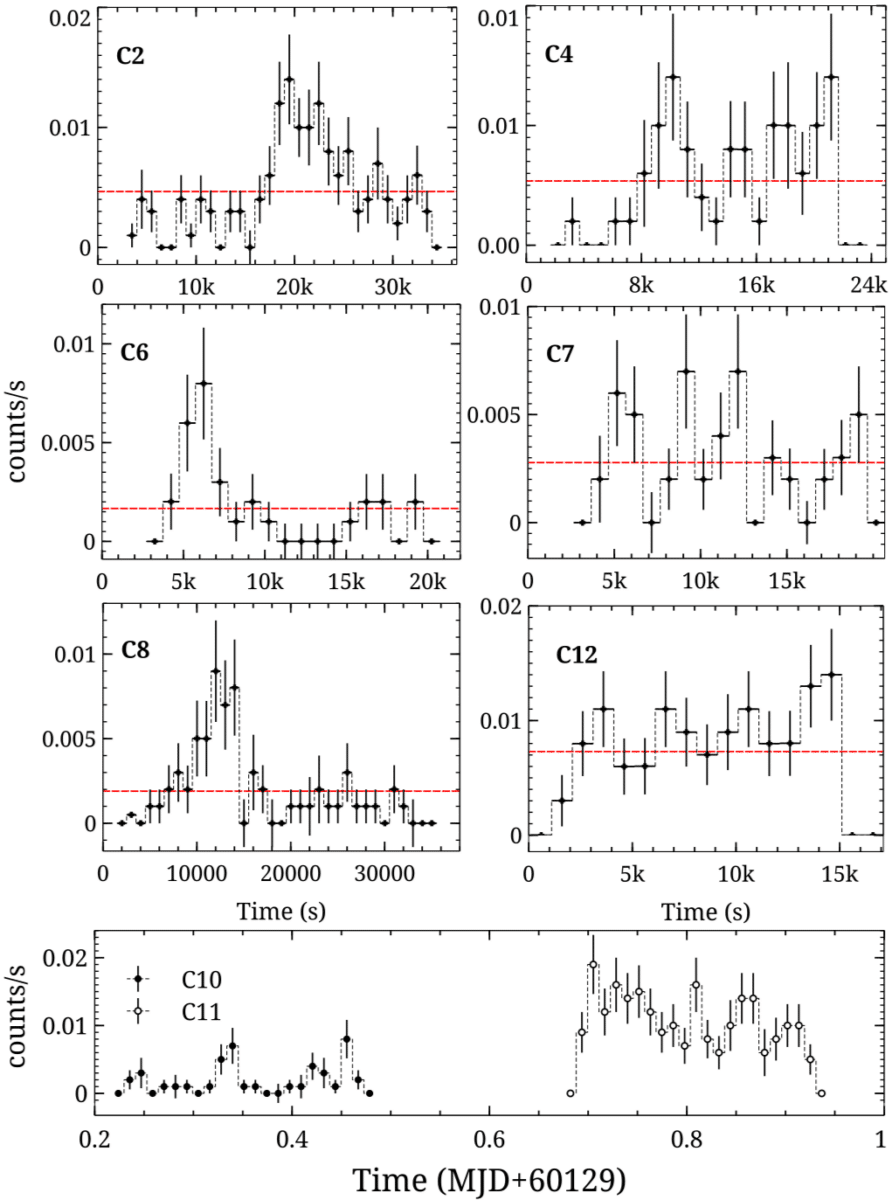
The results showed pronounced long-term variability, with the 0.3–10 keV X-ray luminosity shifting by over 100 times throughout recorded observations, confirming the source’s transient nature rather than steady emission.
On shorter timescales, the Chandra data revealed distinct peak events lasting from approximately 1,000 to 5,000 seconds, accompanied by unpredictable fluctuations lacking a clear repetitive pattern. These traits imply the emission is influenced by a radiatively driven, optically thick wind.
The Accretion Disk Exhibits Unconventional Features
Additionally, the researchers noted that the spectral behavior of X-4 deviates from expectations for a typical thin accretion disk. As detailed in the arXiv manuscript, both the correlation between luminosity and temperature and the changing spectral hardness differ from standard models.
These observations align more closely with theories involving super-Eddington accretion flows, where radiation-driven winds and viewing angle affect the X-ray spectrum’s characteristics.
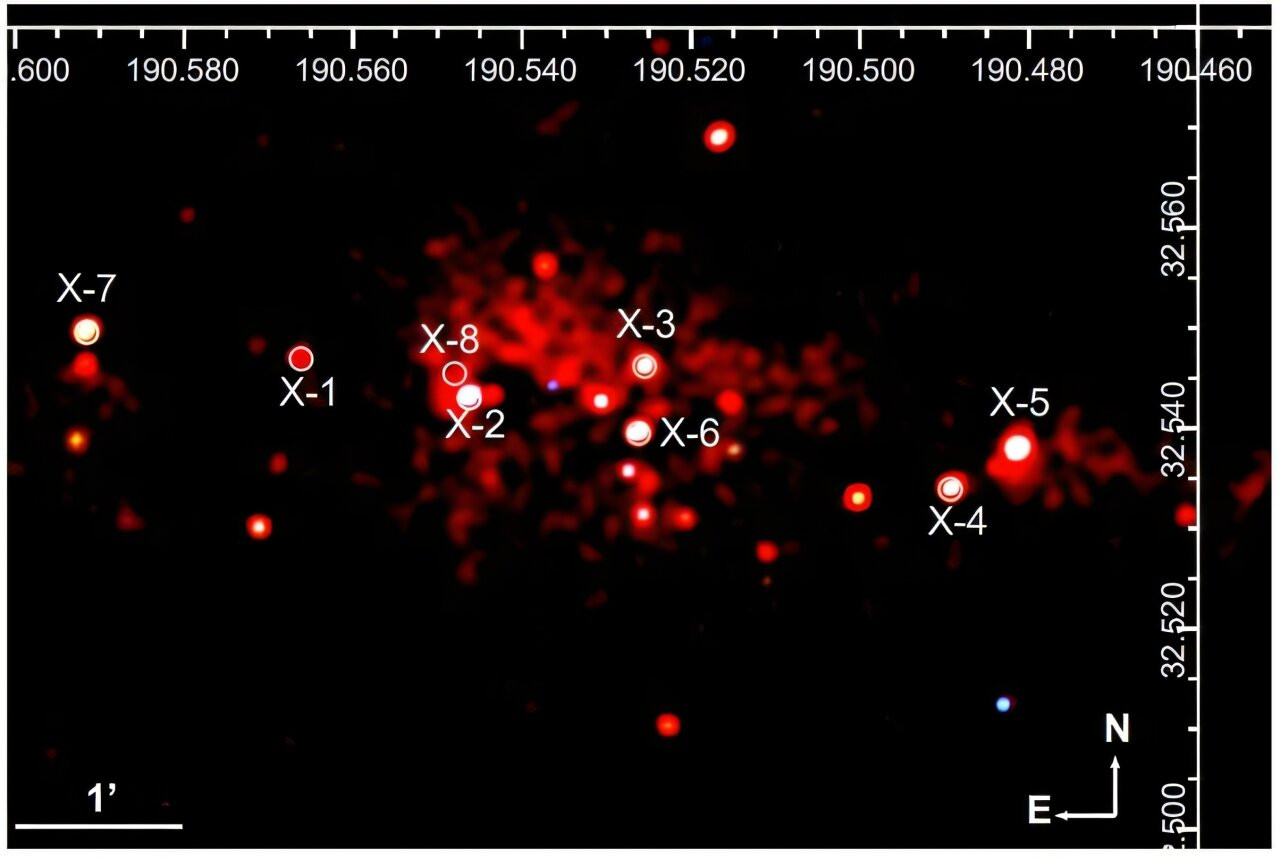
This combination of spectral and temporal properties positions X-4 within a growing category of ULXs believed to be sustained by super-Eddington accretion processes.
The Identity of the Compact Core Still Unknown
A key mystery persists: what lies at the heart of X-4? The team examined Chandra and XMM-Newton data for signs of coherent pulsations, quasi-periodic oscillations, and other statistically meaningful periodic signals, but found none.
Given current evidence, the researchers suggest that X-4 harbors a stellar-mass compact object—either a neutron star or a stellar-mass black hole—with current data insufficient to clearly determine which.
“Future deeper observations with a higher signal-to-noise ratio will be crucial to constrain the nature of the compact object and to probe the structure of the supercritical accretion flow,” the authors said.
- Categories:
- Physics











0 comments
Sign in to Comment