
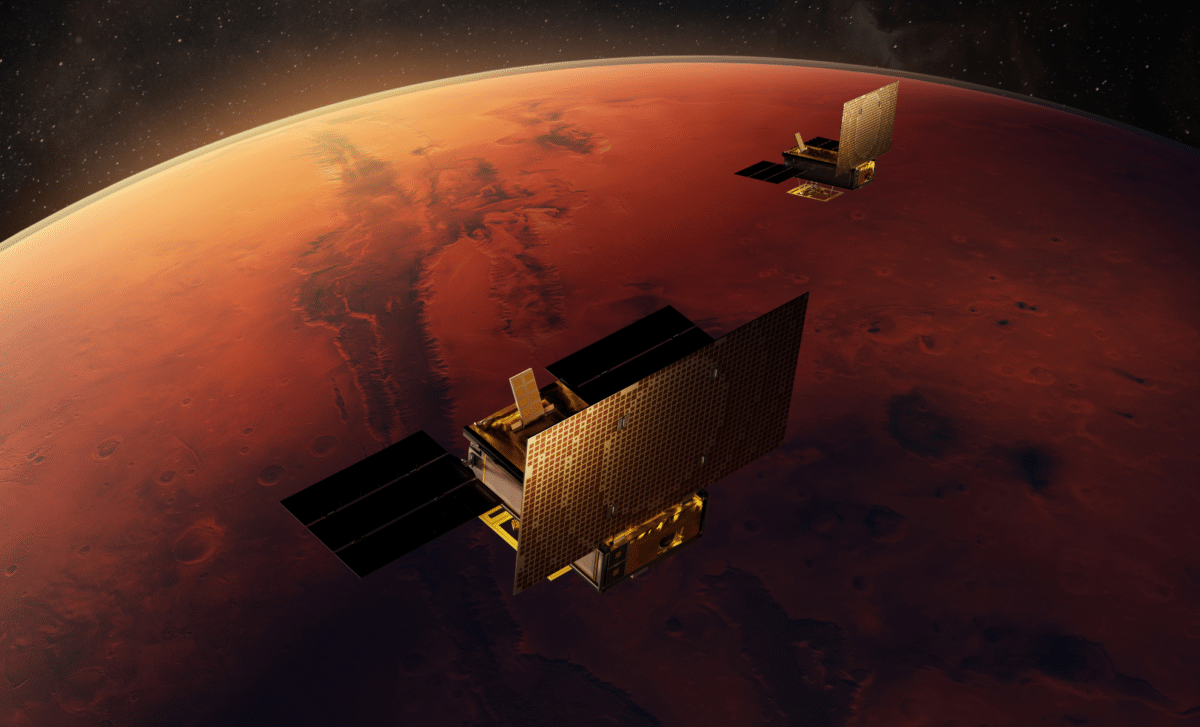
Scientists at MIT have unveiled an innovative propulsion system that could significantly enhance the reach of miniature satellites, enabling them to journey as far as Mars and the asteroid belt. This advancement, detailed in the Journal of Propulsion and Power, merges two distinct types of propulsion into a unified system powered by a single type of fuel. If validated in space, this technology could revolutionize the missions possible with affordable CubeSats.
Integrating Chemical and Electric Thrusters in One Efficient Package
For years, spacecraft engineers have grappled with a compromise when selecting propulsion methods. Chemical propulsion offers powerful thrust for rapid maneuvers and quick trajectory shifts, whereas electric propulsion delivers minimal thrust but exceptional fuel efficiency, supporting long-distance travel.
MIT scientists have developed a dual-mode engine that utilizes a single propellant for both chemical and electric thrusters. This compact design fits within small satellite platforms, providing operational versatility traditionally seen only in larger spacecraft.

“If you can have chemical and electrical propulsion in one small package, it’s the best of both worlds,” says Amelia Bruno, a former postdoctoral researcher in MIT’s Department of Aeronautics and Astronautics (AeroAstro). “This opens the door for small satellites to do even more science, more observations, and more interesting missions, all on a smaller and cheaper platform.”
This innovation directly tackles a major hurdle faced by CubeSats. Although these compact satellites are affordable and increasingly capable, their limited size constrains onboard equipment. Sharing a single fuel source frees up valuable space and weight capacity for sensors, communication devices, and other instruments.
Electrospray Thrusters: Enabling Long-Distance Travel for Small Satellites
At the core of MIT’s approach is an electrospray thruster, a miniature electric propulsion device. These thrusters use electric fields to ionize particles in a liquid fuel, accelerating them to generate thrust. Despite producing low force, their exceptional efficiency enables spacecraft to achieve substantial velocities over extended durations.
This gradual increase in speed makes electrospray thrusters ideal for deep-space missions where conserving fuel is paramount.
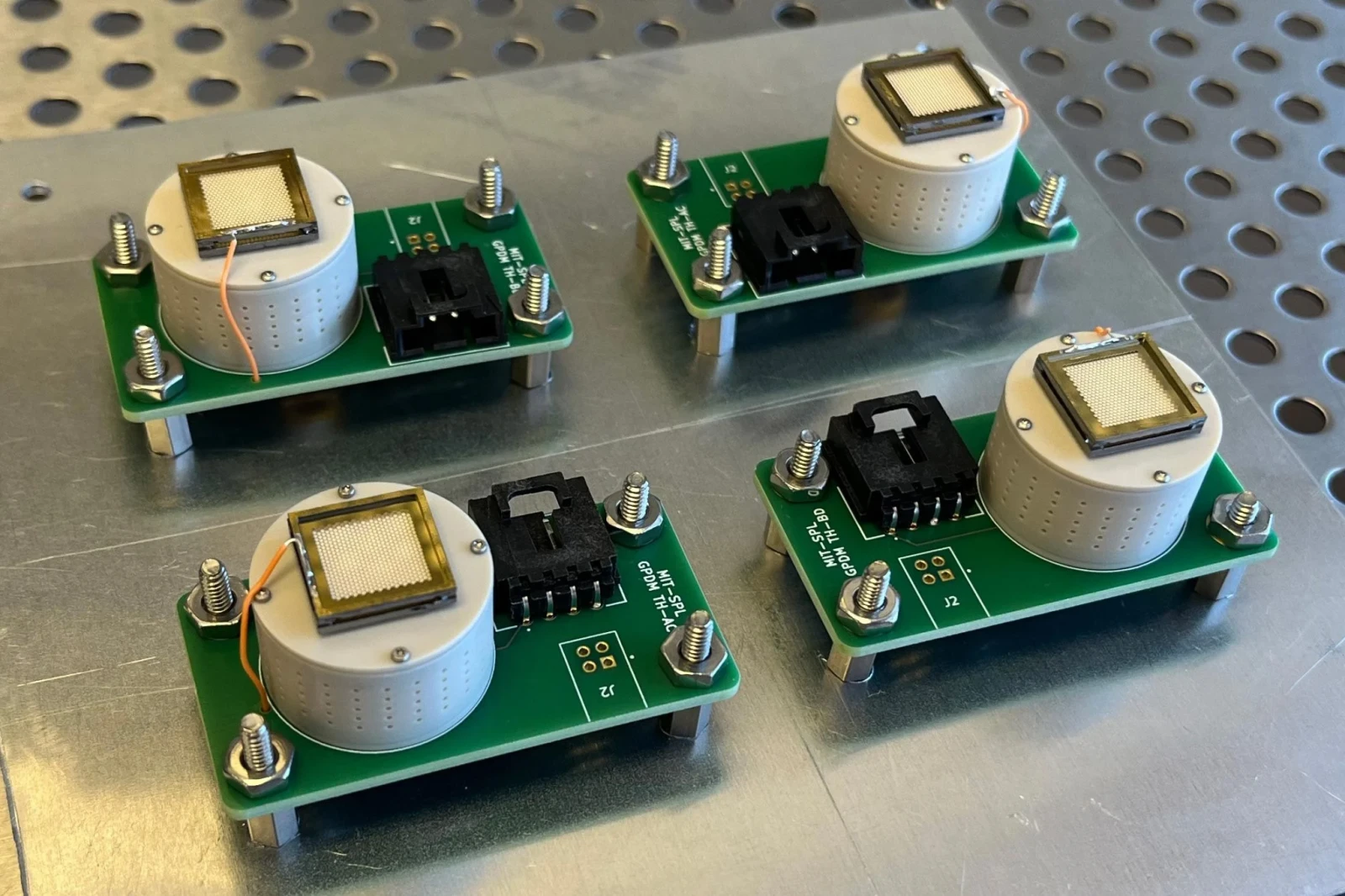
The miniaturized devices, about the size of a thumbnail, are perfectly suited for CubeSats. They can operate continuously for long periods, gradually building speed over months or even years.
Key to the system’s success is the use of ionic liquids, which maintain a liquid state in extreme space environments where other fluids would fail.
“Ionic liquids are very stable and can even remain a liquid in space, which not a lot of materials can do,” Bruno says. “And it’s basically a sea of ions, which is why we base our technology around it, so we can pull those ions out into an electrospray.”
This stability allows for dependable electric propulsion and is crucial for missions that demand endurance over long periods in space.
ASCENT Propellant: The Key to Dual-Mode Operation
The cornerstone of this propulsion system is ASCENT (Advanced SpaceCraft Energetic Non-Toxic), a fuel originally developed by the U.S. Air Force as a safer alternative to hydrazine for chemical thrust.
Researchers soon discovered ASCENT’s ionic liquid composition made it suitable for electrospray propulsion as well, enabling a single fuel to power both propulsion modes.
“ASCENT happens to be an ionic liquid mixture,” Bruno says. “And we said, hey, that’s the stuff we typically use. Theoretically, this should work. Let’s go figure out how.”
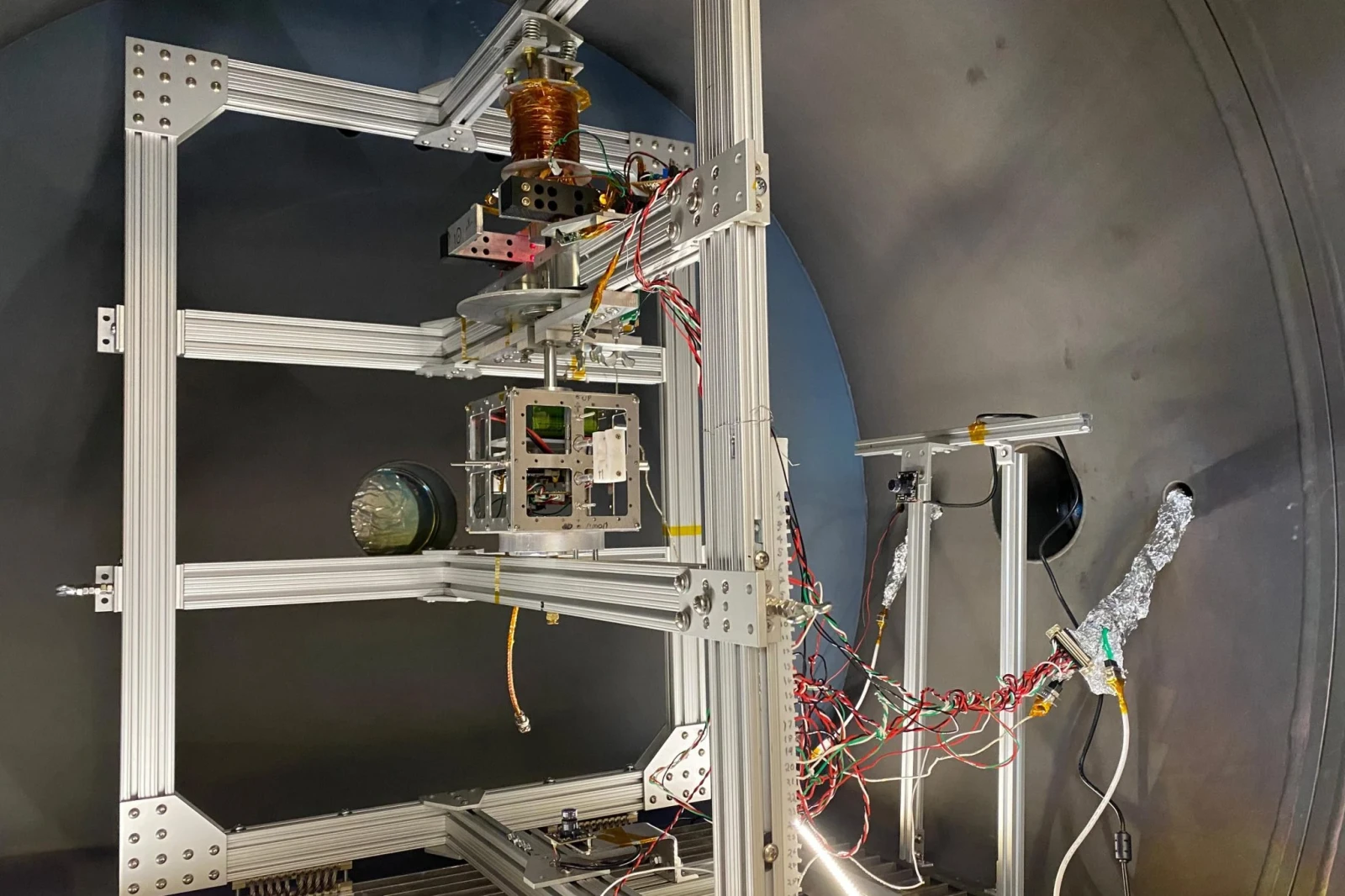
The team conducted extensive testing in vacuum chambers where electrospray thrusters powered by ASCENT ran for up to 100 hours, proving their ability to operate continuously and produce measurable thrust on CubeSat-sized structures.
Results showed ASCENT matched the performance of common electrospray fuels, confirming its dual-use potential and paving the way for practical spacecraft designs using a unified propellant.
Published in the Journal of Propulsion and Power, the findings represent a significant step toward achieving a combined chemical and electric propulsion strategy with a shared fuel.
Expanding Horizons: CubeSats Reaching Mars and Beyond
The ramifications could revolutionize space exploration. Future CubeSats might cruise vast distances using electrospray propulsion and switch to chemical thrusters for rapid maneuvers near targets like Mars or asteroids.
“We could send CubeSats to Mars, or the asteroid belt, where they could make the journey slowly, using electrospray thrusters,” says study co-author Paulo Lozano, the Miguel Alemán Velasco Professor of Aeronautics and Astronautics at MIT. “You could then use your chemical thrusters to quickly move to look at interesting features. You could have a lot more flexibility to do a lot more things.”
This adaptability offers cost-effective opportunities for missions that traditionally required heavy, expensive spacecraft loaded with fuel. Instead, smaller, versatile satellites could conduct extensive scientific investigations across the solar system.
Deploying fleets of CubeSats could enable simultaneous data collection from various locations, boosting scientific outcomes and lowering financial risk.
NASA's Upcoming Mission to Validate the Technology
NASA’s Green Propulsion Dual Mode mission will mark the first space deployment of this integrated propulsion concept. The CubeSat will feature one chemical and four electrospray thrusters sharing a common tank filled with ASCENT fuel.
This mission is groundbreaking as it introduces the first satellite equipped with a fuel tank serving dual propulsion methods.
“This will be the first time that a satellite will have a shared propellant tank,” states Lozano.
Beyond planetary exploration, Earth observation satellites could benefit too by enabling flexible positioning, quickly responding to dynamic events like storms while maintaining efficient station-keeping.
“Say there’s a storm coming, and you’d want to deploy your constellation of small satellites to observe over one location,” he says. “You could choose to send them quickly or slowly depending on the nature of the observation. And the only way to do that is if you have two propulsion systems, which is now possible.”
Advancing the Future of Small Satellite Missions
Additional testing confirmed that ASCENT performs comparably to standard electrospray propellants, encouraging optimism for further refinements that could enhance thruster capabilities.
“Compared to our normal electrospray propellants, ASCENT can provide similar performance in terms of thrust,” says Bruno. “Now that we know our thrusters work with ASCENT, we can start thinking of all the ways we can make them even better.”
As launch expenses drop and small satellites grow more advanced, propulsion systems remain a crucial determinant of mission success. MIT’s dual-propulsion system uniquely blends efficiency and versatility into a compact form factor. A successful NASA demonstration could redefine CubeSats, transforming them from Earth-bound satellites into explorers venturing throughout the solar system.
- Categories:
- News






0 comments
Sign in to Comment