
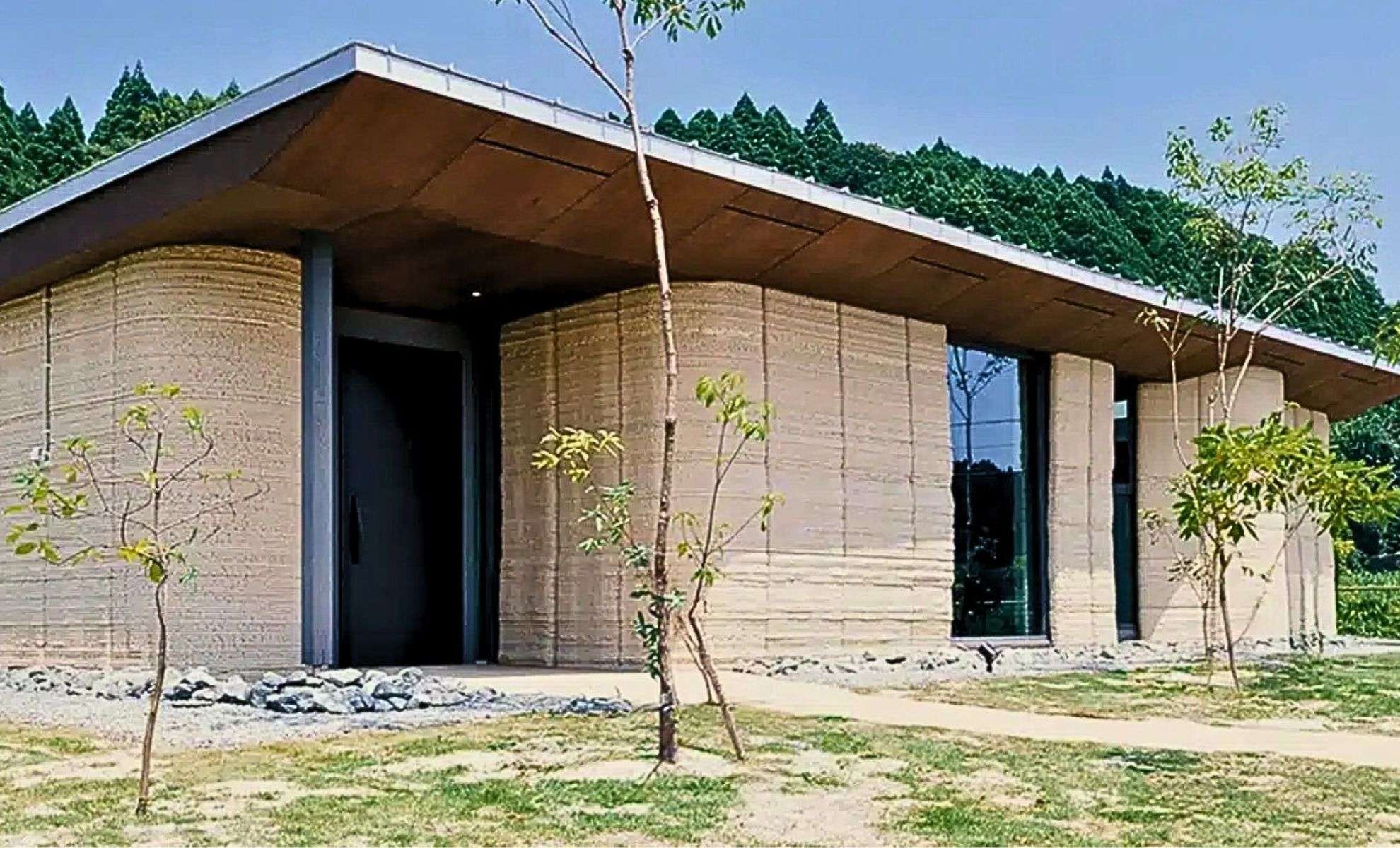
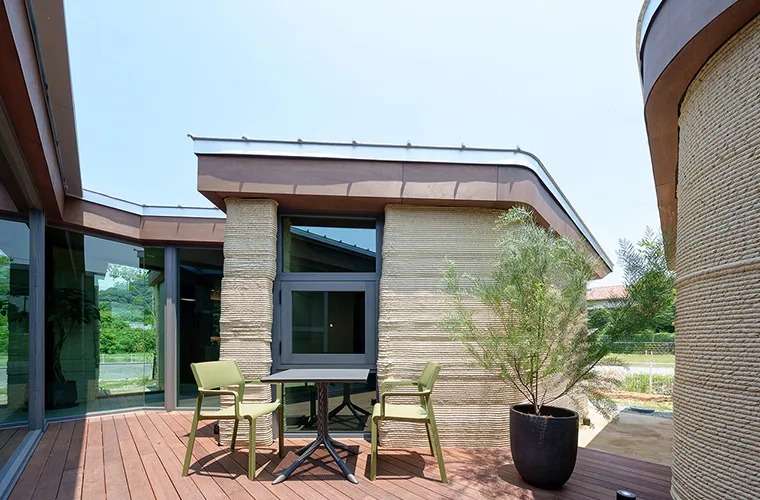
In the serene backdrop of Kumamoto Prefecture, Japan, an innovative building project is capturing worldwide interest—less for its scale and more for what it deliberately omits: concrete. The Lib Earth House, designed by the Japanese company Lib Work, is Japan’s first 3D-printed residence constructed mainly from earth materials, potentially reshaping the future of eco-friendly architecture.
Concrete remains the second most used substance on the planet after water. The Global Cement and Concrete Association reports annual consumption exceeding 14 billion cubic meters, responsible for about 8% of global carbon dioxide emissions—mostly due to cement manufacturing. While various strategies have tried to reduce this footprint, few ventures have entirely removed concrete from the equation.
The Lib Earth House achieves this feat by utilizing a unique mix of soil, lime, and plant fibers. This blend is applied layer-by-layer with a large-scale robotic arm to shape the house’s outer shell, while an internal wooden framework provides structural stability. Preliminary figures indicate this method can lower construction-related emissions by as much as 50%, surpassing some timber-based projects, according to insights from MaterialDistrict.

Combining digital technology with natural building materials
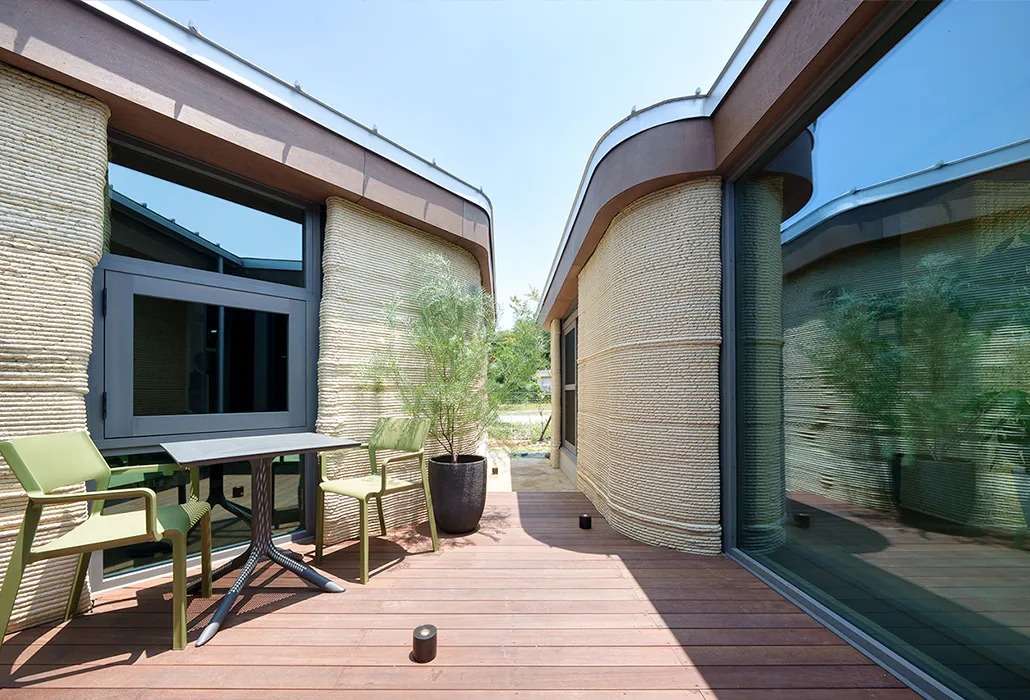
While 3D printing has been employed in architecture before, many designs still rely on cement-based substances. Lib Work’s innovation lies in merging precise additive manufacturing with traditional earth materials, effectively blending modern technology with age-old practices.
This soil-derived compound reduces carbon emissions and enables freeform architectural designs. The walls have smooth, flowing curves, interior spaces connect without right angles, and the overall shape resembles natural terrain. The company notes on its official website: “Conventional geometric forms have long limited home design. 3D printing liberates those limits.”
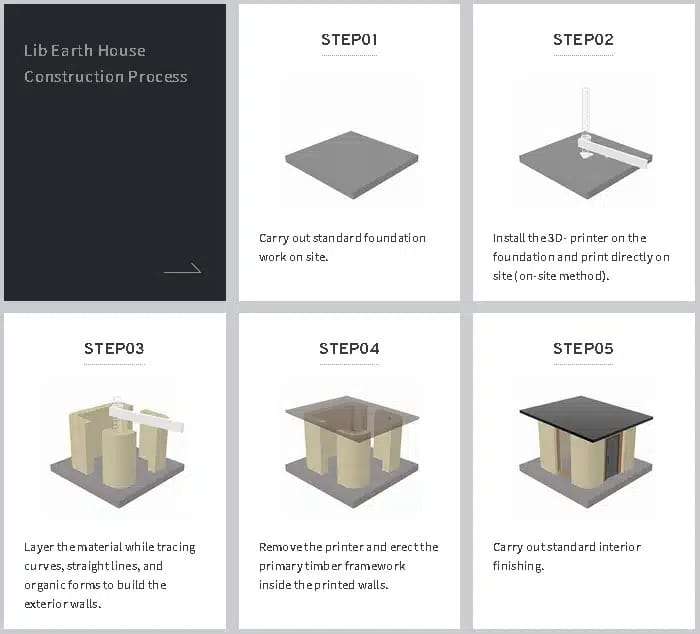
Beyond aesthetics, using soil sourced locally cuts transport emissions and supports design suited to the local climate. In Japan, where humid summers and earthquake hazards present challenges, earthen walls offer effective thermal regulation and structural flexibility, attributes long valued in regional traditional homes.
Addressing skilled labor shortages with robotics and earth materials
Japan’s building industry confronts a double challenge: reducing emissions and managing a shrinking workforce. As fewer young people enter the trades and the population ages, experienced craftsmen are dwindling. Introducing digital automation into construction enables Lib Work to counteract labor shortages while maintaining adaptability and local production.
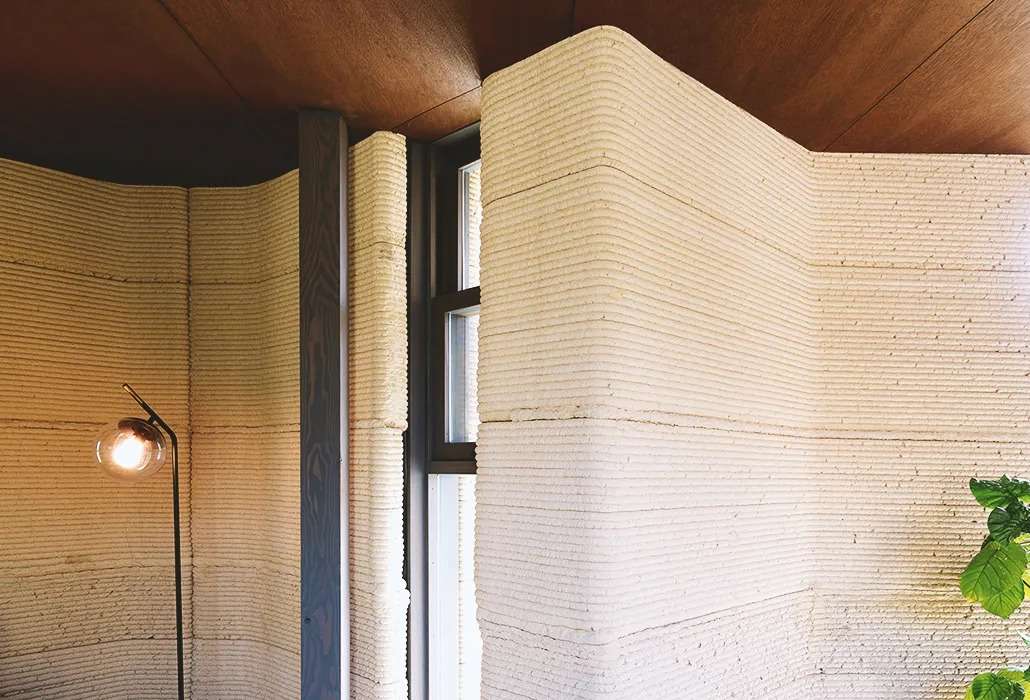
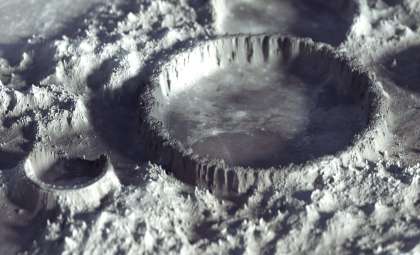
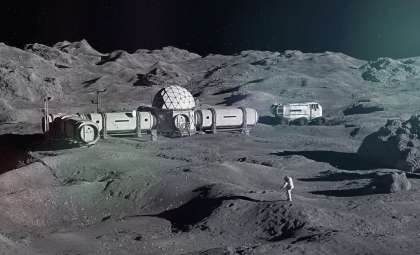
Lib Work envisions the Lib Earth House as a model for next-generation living, with aims extending beyond Japan. The company is investigating commercial ventures like boutique hotels, retail storefronts, and even off-planet shelters, inspired by NASA’s studies on 3D-printing habitats using extraterrestrial soil analogs for lunar and Martian missions.
Wider acceptance depends on regulations evolving alongside the technology. Importantly, the soil-based home complies with Japan’s Building Standards Act, including rigorous earthquake safety criteria, making it a rare instance of a 3D-printed structure both highly experimental and approved for human habitation under strict codes.
A modest prototype with far-reaching consequences
Although currently a single-story prototype equipped with solar energy systems and Tesla Powerwall batteries, the Lib Earth House represents a fundamental shift in construction philosophy, material choices, and building methods.
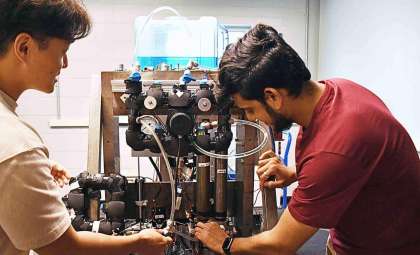
Academic circles are paying close attention. Faculty at Texas A&M University are advancing similar earth-based 3D-printed materials, while European innovators like Nagami and the Hassell Studio experiment with recycled plastics and modular urban structures.
These efforts exemplify emerging priorities centered on material reuse, decentralized construction, and more inclusive design—themes highlighted in the UNEP’s Global Status Report for Buildings and Construction. With goals requiring a 40% reduction in building sector emissions by 2030, innovations like the Lib Earth House are not only revolutionary but urgently needed.










0 comments
Sign in to Comment