
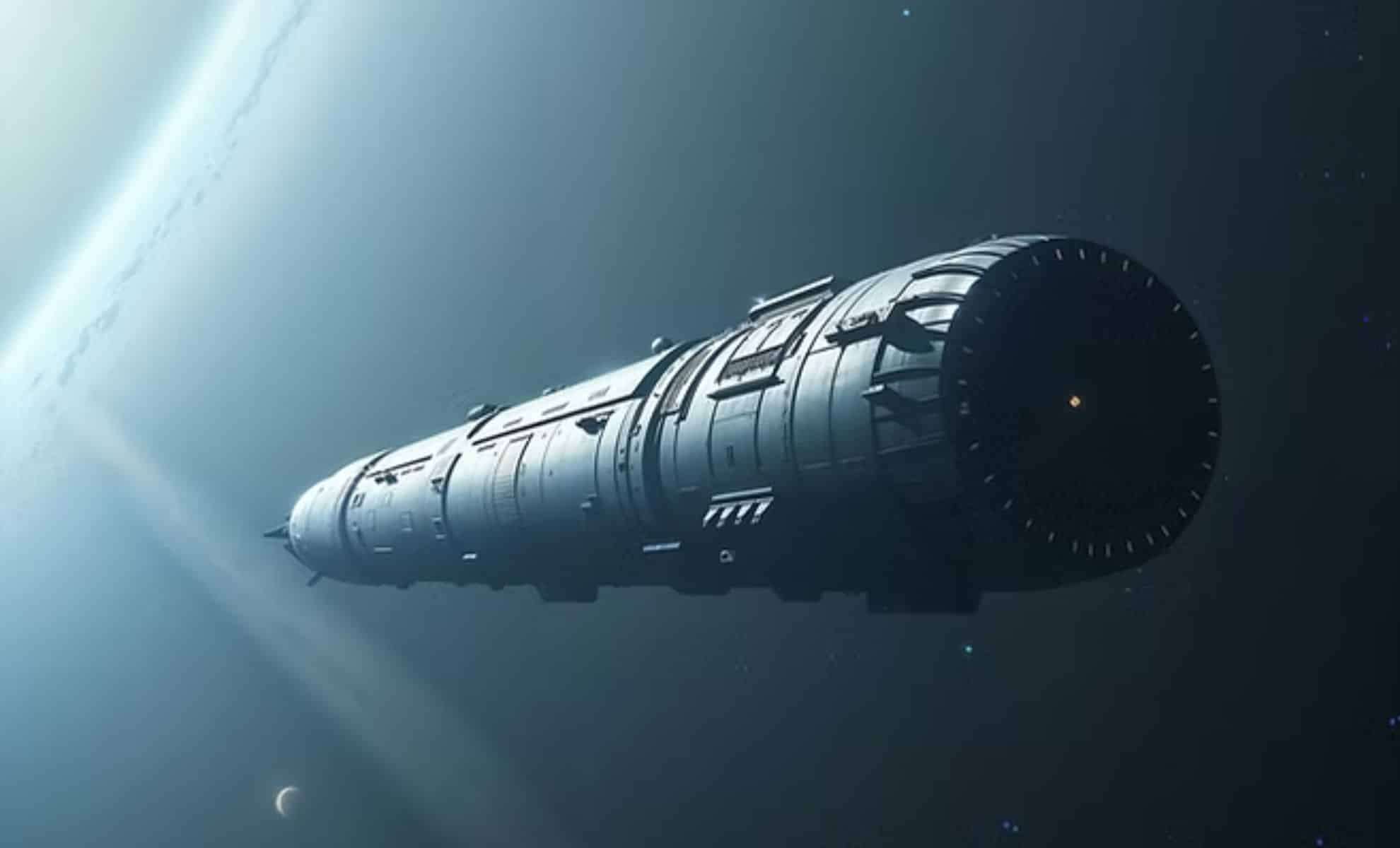
A visionary initiative has yielded an innovative spaceship concept capable of transporting humans on a permanent, 250-year expedition to Alpha Centauri, our nearest neighboring star system. Developed through the international Project Hyperion contest, this design has inspired experts across disciplines. Titled Chrysalis, the proposed vessel is engineered to support a community of 1,000 individuals living across multiple generations.
Designing a Fully Autonomous Spacecraft for Eternal Departure
Extending an incredible 58 kilometers (36 miles) in length, Chrysalis incorporates a complex network of ecological environments essential for sustaining life throughout the extended mission. Facilities include food cultivation zones, libraries, parks, multi-story residences, schools, and athletic centers. A centerpiece is its 130-meter-tall “cosmos dome”, outfitted with expansive glass panels that enable passengers to experience weightlessness while gazing out into the cosmos.
Energy generation would rely on advanced nuclear fusion reactors, anticipated to provide consistent power over the long journey. High-speed rotation of concentric cylinders would create artificial gravity, replicating Earth-like conditions vital for everyday life and work on board.

Living Conditions Within the Multi-Generational Spaceship
The ship’s interior divides into specialized shells, each dedicated to distinct purposes to maintain passenger health and comfort. One zone focuses on agriculture and biomes, re-creating diverse Earth habitats such as tropical and boreal forests and arid scrublands. These ecosystems serve to prepare inhabitants for the planned colonization of an exoplanet, specifically Proxima Centauri b, located approximately four light-years away.
Protecting Earth's genetic variety is another mission priority, with a genetic repository preserving seeds, embryos, and DNA from species aboard. A closed-loop cycle manages water and nutrient recycling, ensuring conservation of vital resources throughout the voyage.
While plant cultivation forms the cornerstone of food supplies, animals would be housed sparingly, mainly for ecological balance rather than consumption. Synthetic protein production, utilizing lab-grown technology analogous to current developments, would supplement dietary needs. These strategies support survival during the 250-year interstellar trek.
Supporting a Thriving Community of 1,000 in Space
The Chrysalis concept extends beyond survival, focusing on nurturing a vibrant society within deep space. Living quarters occupy the third shell, segmented into 20 sectors featuring “module houses” for the 1,000 residents. These modular units offer privacy while encouraging community interaction and mobility between sectors.
Shared amenities such as parks, libraries, and leisure areas are integral to passenger well-being. Large panoramic windows and wall displays simulate familiar Earth environments, helping maintain psychological health and a bond to their origins.
The vessel’s social design fosters cohesion, allowing flexible family arrangements without strict rules. Families with children can stay together or choose to relocate within the ship’s sectors as desired during the mission.
The Cosmos Dome: Gateway to the Universe
One of the most captivating features of life aboard Chrysalis is the cosmos dome, an exclusive observation area for passengers to connect visually with the surrounding expanse of space.
This impressive glass dome offers sweeping star views and serves as the venue for the annual “Chrysalis Plenary Council” assembly, uniting all travelers. Notably, the dome faces backward toward Earth and the Sun, symbolically keeping the ship linked to its point of origin.
Recently, this concept won first place in the Project Hyperion competition, which challenged teams to devise feasible generation ship models capable of sustaining human life for centuries.
- Categories:
- News








0 comments
Sign in to Comment