
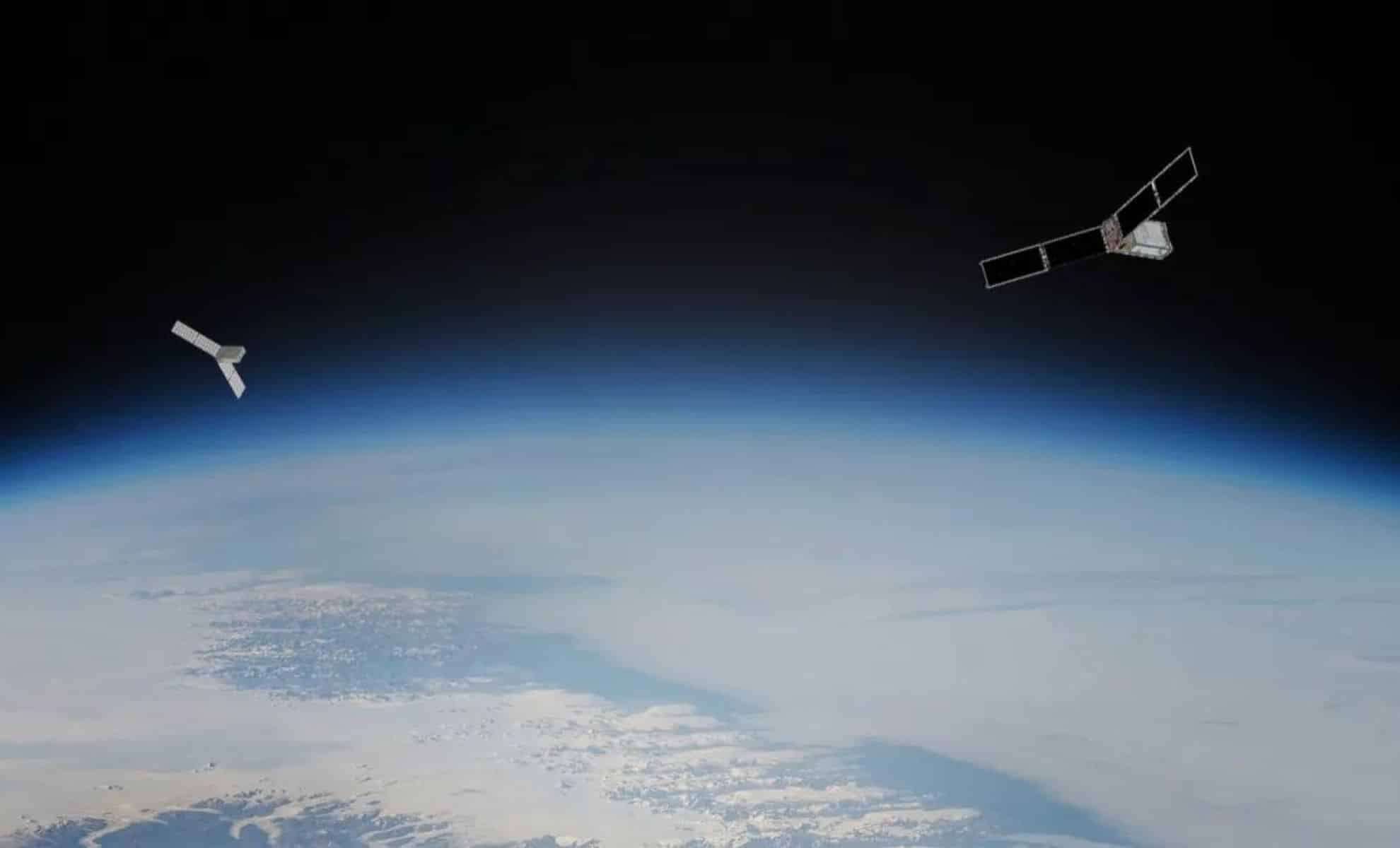
NASA is preparing to deploy a pair of climate-focused cubesats within the Polar Radiant Energy in the Far-Infrared Experiment (PREFIRE) to gain new insights into heat emission from Earth's polar regions, which is pivotal for understanding climate change.
Mission Highlights: PREFIRE's Climate Exploration
Scheduled for liftoff in May 2024, the PREFIRE mission includes two satellites named “Ready, Aim, PREFIRE” and “PREFIRE and ICE.” Orbiting near the poles, these compact satellites will measure far-infrared radiation, responsible for about 60% of polar heat loss. This data will deepen knowledge of polar climate processes and their influence on global weather patterns.
A collaborative enterprise between NASA and several research institutions, PREFIRE aims to close major gaps in our comprehension of Earth’s radiation budget, focusing on far-infrared emissions.

By zooming in on polar zones, PREFIRE will shed light on the mechanisms behind heat dissipation in these critical regions and how they affect the broader climate.
Key Scientific Goals
The core aim of PREFIRE is to capture far-infrared wavelengths beyond 15 microns from orbit—measurements never previously achieved. This will enable researchers to analyze how polar clouds, humidity, and surface conditions govern heat release. The collected information will feed into climate models, refining forecasts related to sea level rise and polar environmental shifts.
Understanding far-infrared radiation is essential since it represents a large yet underexplored segment of Earth’s energy flow. PREFIRE’s data will provide a missing puzzle piece, enabling more precise climate models vital for guiding policy and adaptation strategies.
Launch Information
The cubesats will be sent into orbit on separate missions. “Ready, Aim, PREFIRE” will launch aboard a Rocket Lab Electron rocket from New Zealand, with “PREFIRE and ICE” following shortly after. These launches form part of NASA's integrated approach combining small and large missions to tackle climate science challenges.
Rocket Lab’s Electron rocket offers precision delivery of small payloads to targeted orbits, making it the ideal launch vehicle for the PREFIRE cubesats. This mission illustrates NASA’s growing reliance on commercial partners to conduct frequent, cost-efficient scientific projects.
Cutting-Edge Technology
Both cubesats carry a miniaturized thermal infrared spectrometer inspired by NASA's Moon Mineralogy Mapper, previously validated on Mars and lunar missions.
The onboard spectrometer exemplifies breakthrough design in reducing complex optics for far-infrared observations, enabling high-resolution data collection critical for advancing knowledge of Earth's energy balance. Its proven reliability stems from extensive testing on past planetary explorations.
Importance of Far-Infrared Radiation
Far-infrared radiation is fundamental in Earth's heat budget, especially for heat loss at the poles, yet measuring it precisely from space has been historically difficult. PREFIRE’s mission is to overcome these hurdles and deliver comprehensive far-infrared emission data.
Accurate far-infrared measurements are vital to evaluate how cloud formation and surface characteristics influence thermal radiation escape, which in turn impacts global climate, ocean circulation, and atmospheric dynamics.
Wider Impact and Accessibility
The PREFIRE mission highlights NASA's dedication to advancing climate science. By making its data publicly available, the mission encourages worldwide collaboration and enhances collective understanding of climate mechanisms. The mission’s outcomes will be influential for global climate forecasting and mitigation efforts.
Open access to PREFIRE’s datasets ensures researchers everywhere can engage with and build upon the findings, promoting transparency and accelerating climate research progress. These contributions will support more robust climate models and inform international adaptation policies.
- Categories:
- Astronomy ,
- News ,
- Space ,
- Nasa ,
- Aircraft











0 comments
Sign in to Comment