
NASA is gearing up to launch Artemis II, marking the first manned lunar mission in over 50 years, with a potential liftoff as early as February 2026. This accelerated target, ahead of the initial April deadline, highlights NASA’s confidence in the spacecraft and astronaut readiness.
According to a BBC News report from September 23, 2025, this flight forms a key component of the expansive Artemis program, which seeks to return humans to the lunar surface and develop a sustainable lunar presence. Artemis II will focus on circling the Moon, representing the boldest crewed mission since the 1972 Apollo 17 expedition.
Setting Course for Deep Space Exploration
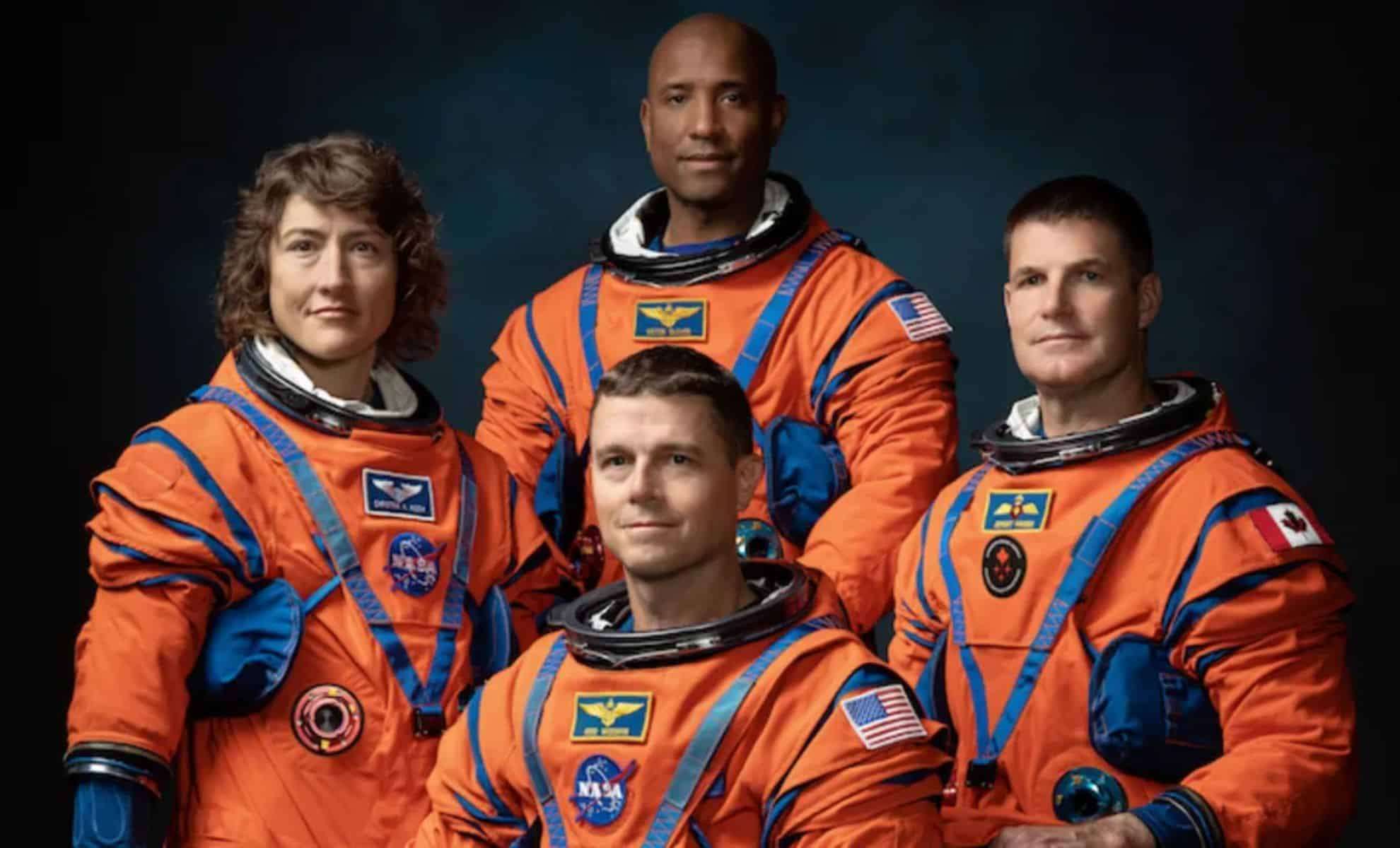
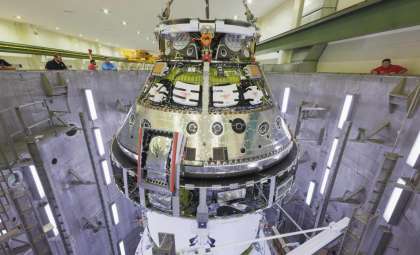
The crew of four astronauts—Reid Wiseman, Victor Glover, Christina Koch from NASA, and Jeremy Hansen from the Canadian Space Agency—will embark on a ten-day journey aboard the Orion spacecraft. They will be the first humans to venture beyond low Earth orbit in more than five decades, traveling at least 5,000 nautical miles (9,200 kilometers) beyond the Moon.

During this mission, Orion will traverse a distance exceeding 230,000 miles away from Earth. Although there is no lunar landing planned, the mission plays a vital role in validating life-support systems, communication technologies, and other essentials for future surface excursions. Lakiesha Hawkins, NASA’s acting deputy associate administrator, remarked at a press briefing, “We together have a front row seat to history.”
The Space Launch System (SLS) rocket, designed to propel Orion into space, is reported to be nearly ready by Artemis Launch Director Charlie Blackwell-Thompson. The remaining steps involve coupling Orion with SLS and performing in-depth ground validations.
Mission Overview and Operations
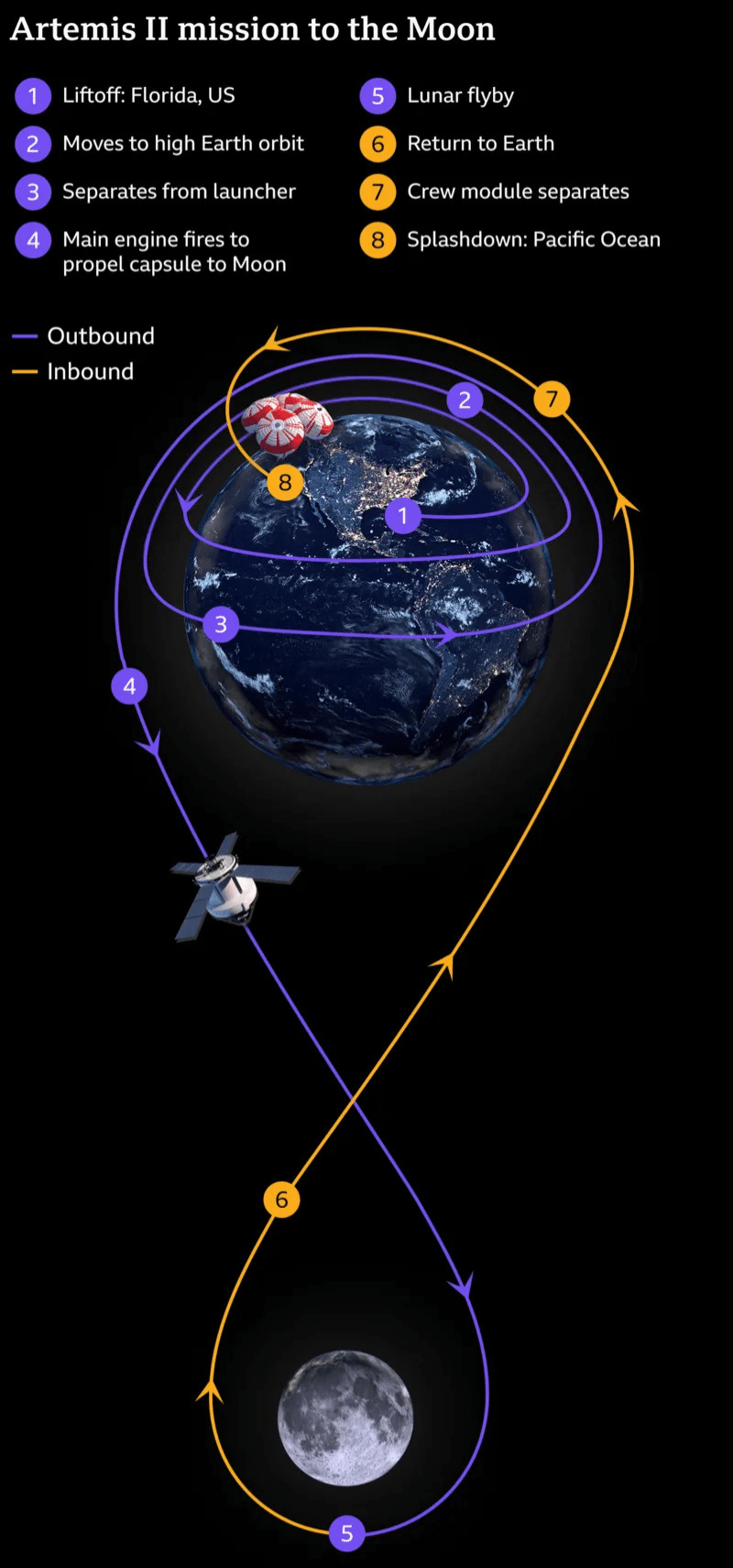
After launch, the SLS will ignite its boosters and core stage to send Orion into orbit around Earth. Following booster separation, the Interim Cryogenic Propulsion System (ICPS) will boost Orion into a higher orbit. About 90 minutes post-launch, Orion’s solar panels will unfurl to supply power when in shadow.
The astronauts will undertake a Proximity Operations Demonstration, manually guiding Orion through practice maneuvers with the ICPS—a crucial rehearsal for future lunar docking operations, often called a “space ballet”.
Approximately 23 hours after liftoff, Orion’s service module will perform the Translunar Injection (TLI) maneuver, setting course for the Moon. The outbound trip spans four days, featuring system diagnostics and additional crew training.
Scientific Exploration Beyond the Surface
The astronauts will double as experiment subjects during the flight. A pioneering aspect of this mission involves analyzing biological samples derived from their own blood. Scientists will grow organoids—miniature tissue constructs—before and after the mission. This approach will help NASA investigate how microgravity and cosmic radiation affect human tissues.
“We want to be able to study in depth the effect of the microgravity and the radiation on these samples,” stated Dr. Nicky Fox, NASA’s chief scientist. “I’m certainly not going to dissect an astronaut! But I can dissect these little organoid samples and really look at the difference.”
Post lunar flyby, Orion will sling around the Moon and begin a four-day journey back to Earth. During atmospheric re-entry, the service module will detach, allowing the crew module to descend safely under parachutes into the Pacific Ocean near California.
Looking Ahead to Artemis III
Artemis II sets the stage for the program’s subsequent goal: Artemis III, which aims to return humans to the Moon’s surface. NASA targets a launch date of no earlier than mid-2027; however, experts acknowledge that delays are probable. Dr. Simeon Barber from the Open University described the timeline as “optimistic,” noting, “’No earlier than’ is familiar language for NASA, and it means just that. That’s the earliest possibility,.”
One of the main uncertainties is SpaceX’s Starship, designated as the lunar landing vehicle. While extensive resources have been dedicated to its development, it has yet to demonstrate reliable orbital flights, putting its readiness for crewed lunar missions in question.
- Categories:
- News









0 comments
Sign in to Comment