
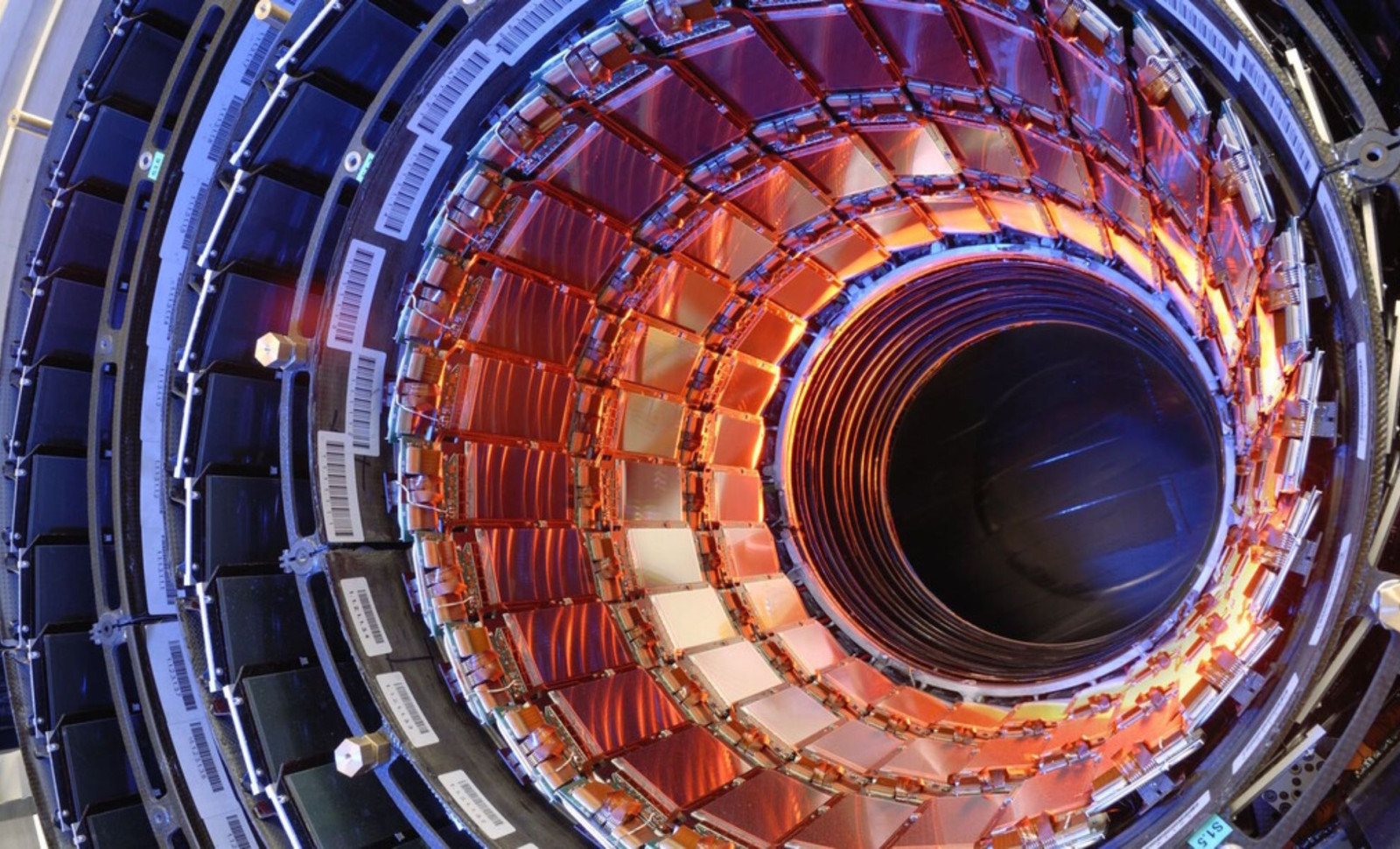
In early 2023, a neutrino boasting an energy 100,000 times greater than anything produced by the Large Hadron Collider (LHC) reached Earth, astonishing researchers worldwide. This unprecedented finding has prompted experts to reevaluate current astrophysics theories. Researchers at the University of Massachusetts Amherst propose that this extraordinary particle might have originated from a primordial black hole, potentially revealing new clues about the elusive nature of dark matter.
Typically, neutrinos come from the Sun or energetic cosmic events like supernovae, but this event was exceptional. The particle carried an astounding energy level of 220 PeV (peta-electronvolts), far exceeding any known cosmic source's output. Physicists emphasize that such extreme energy defies conventional understanding of cosmic phenomena. What’s even more surprising is that the IceCube Neutrino Observatory in Antarctica, despite years of monitoring, had not detected anything close to this.
Neutrino With Unprecedented Energy
On February 13, 2023, the ARCA detector, a part of the KM3NeT telescope situated in the Mediterranean Sea, identified a neutrino unlike any previously recorded. This particle’s energy of 220 PeV dwarfs that of particles generated by the LHC, known for its extreme acceleration capabilities. High-energy neutrinos like this were only theoretical until now, as no astrophysical source was expected to produce such energetic particles.

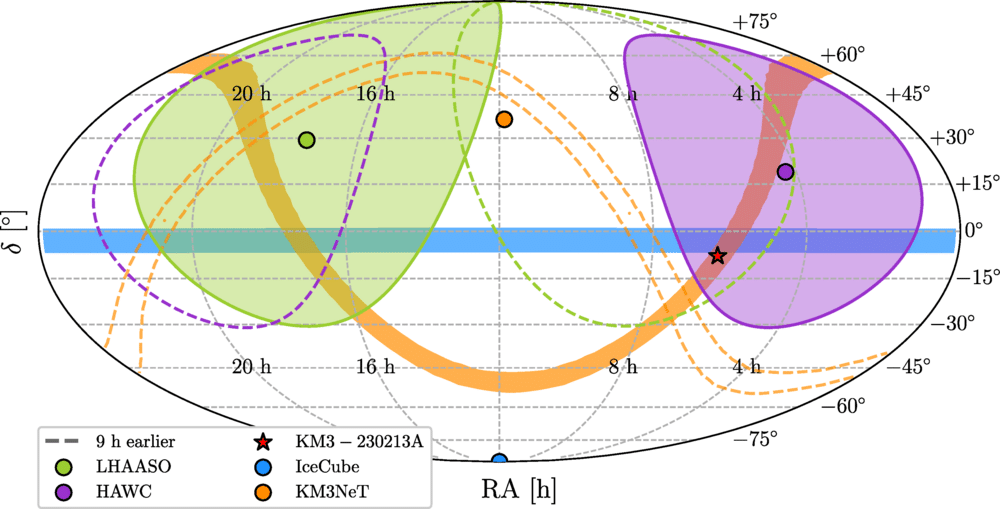
The findings, detailed in Physical Review Letters, baffled the scientific community. The energy level detected did not align with established cosmic models developed over many years. Further intrigue arose from the fact that if such powerful neutrinos were common, then IceCube—a larger and long-standing neutrino observatory—would have recorded similar events, yet it had found none.
Could an Ancient Black Hole Be the Source?
Instead of linking the neutrino to typical cosmic phenomena, the UMass research group suggested an origin involving a primordial black hole, a tiny black hole formed shortly after the Big Bang. These theoretical entities emerged during the chaotic early moments of the universe and are much smaller than modern black holes, possibly as small as atomic nuclei.
Though these tiny black holes might seem improbable, they are hypothesized to gradually evaporate, emitting particles via a process known as Hawking radiation.
“The lighter a black hole is, the hotter it should be and the more particles it will emit,” stated Andrea Thamm, a physicist at UMass Amherst and co-author of the new study. “As PBHs evaporate, they become ever lighter, and so hotter, emitting even more radiation in a runaway process until explosion.”
Connecting the Dots: Insights Into Dark Matter
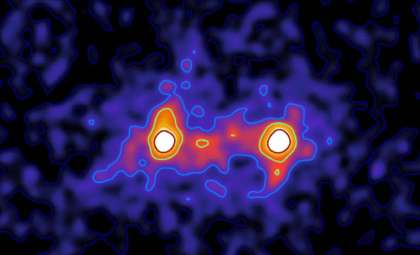
What does this mean for the enduring mystery of dark matter? The UMass team hypothesizes that primordial black holes may carry a “dark charge,” a force linked to dark matter, potentially clarifying why dark matter is so difficult to detect despite composing the bulk of the universe.
“It gave us a new window on the Universe. But we could now be on the cusp of experimentally verifying Hawking radiation, obtaining evidence for both primordial black holes and new particles beyond the Standard Model, and explaining the mystery of dark matter,” Dr. Michael Baker, also a member of the University of Massachusetts Amherst, stated.
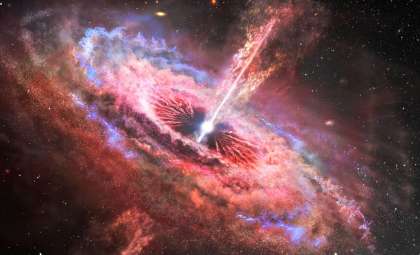
Unlike typical black holes, which emit gamma rays as they evaporate, these primordial black holes remain in a “quasi-extremal” state and only reveal their presence by emitting high-energy neutrinos during their final explosive moments. This theory fits seamlessly with the observations from KM3NeT, yet explains why IceCube did not detect any accompanying gamma radiation.
- Categories:
- Physics




0 comments
Sign in to Comment