

A diminutive asteroid, designated 2024 RW1, was identified just hours before it entered Earth's atmosphere over the Philippines on September 4, 2024.
Measuring approximately one meter across, this near-Earth object was discovered by Jacqueline Fazekas with NASA’s Catalina Sky Survey team in Arizona only eight hours prior to its atmospheric entry. This event represents just the ninth recorded occasion of an asteroid being observed before impact, underscoring notable progress in asteroid observation and planetary defense strategies.
The European Space Agency (ESA) confirmed that 2024 RW1 was forecasted to sweep through Earth’s atmosphere around 12:46 p.m. ET (16:46 UTC), disintegrating safely above the western Pacific Ocean close to Luzon Island. Authorities in the Philippines encouraged residents to watch for a vivid fireball, though viewing conditions might be challenged by tropical storm Yagi.

Detection Highlights Growing Capabilities in Planetary Defense
The late-stage spotting of 2024 RW1 highlights advancements in monitoring near-Earth objects (NEOs). While this asteroid posed no risk due to its modest size, the swift detection reflects the effectiveness of programs such as the Catalina Sky Survey. An ESA representative noted, “Our ability to identify asteroids mere hours before atmospheric entry is continually improving,” emphasizing the rapid identification of this object.
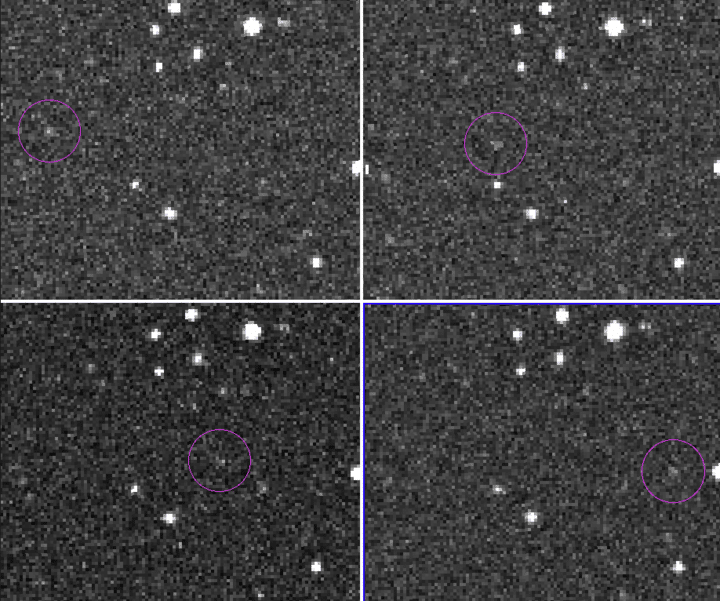
Although planetary defense efforts have traditionally focused on larger potential impactors, this event confirms the ability to detect smaller space rocks in real time. NASA’s Asteroid Watch along with ESA’s defense teams continue to vigilant monitor space for objects that may pose future threats. NASA Asteroid Watch tweeted, “While 2024 RW1 is harmless, it provides valuable experience to enhance our detection methods for future asteroids.”
Atmospheric Entry Over Philippine Waters
ESA’s forecast placed 2024 RW1 entering Earth’s atmosphere at roughly 12:46 p.m. ET (16:46 UTC), producing a luminous fireball visible over Luzon Island. Despite viewing possibly being hindered by tropical storm Yagi, observers might still witness an impressive spectacle. The asteroid ultimately vaporized without risk to life or infrastructure. ESA also released an impact prediction map on social platforms, pinpointing the expected entry location.
⚠️☄️Incoming!
A roughly 1 metre asteroid will strike Earth’s atmosphere over the Philippines near Luzon Island at 17:08 UTC today, 4 September.
The object is harmless, but people in the area may see a spectacular fireball!
Discovered this morning by the Catalina Sky Survey,… pic.twitter.com/UjQLbh3fFr
— European Space Agency (@esa) September 4, 2024
Such events, termed bolides, occur when small asteroids ignite brightly as they enter the atmosphere. The International Meteor Organization (IMO) indicated that this fireball could potentially lead to meteorite fragments reaching the ground. “We anticipate this to be a notable and scientifically insightful event,” the IMO commented, urging witnesses to submit their reports to their network.
An Uncommon and Informative Occurrence
This event ranks as only the ninth confirmed occasion of an asteroid being discovered in advance of its Earth impact, marking a milestone for planetary defense research. The astronomical community has dedicated significant effort to enhancing early warning systems to better track potential hazards. The Catalina Sky Survey remains a cornerstone observatory in scanning for swift-moving small objects like 2024 RW1.
This identification forms part of global initiatives aimed at early detection of larger asteroids capable of causing serious damage. Both ESA and NASA have invested in missions such as the DART mission and the forthcoming NEO Surveyor, designed to discover and, when needed, divert objects menacing Earth.
ESA emphasized on social media that small asteroids like 2024 RW1 serve as critical tests for international detection networks. This event aids in refining strategies for observing and tracking near-Earth objects in the future.










0 comments
Sign in to Comment