
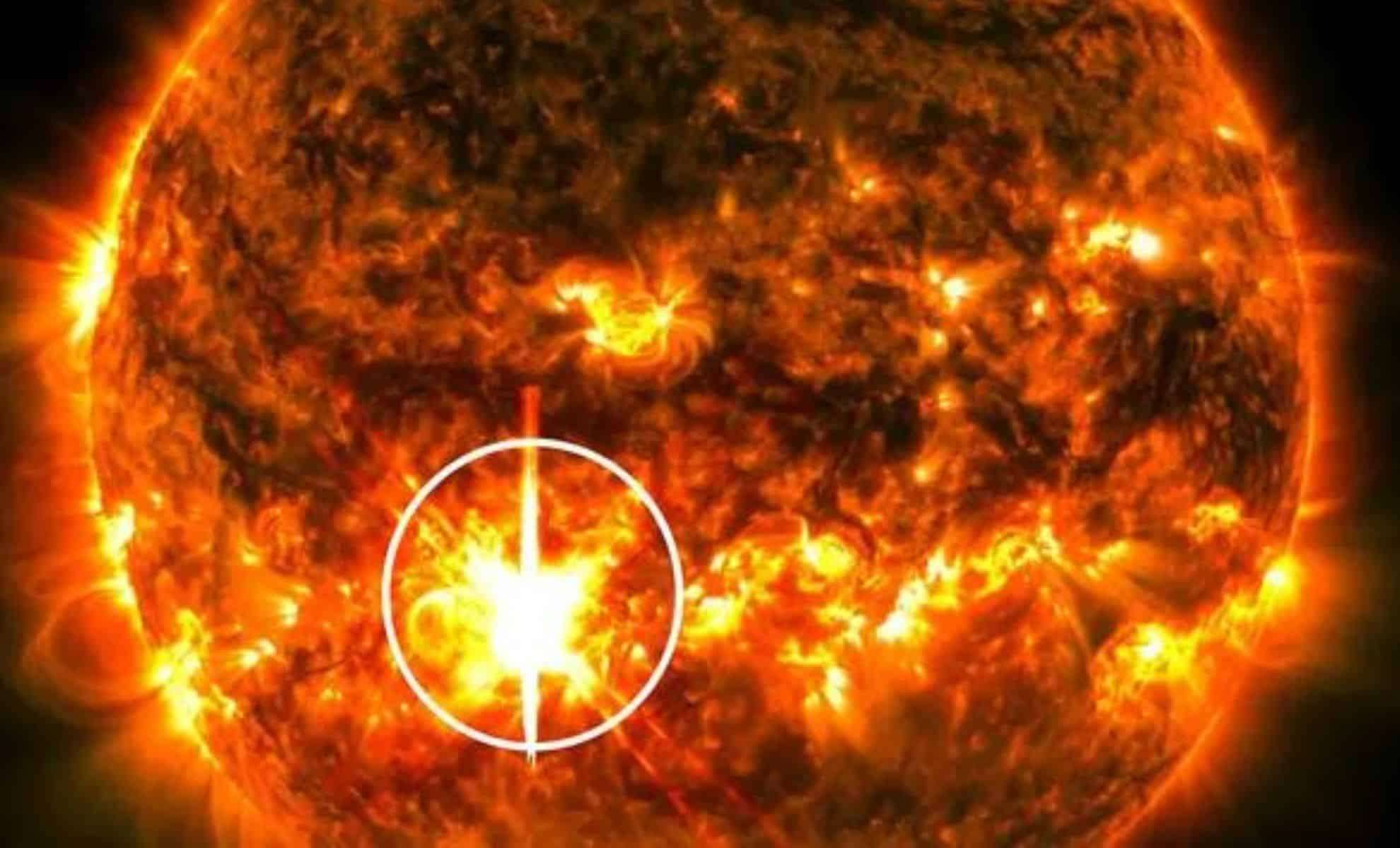
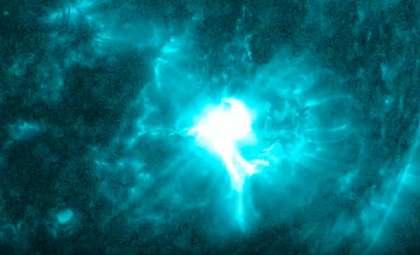
On October 1, 2024, the sun released a remarkable X7.1-class solar flare, ranking among the strongest occurrences in recent years. This event caused a brief radio communication blackout over parts of the Pacific Ocean and propelled a coronal mass ejection (CME) toward Earth.
The incoming CME—a large cloud of charged particles from the sun—is projected to strike Earth by October 4, potentially causing geomagnetic storms and vibrant auroras visible far beyond the polar regions. This powerful solar activity is linked to the sun’s journey toward the peak of Solar Cycle 25. This cycle has already seen numerous intense flares and storms. The approaching CME might produce breathtaking auroral displays but could also interfere with various communication networks, power systems, and satellites.
An Intense Solar Flare Emerges from Sunspot AR3842
The X7.1 flare originated from sunspot AR3842, a highly volatile region near the sun’s equator. Solar flares are ranked by strength, with X-class flares being the most powerful and capable of impacting Earth's atmosphere profoundly. The recent X7.1 flare ranks as the second-largest so far in Solar Cycle 25, trailing only an X8.7 flare recorded in May 2024. As solar researcher Harry Baker remarked, “The flare’s magnitude of X7.1 positions it as the second-strongest solar explosion during this solar cycle.”

The intense radiation from this flare penetrated Earth’s magnetic shield, temporarily disrupting radio communications across the Pacific, especially near Hawaii. Such radio blackouts happen when high-energy solar emissions ionize the Earth's upper atmosphere, hindering signals reliant on high-frequency (HF) bands. Consequently, some Pacific regions experienced interruptions in radio contact triggered by the flare’s intensity.
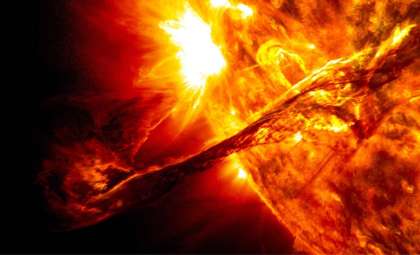
Additionally, the flare generated a coronal mass ejection (CME)—a gigantic burst of plasma and magnetic fields traveling through space. NASA’s simulations forecast this CME will hit Earth by October 4, potentially igniting a geomagnetic storm that could spark widespread auroras. When CMEs interact with Earth's magnetosphere, they can disturb satellite functions, navigation systems, and power infrastructures.
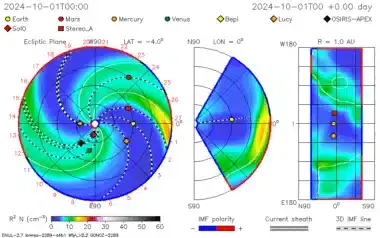
Anticipated Geomagnetic Storm Effects and Aurora Displays
When this CME arrives, it is expected to trigger a geomagnetic storm, which disrupts Earth's magnetic environment and can affect technology on a broad scale. Such storms happen as charged particles from CMEs disturb the magnetosphere, inducing currents that may impair satellites, electrical grids, and communications. The severity of these storms is rated on a scale, with more intense events causing greater disturbances. According to NASA’s projections, the upcoming storm could notably impact GPS-based communication, aviation networks, and military systems.
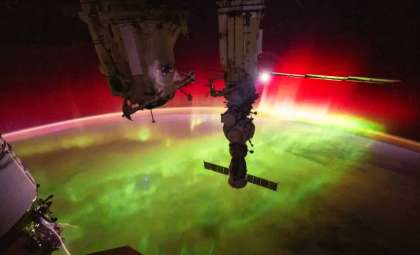
One captivating result of geomagnetic storms is the occurrence of auroras, commonly known as northern and southern lights. Typically confined near polar latitudes, these colorful light shows can shift toward the equator during intense geomagnetic events. The forthcoming storm might make auroras visible as far south as the northern United States and possibly Europe. These luminous displays happen when solar particles collide with atmospheric gases like oxygen and nitrogen, which then glow with vibrant green, pink, and red hues.
While auroras themselves are harmless and beautiful, the underlying geomagnetic disturbances carry risks for modern infrastructure. Power networks, especially those with limited safeguards, can suffer overloads or blackouts during extreme storms. Satellites crucial to communication and weather forecasting can also be vulnerable due to heightened radiation exposure, potentially leading to costly operational failures.
Solar Cycle 25’s Rising Solar Activity
The recent powerful flare fits into a broader pattern of increasing solar activity as Solar Cycle 25 progresses. The sun follows an approximately 11-year cycle characterized by fluctuating levels of solar activity, including quiet phases and periods with frequent flares and storms. Starting in 2019, the current cycle is moving toward its solar maximum, when activity peaks. Earlier predictions suggested a relatively mild cycle, but recent powerful flares have surpassed expectations. Solar physicist Meredith Garofalo noted, “This flare ranks as the second strongest of Solar Cycle 25, trailing only the tremendous X8.7 event in May.”
In 2024 alone, the sun has produced 41 X-class flares—exceeding the total number from the prior nine years combined. This surge indicates the solar maximum may be arriving ahead of schedule, prompting scientists to update their forecasts. The peak phase is expected to extend through 2025, likely bringing more flares, geomagnetic disturbances, and auroral phenomena in the near future.
An increase in solar activity elevates concerns about a recurrence of a large-scale event like the historic Carrington Event of 1859, which was the most severe geomagnetic storm on record. That event disrupted telegraph networks globally and produced auroras seen as far south as the Caribbean. If a similar event struck today, it could devastate power systems, satellite operations, and essential technologies, potentially causing trillions in economic damages. While rare, the rising frequency of X-class flares in Solar Cycle 25 has spurred renewed attention toward preparedness for such extreme solar storms.
Steps Toward Readiness for Solar Storms
With Solar Cycle 25 advancing into its active peak, space weather experts and agencies remain vigilant. The U.S. National Oceanic and Atmospheric Administration (NOAA) and NASA actively track solar flares and CMEs like the October 1 event, issuing alerts to operators of power grids, satellites, and aviation services. By forecasting CME impacts and geomagnetic storm strengths, these organizations help reduce potential damage from heightened solar activity.
Though the current CME is not forecasted to cause severe harm, it highlights the sun's powerful influence on Earth’s environment. Ongoing monitoring and preparedness efforts will be crucial for mitigating the impacts of future intense solar storms.
- Categories:
- Astronomy ,
- News






0 comments
Sign in to Comment