
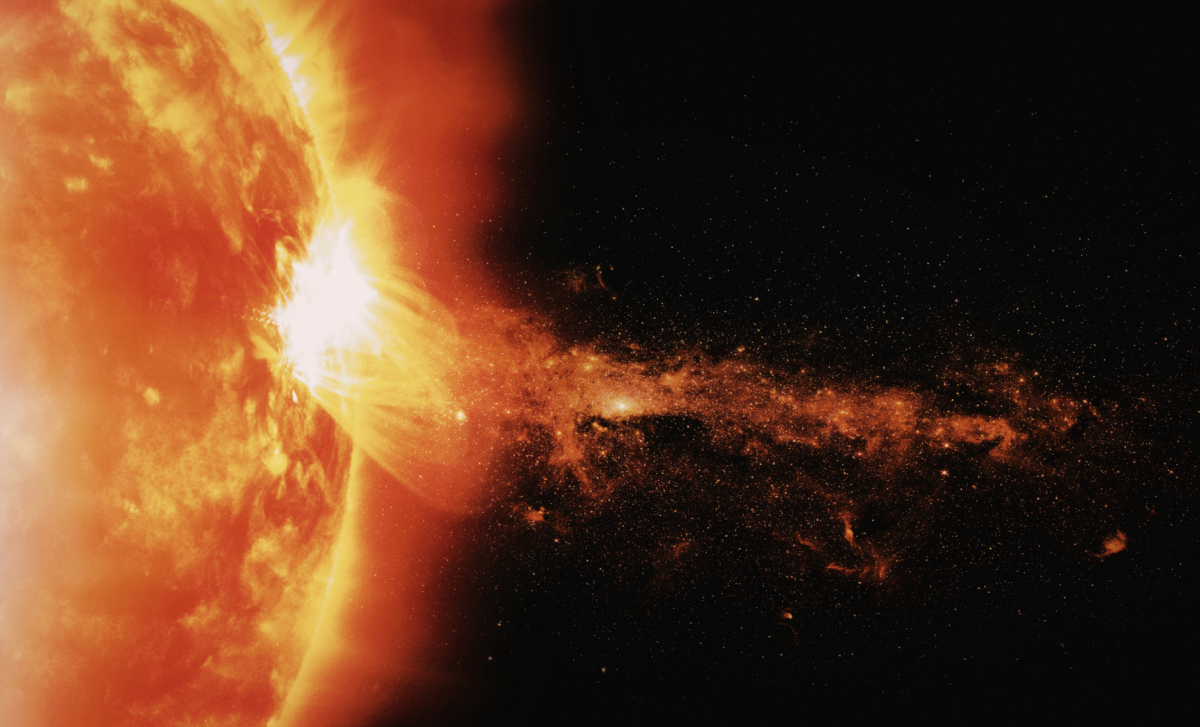
Using the Daniel K. Inouye Solar Telescope (DKIST), solar scientists have observed a flare exhibiting spectral features that contradict current solar theories, prompting a reevaluation of flare dynamics. Published in two recent papers, New Solar Flare Observations Challenge Leading Theories and Spectroscopic Analysis and RHD Modeling of the First Ca II H and H-epsilon Flare Spectra, these findings showcase intense calcium II H and hydrogen-epsilon emissions during the flare's trailing phase, unveiling complexities in the Sun’s atmospheric interactions not previously understood.
Revolutionary Solar Flare Observation
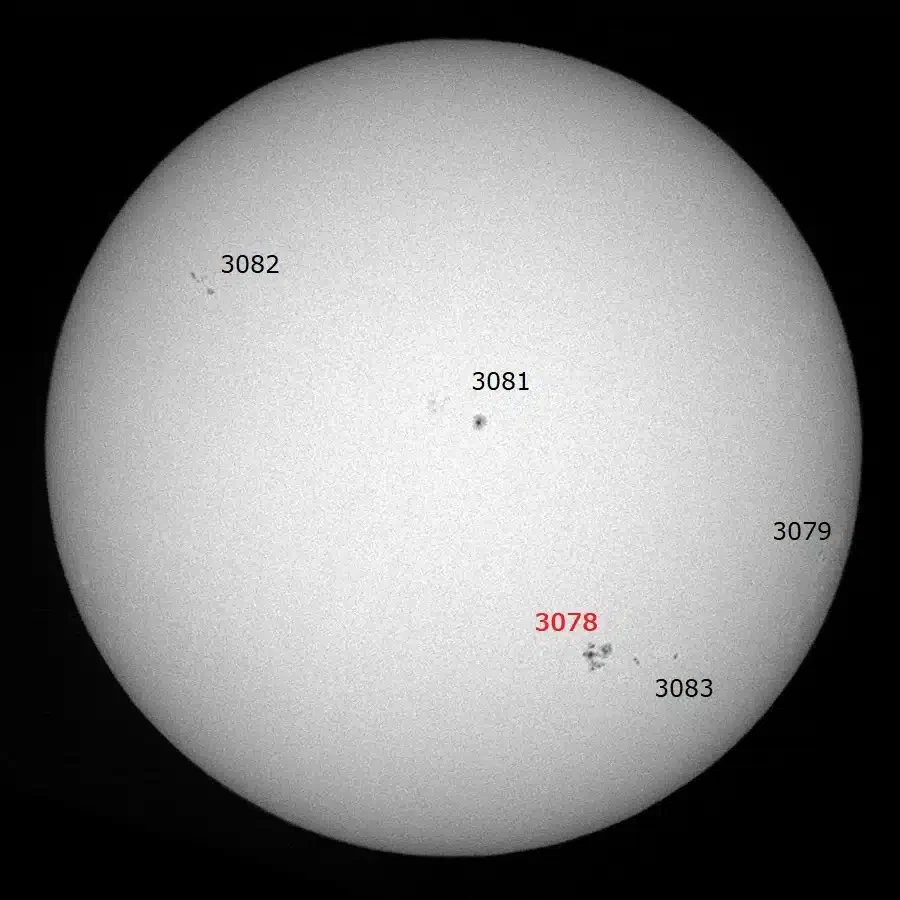
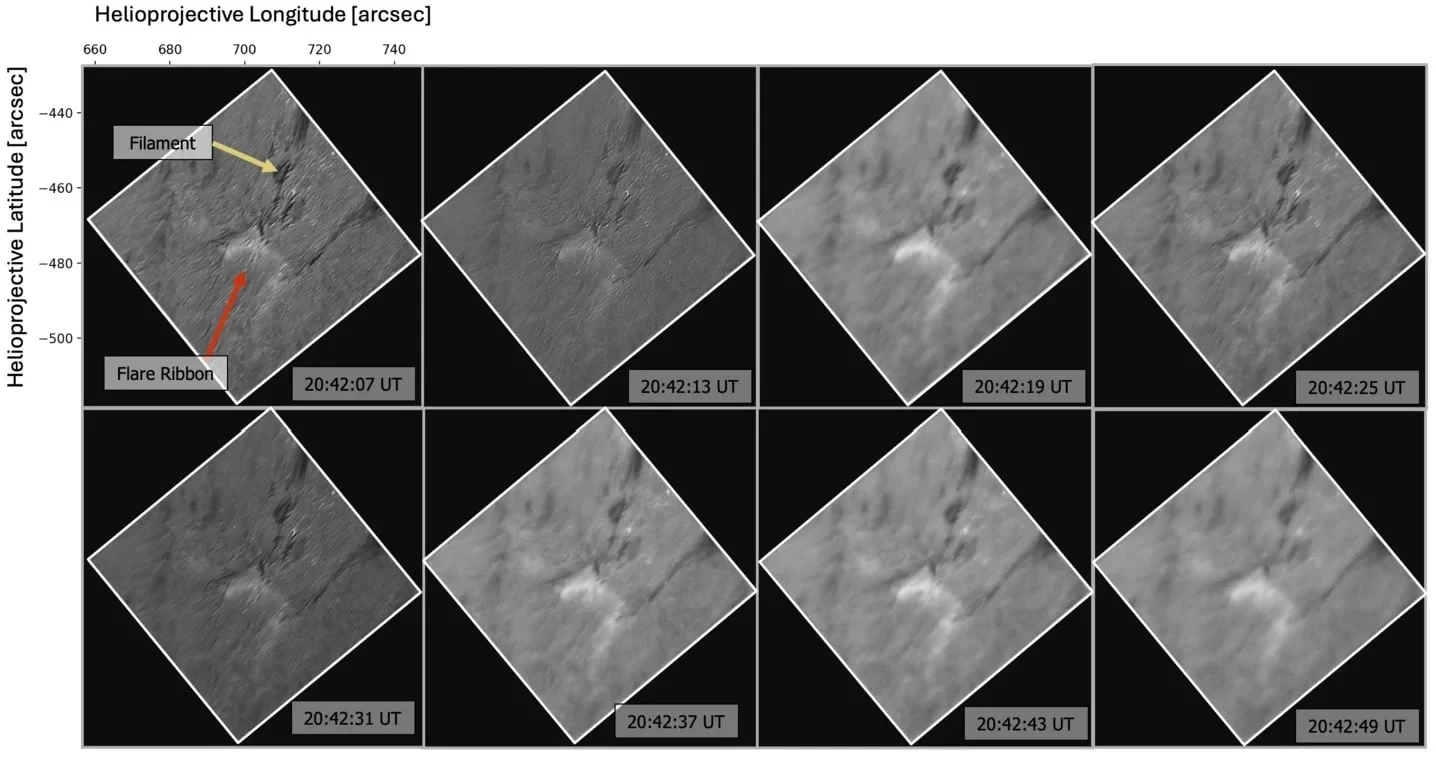
On August 19, 2022, astronomers recorded an unusual aftermath of a C-class solar flare with the Daniel K. Inouye Solar Telescope. Contrary to prior observations, the flare's decaying phase displayed prominent calcium II H and hydrogen-epsilon spectral lines, providing fresh evidence about the solar chromosphere—the intermediate atmospheric layer between the surface and the outer corona.
The remarkable intensity of these emissions challenges preexisting flare models. Far from being statistical outliers, these spectral signals hint at more complex atmospheric dynamics within the Sun, revealing mechanisms that have yet to be fully elucidated.

High-Precision Instruments Enable Breakthrough Insights
The ability to capture these atypical solar flare emissions is owed to DKIST’s cutting-edge observational power. This telescope’s exceptional resolution offered an unprecedented view into the complex interactions occurring during the flare’s decline, marking a first in observing such clear spectral signatures at this stage.
Initially targeting the flare's intensifying phase, the team unexpectedly recorded data from its fading phase instead. This revealed a stronger and more intricate emission pattern than anticipated, prompting a reexamination of theoretical frameworks.
“The data we collected not only surprised us but also pointed out weaknesses in our models of solar physics,” said Tamburri.
This discovery undermines existing assumptions that expect flare energy to diminish steadily after the peak. Instead, the persistence of strong energy signatures suggests there are additional processes at play beyond those currently recognized. This presents an important opportunity to refine flare models, with future observations poised to deepen our understanding.
Mechanisms Behind Solar Flare Atmospheric Heating
Solar flares unleash vast energy as magnetic tensions in the solar atmosphere abruptly release. These phenomena progress through distinct phases: a precursor, an impulsive explosive phase, and eventual decay. The impulsive stage triggers bursts of high-energy particles alongside intense x-ray and gamma-ray outputs. Traditionally, the decay indicates a gradual decrease in energy output, but the August 2022 data suggest a far more nuanced progression.
Instead of fading emissions as expected, the flare’s decay phase exhibited continued, unexpectedly strong spectral activity. The findings detailed in New Solar Flare Observations Challenge Leading Theories and Spectroscopic Analysis and RHD Modeling of the First Ca II H and H-epsilon Flare Spectra reveal that conventional models—whether through heat conduction or particle beams—fall short in fully accounting for the observed emissions. This underscores the Sun’s flare processes as more intricate and multifaceted than previously believed, urging solar physicists to reconsider current paradigms.
Advancing Our Understanding of Solar Flares
These revelations extend well beyond a singular flare incident, opening new investigative paths into solar flare physics. The surprising calcium II H and hydrogen-epsilon line behaviors demand more sophisticated models that can capture these emerging spectral phenomena.
Future advances will rely on the fusion of high-resolution observational tools like DKIST with enhanced computational models to decode the Sun’s dynamic and energetic flare events. Holistic observations encompassing all flare stages—from genesis through dissipation—will be critical for constructing a detailed and accurate understanding.
Ongoing improvements in instrumentation and theory promise to yield increasingly refined insights into solar activity, ultimately helping to unravel the complex solar mechanisms influencing our entire solar system.
- Categories:
- Science











0 comments
Sign in to Comment