

A recent intense solar flare, the most powerful in nearly 20 years, has dramatically increased radiation levels on the Martian surface.
Details of the Solar Flare Event
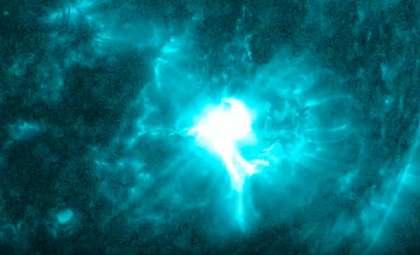
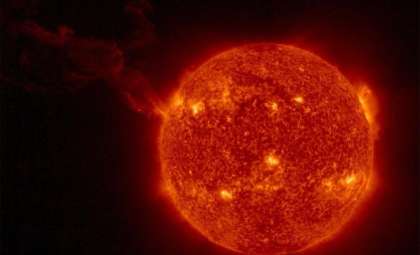
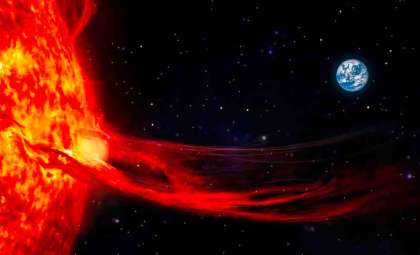
On May 20, 2024, sunspot AR 3664 unleashed an intense X-class solar flare that propelled gamma and X-rays directly towards Mars at light speed. This was soon followed by a coronal mass ejection (CME) that sent high-energy charged particles trailing behind the initial burst.
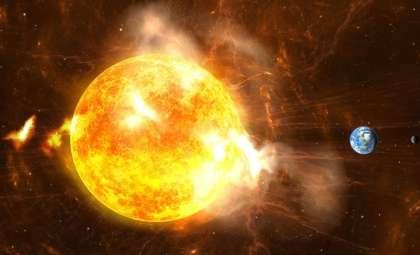
The solar flare ranks as the most powerful since September 2005, with its effects observed throughout much of the solar system, impacting planets from Mercury all the way out to Mars. Its intensity was sufficient to create noticeable effects on planetary atmospheres and surfaces.

European Space Agency solar physicist Dr. Miho Janvier highlighted the flare's broad impact: “The reason why the X-class flare that happened on the other side of the Sun is really interesting is because it’s associated with particles that were on the path of BepiColombo as well as Mars Express.” This event illustrates the extensive reach and interconnectedness of solar activity across the heliosphere.
Radiation Surge on Mars
Following the flare, radiation levels on Mars soared, amounting to an exposure comparable to receiving around 30 chest X-rays at once. While not immediately lethal, this radiation spike raises serious concerns for long-term health risks, especially for astronauts who may face recurring exposure during future missions to Mars.
Christina Lee from UC Berkeley’s Space Sciences Laboratory explained, “This was the largest solar energetic particle event that MAVEN has ever seen. There have been several solar events in the past weeks, so we were seeing wave after wave of particles hitting Mars.” Mars’ lack of a global magnetic shield combined with its thin atmosphere makes it especially vulnerable to such assaults from solar energetic particles.
Impact on Mars Orbiters and Rovers
The surge in solar radiation also affected Mars-orbiting spacecraft. Mars Odyssey’s star tracker, critical for navigation, was temporarily disabled for about an hour due to the influx of energetic particles. Although the system recovered, the disruption exposed how susceptible spacecraft systems are to solar storms.
MAVEN captured detailed observations of how these particles penetrate Mars’ atmosphere. Unlike Earth’s robust magnetic field and thick air, Mars offers minimal protection against solar radiation, emphasizing the importance of such data in preparing for safe human exploration.
Rising Solar Activity and Challenges Ahead
This solar flare is one of many as the Sun approaches the peak of its 11-year cycle, expected around mid-2025. As solar storms grow more frequent and intense, they will pose greater risks not only to Earth but to all planets within the solar system. These events threaten to damage electronics, interfere with communications, and jeopardize astronaut health.
The radiation spike on Mars highlights the significant obstacles human explorers will face. Due to the absence of a comprehensive magnetic field, protective measures will be essential. Using natural formations such as lava tubes as shelters is increasingly seen as a promising strategy to shield future colonists from harmful radiation.
Dr. Miho Janvier emphasized the importance of these findings: “This event is a stark reminder of the dangers posed by solar activity. Understanding these events and how they affect different parts of the solar system is crucial for the safety of future space missions.” Insights gained from this flare will help improve protection strategies for both astronauts and robotic explorers.
- Categories:
- Astronomy ,
- News ,
- Space








0 comments
Sign in to Comment