
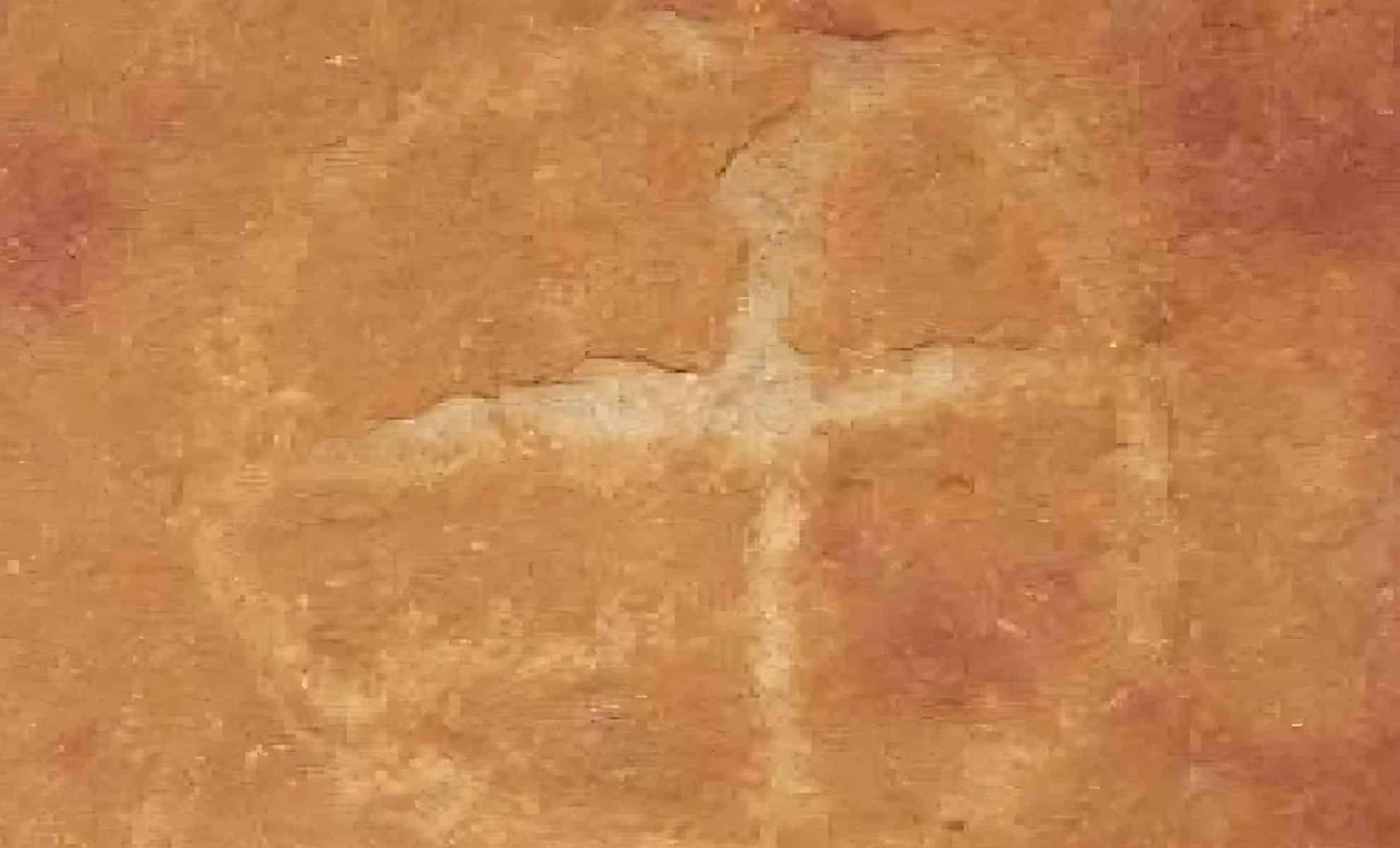
In the eastern region of Brazil, researchers have unveiled a remarkable archaeological location where petroglyphs dating back 9,000 years lie mere inches from what scientists identify as dinosaur footprints from 66 million years ago. This extraordinary site, known as Serrote do Letreiro in the Paraíba countryside, has the potential to transform our perspective on prehistoric human interactions with ancient fossils.
Petroglyphs Discovered Within Inches of Cretaceous Tracks
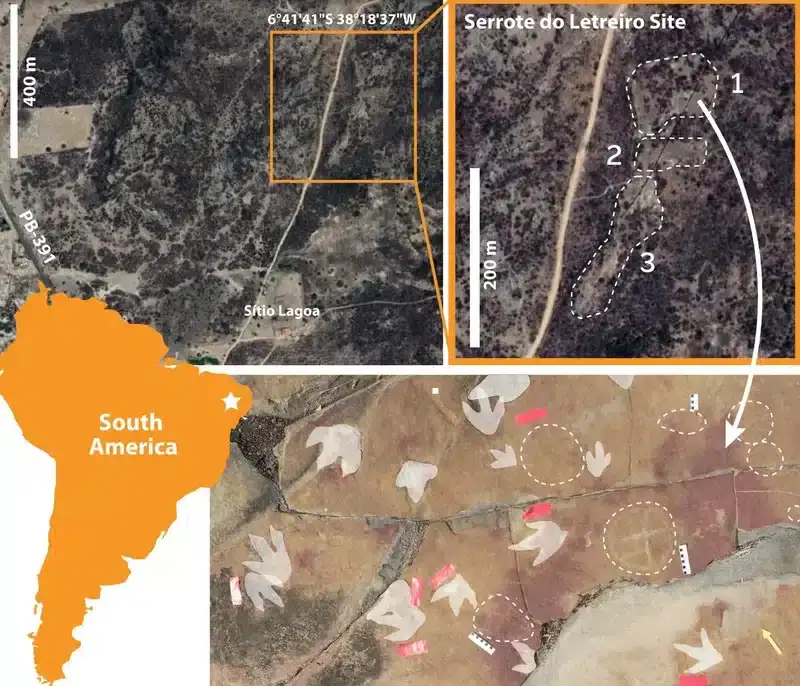
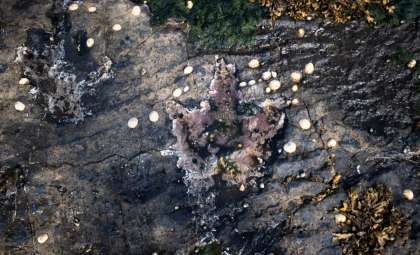
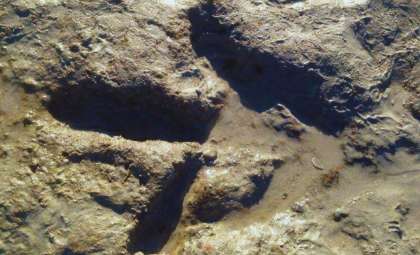
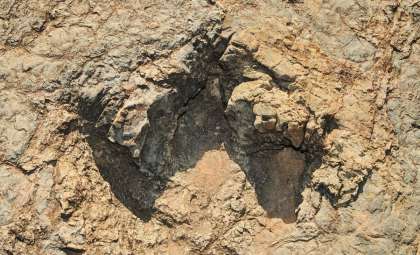
Although the location was initially recognized in 1975, only recent drone-assisted surveys have exposed the full scale of these ancient carvings and their surprisingly close proximity to the dinosaur footprints. Several of the petroglyphs are positioned just a few inches away from the preserved fossilized tracks.
The newly cataloged rock art showcases varied styles and methods, suggesting contributions from multiple artisans or generations. The engravings are attributed to small nomadic hunter-gatherer groups that inhabited the area between 9,400 and 2,620 years ago.

Scientists Propose a Cultural Bond with Fossil Impressions
According to the research team, featured in Nature, the site likely held spiritual or symbolic meaning. Leonardo Troiano, the Coordinator of Cooperation and Promotion at Brazil’s National Historic and Artistic Heritage Institute, suggested that the deliberate positioning of petroglyphs near the fossil footprints reflects a meaningful cultural connection between early humans and the ancient fossils they encountered.
“The ancient inscriptions (petroglyphs), strategically positioned around the dinosaur footprints, reveal a deep reverence for fossil tracks among Brazil’s ancient, indigenous communities”, wrote Troiano.
This discovery marks a fascinating convergence of archaeology and paleontology, where human cultural expression intersects with natural history. The site presents a unique chance to study how prehistoric peoples might have interpreted and interacted with fossilized evidence from a distant past.
Connecting Cultural Artifacts to the Fossil Legacy
Troiano described this exceptional site as a fusion of natural wonders and cultural heritage: “The findings bridge ancestral symbols with the fossil record and highlight the connection between native people and fossils.”
The researchers stress that the site's value extends beyond pure scientific data, representing what Troiano refers to as our “shared cultural heritage.”
“In essence, this site documents humanity’s enduring interaction with the natural environment and its fossil archives (which are particularly abundant in Brazil). It stands as a distinct and vital part of our collective cultural heritage.”
Exploring Early Human Perspectives on Extinct Creatures
This discovery raises intriguing questions about cognitive abilities, observation skills, and the creation of myths by prehistoric societies. Did these ancient groups grasp that the footprints belonged to creatures no longer alive? Were these fossil impressions viewed as sacred elements of their environment, or did they spark now-forgotten narratives?
Though it’s improbable these early humans understood dinosaurs scientifically, the careful placement of petroglyphs near the tracks suggests they recognized the footprints’ significance.
A Team Effort in Uncovering the Past
This groundbreaking find resulted from a collaborative effort including archaeologist Heloisa Bitú and paleontologists Aline Marcele Ghilardi and Tito Aureliano. Troiano expressed immense pride in their achievements: “The team couldn’t be prouder.”
“The petroglyphs were produced using a technique where a stone hammer was employed to perforate the surface, creating small, defined pits resembling stippling, while scraping involved rubbing a stone against the rock to carve out the designs,” Troiano explained.
- Categories:
- Science





0 comments
Sign in to Comment