
Records of dinosaur footprints found in Mongolia nearly seven decades ago had largely faded from scientific knowledge. The initial report consisted of only two pages, lacking photographs, precise site details, and thorough descriptions. This left researchers with just a name: Saijrakh.
Recently, scientists have relocated this overlooked location.
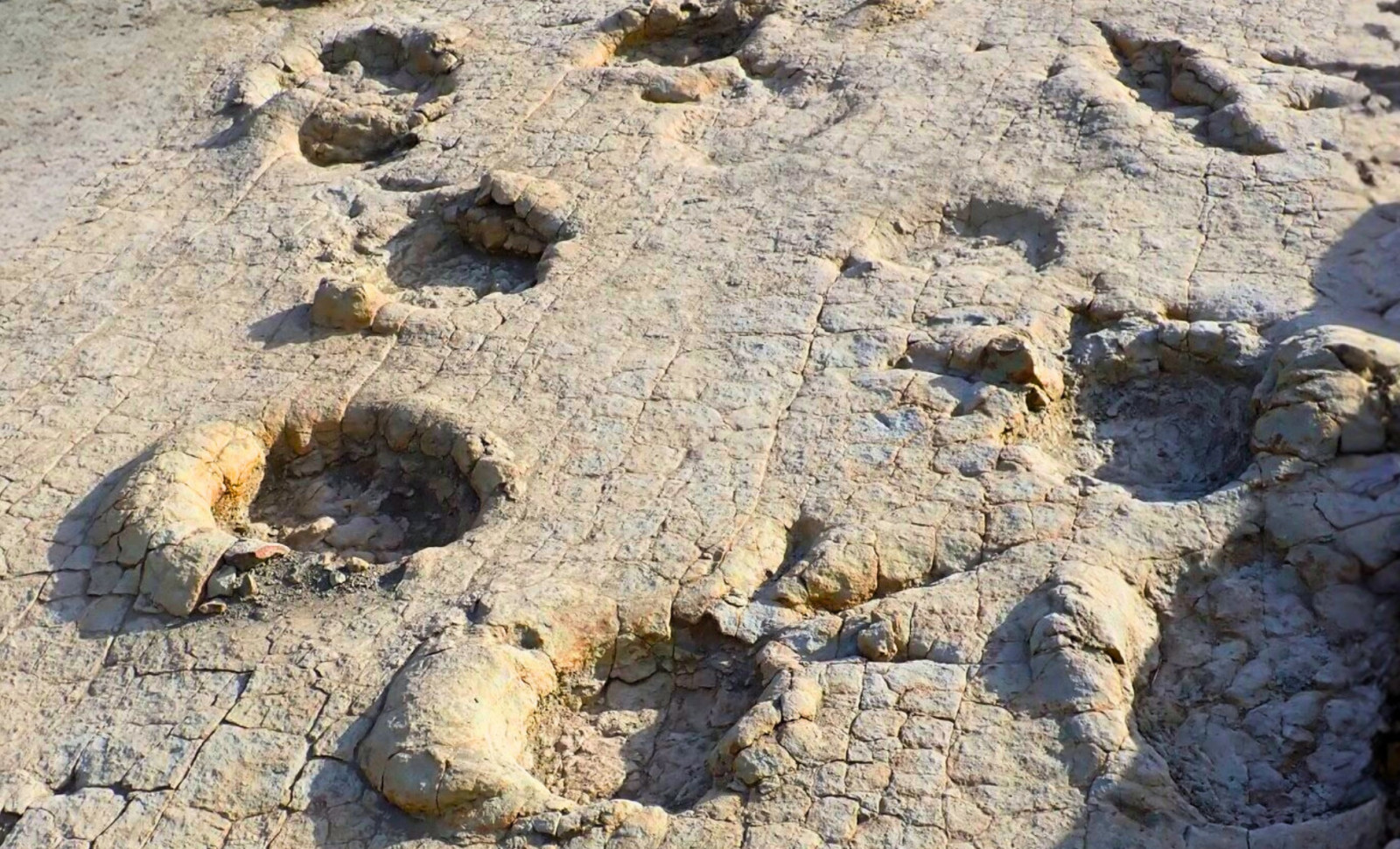
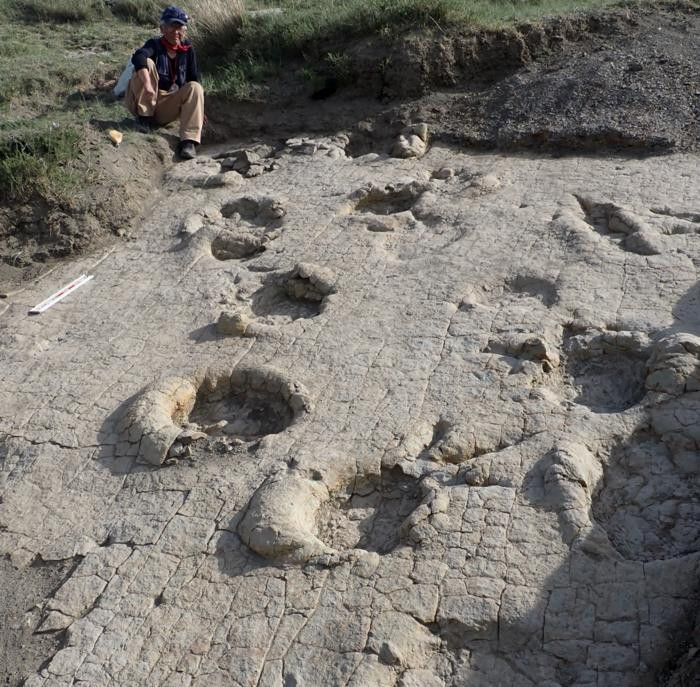
At the Saizhurakh site in northern Mongolia, 31 fossilized footprints were uncovered within a single ancient sand layer dating back about 120 million years. Two sauropod footprint trails extend over 15 meters across what was once a lakebed, alongside five separate theropod trackways intersecting the same sediment.

These footprints offer the inaugural physical proof that both large herbivorous and predatory dinosaurs inhabited this area during the Early Cretaceous period.
Early Cretaceous Fossil Records in Mongolia Had Remained Sparse
Mongolia is renowned as one of the world’s richest sources of dinosaur fossils. Yet, most findings date from the Late Cretaceous era, roughly 70 to 90 million years ago.
Fewer fossils exist from the Early Cretaceous, spanning about 100 to 120 million years ago. The specimens found to date predominantly include small to medium-sized species, such as Harpymimus, Psittacosaurus, and Choyrodon. Until now, no confirmed Early Cretaceous tracksites had been discovered in Mongolia.
This absence of data was significant beyond national boundaries. The Early Cretaceous was characterized by warm global climates, rapid diversification of flowering plants, and dinosaur migrations from Asia into North America. Positioned along this migration corridor, Mongolia offers a critical reference for comparing dinosaur populations across continents.
Without concrete evidence of large dinosaurs in Mongolian Early Cretaceous ecosystems, scientists could not confidently identify the species involved or their connections across regions.
Footprints Originated in a Changing Lake Environment
The tracks are embedded within the Shinekhudag Formation, a geological layer formed from sediments deposited in a vast Early Cretaceous lake. The majority of the sediment is fine black clay interspersed with thin sand layers, deposited as lake levels fluctuated.
During times when water receded, exposed stretches of moist sand and mud allowed dinosaurs to tread, leaving footprints in the soft ground. Subsequent sediment deposits preserved these impressions. All 31 footprints were impressed into one of these sand layers.
Two sauropod trackways span over 15 meters on this surface. The dinosaurs were similar in size, with hind footprints measuring around 70 centimeters in length. One track overlaps the other, leading researchers to infer that a second sauropod followed closely behind, moving at a slightly slower speed.
Scientists drew parallels with modern elephants, which sometimes step into the tracks of those ahead to follow well-worn paths. Footprints from the front feet exhibited a combination of anatomical features, including a medially projecting first toe claw alongside a more developed soft-tissue pad. The wide stance and track anatomy suggest these were titanosauriform sauropods, a varied group of long-necked herbivores found globally during the time.
Five Large Theropods Traveled the Area Independently
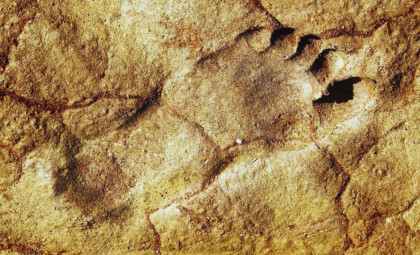
The same sediment layer bears five theropod trackways. The largest footprint measures 57 centimeters in diameter with widely spread toes.
Based on the dimensions and track proportions, scientists estimated these carnivorous dinosaurs were over 8 meters in length. This finding marks them as the largest Early Cretaceous predators documented in the region.
With trackways oriented in various directions, researchers concluded that these dinosaurs were not moving as a coordinated pack. Instead, the evidence points to five separate large theropods traversing the area independently, likely within a brief period before sediments hardened and preserved their traces.
Prior discoveries of sizable Early Cretaceous theropods were limited to China, South Korea, and Japan. The study published in Ichnos notes that the Saizhurakh site extends this range into northern Mongolia, bridging a gap in fossil records that spanned Mongolia and eastern Russia.
Nearby Geological Layers May Harbor Fossil Bones
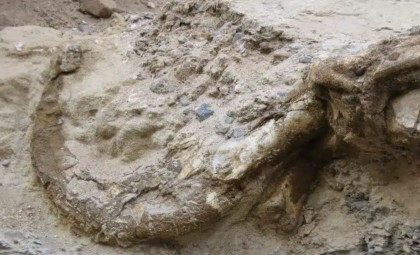
Beyond the track layer, researchers found gravel-rich sand deposits in surrounding rock exposures. These sediment conditions suggest potential for preserving skeletal remains.
Upcoming fieldwork will focus on uncovering bones, teeth, or other fossilized body parts belonging to the same dinosaurs that created the footprints. The team also aims to survey adjacent rock layers in search of additional tracksites.
- Categories:
- Science


0 comments
Sign in to Comment