
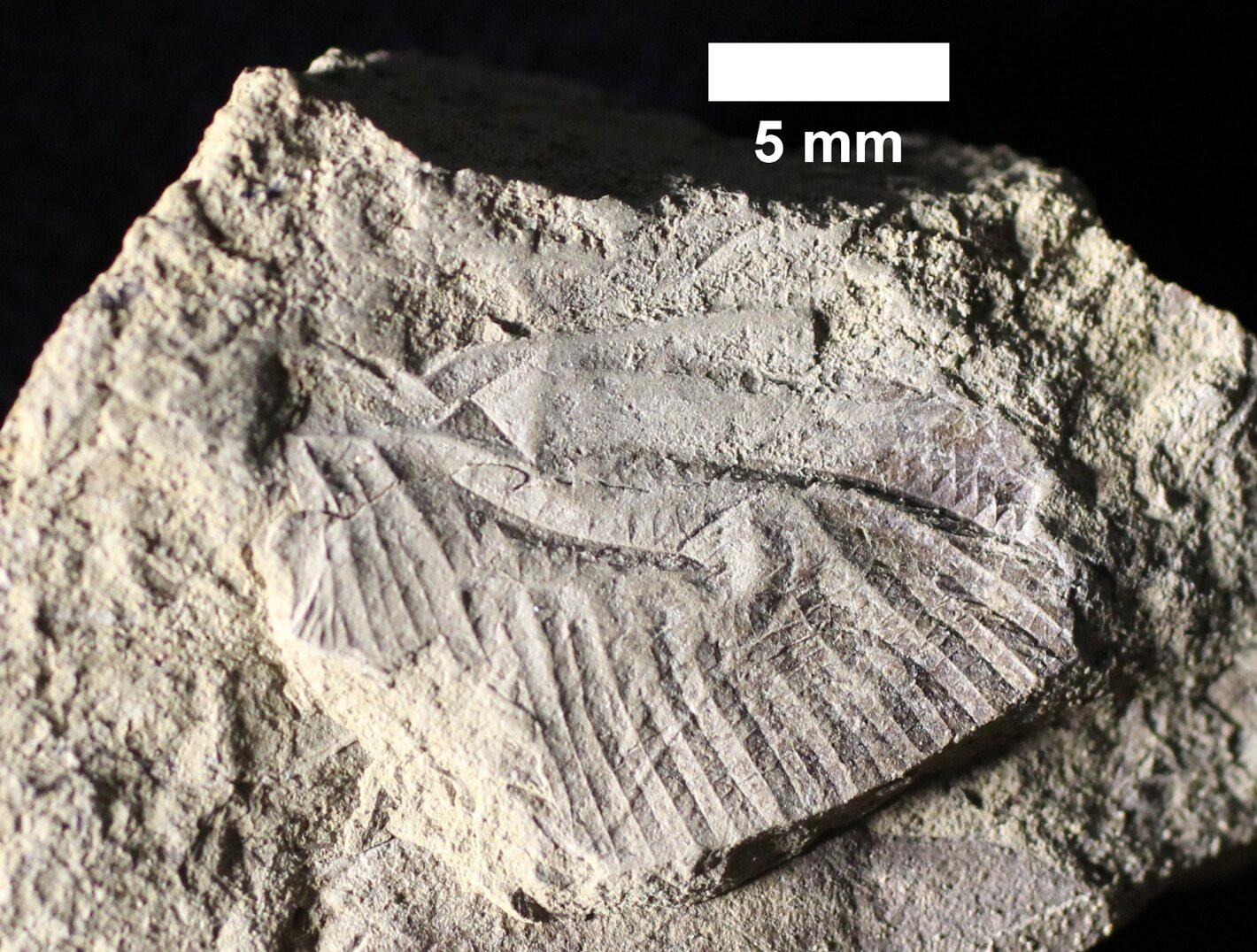
A newly identified fossilized dragonfly wing discovered in Alberta represents a previously unknown species and is Canada’s first from dinosaur-era sediment. Unearthed in Dinosaur Provincial Park, the fossil bridges a 30-million-year evolutionary gap for dragonflies. This study was carried out by researchers from McGill University.
The specimen was discovered in 2023 during a field course directed by Professor Hans Larsson. André Mueller, a McGill Master’s student and the project’s lead author, noted that their team was examining rock layers for leaf fossils when the dragonfly wing unexpectedly appeared. Insect fossils had not been documented in this geological layer before.
Originating from the Dinosaur Park Formation, the specimen dates back approximately 75 million years. While this formation is renowned for its dinosaur remains, insect fossils have been notably rare. Previously, the sole insect record found at this site was a tiny aphid preserved in amber.

An Unusual Insect Find Within Dinosaur Provincial Park
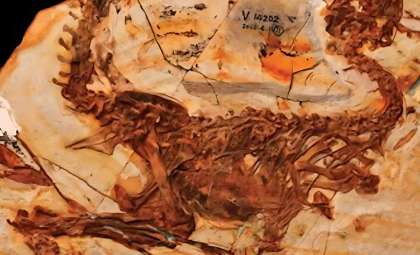
This fossil emerged from an area typically known for vertebrate remains, surprising the research team as insect fossils are uncommon there. The wing was preserved as an impression fossil, distinct from the amber insect fossil previously discovered at the same location.
Alexandre Demers-Potvin, a McGill postdoctoral researcher, emphasized that this discovery opens new avenues by introducing impression fossils as a valuable source of insect data from this formation. He commented:
“We’ve now started finding more insect fossils by expanding where and how we search. The diversity of insect life during this time was likely much greater than we thought.”
Introducing a Brand-New Species
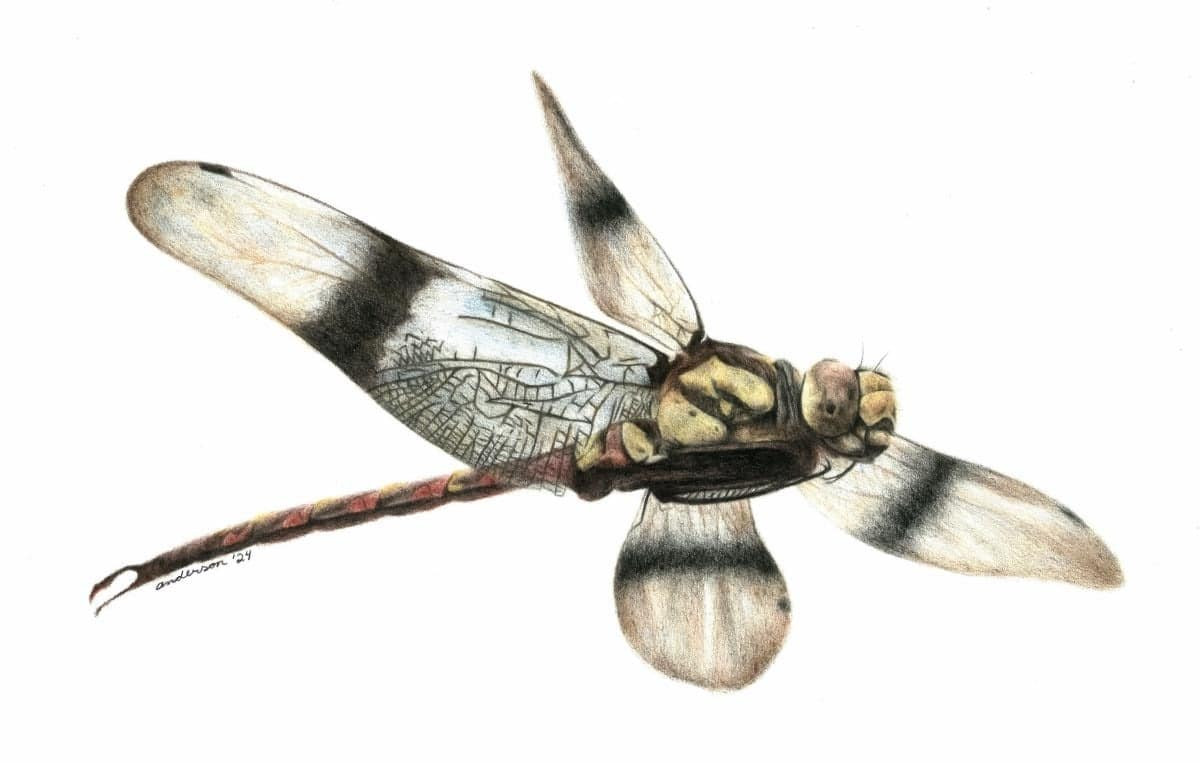
The fossil has been assigned to a new species named Cordualadensa acorni, a tribute to John Acorn, an entomologist and educator from the University of Alberta. Published in the Canadian Journal of Earth Sciences, the research noted that distinct features of the fossil warranted the designation of a new family, Cordualadensidae.
“This is the first ever dinosaur-aged dragonfly found in Canada,” Mueller said. “Its wingspan was about the width of a human hand, and while small, it would have been an important part of the Cretaceous ecosystem—a tasty raptor snack, no doubt.”
Small Fossil, Major Evolutionary Insights
This find fills a critical 30-million-year gap in our understanding of dragonfly evolution and represents the first North American example of the group Cavilabiata from this era. The wing’s structure suggests it was adapted for gliding flight, a trait linked to migratory behavior in modern dragonflies.
“The wing anatomy tells us this species was adapted for gliding; a trait associated with migratory dragonflies today and possibly a key to their success,” said Hans Larsson, who is a paleontologist and evolutionary biologist, “This specimen also provides insight into what life was like in Canada 75 million years ago, adding an important new missing piece of the ecological puzzle of one of the most diverse dinosaur-bearing sites in the world.”
Demers-Potvin noted that this finding doubles the known insect fossil count from the Dinosaur Park Formation.
- Categories:
- Science


0 comments
Sign in to Comment