
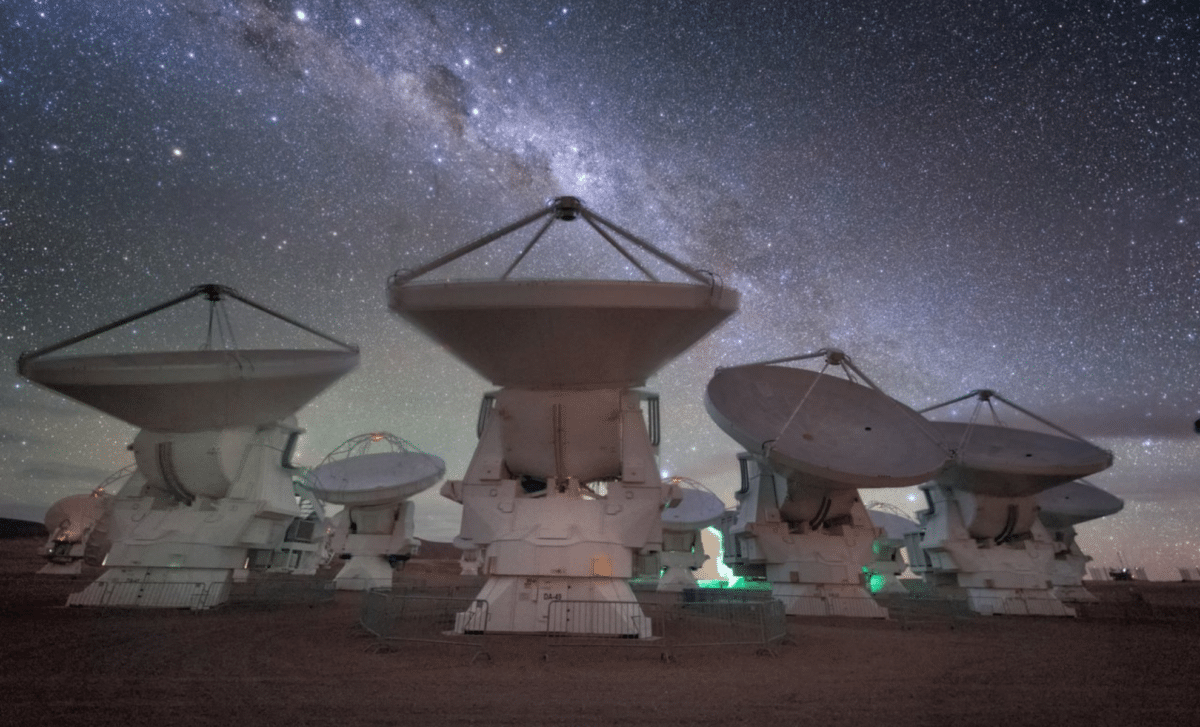
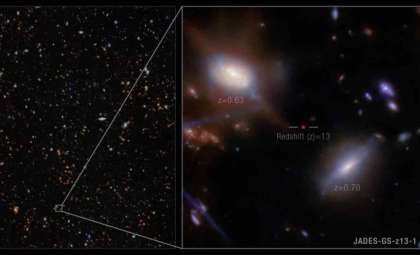
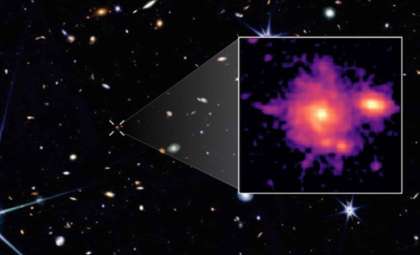
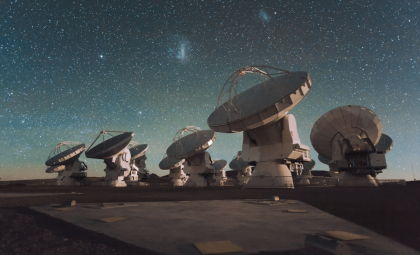
Utilizing the advanced capabilities of the Atacama Large Millimeter/submillimeter Array (ALMA), astronomers have detected a subtle oxygen emission from galaxies observed roughly 700 to 800 million years post-Big Bang. This breakthrough offers a unique glimpse into the fundamental gas that fueled the birth of the universe’s earliest stars.
Unraveling the Mystery of Gas in Early Galaxy Development
While astronomers have long studied stars and ionized gas in distant galaxies to piece together cosmic evolution, a crucial component remained elusive: the neutral gas that directly forms stars. This reservoir of gas is vital for star birth and understanding early galaxy formation. Tools like the James Webb Space Telescope (JWST) and the Hubble Space Telescope (HST) have revolutionized views of the distant universe, but they cannot directly map neutral gas. Past efforts depended on indirect markers often linked to multiple galactic environments, generating ambiguity at extreme distances where signals are faint. The recent ALMA observations overcome these hurdles, offering one of the clearest insights into the neutral gas that shaped galaxy evolution during the universe’s infancy.
ALMA Identifies a Rare Oxygen Emission From the Cosmic Dawn
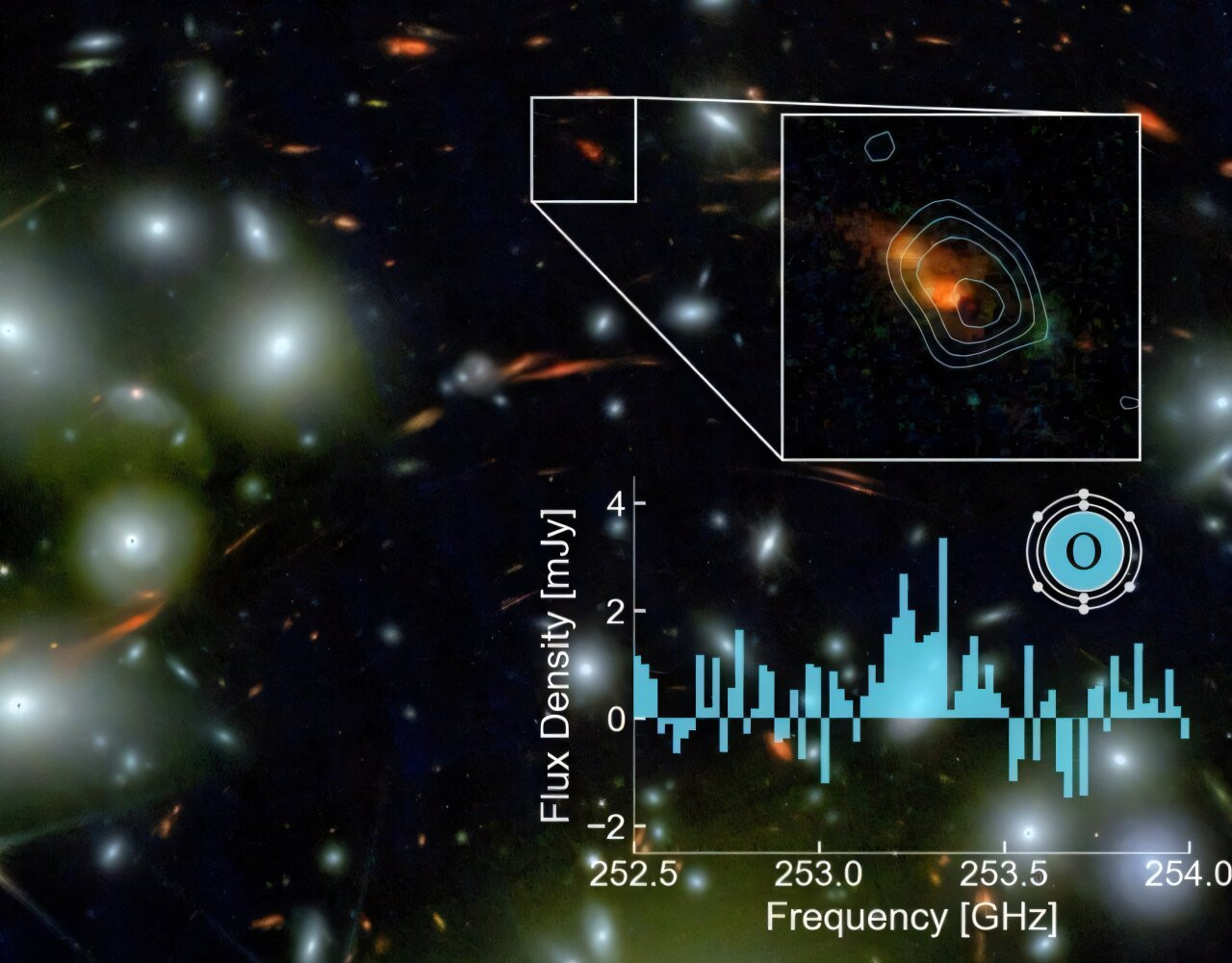
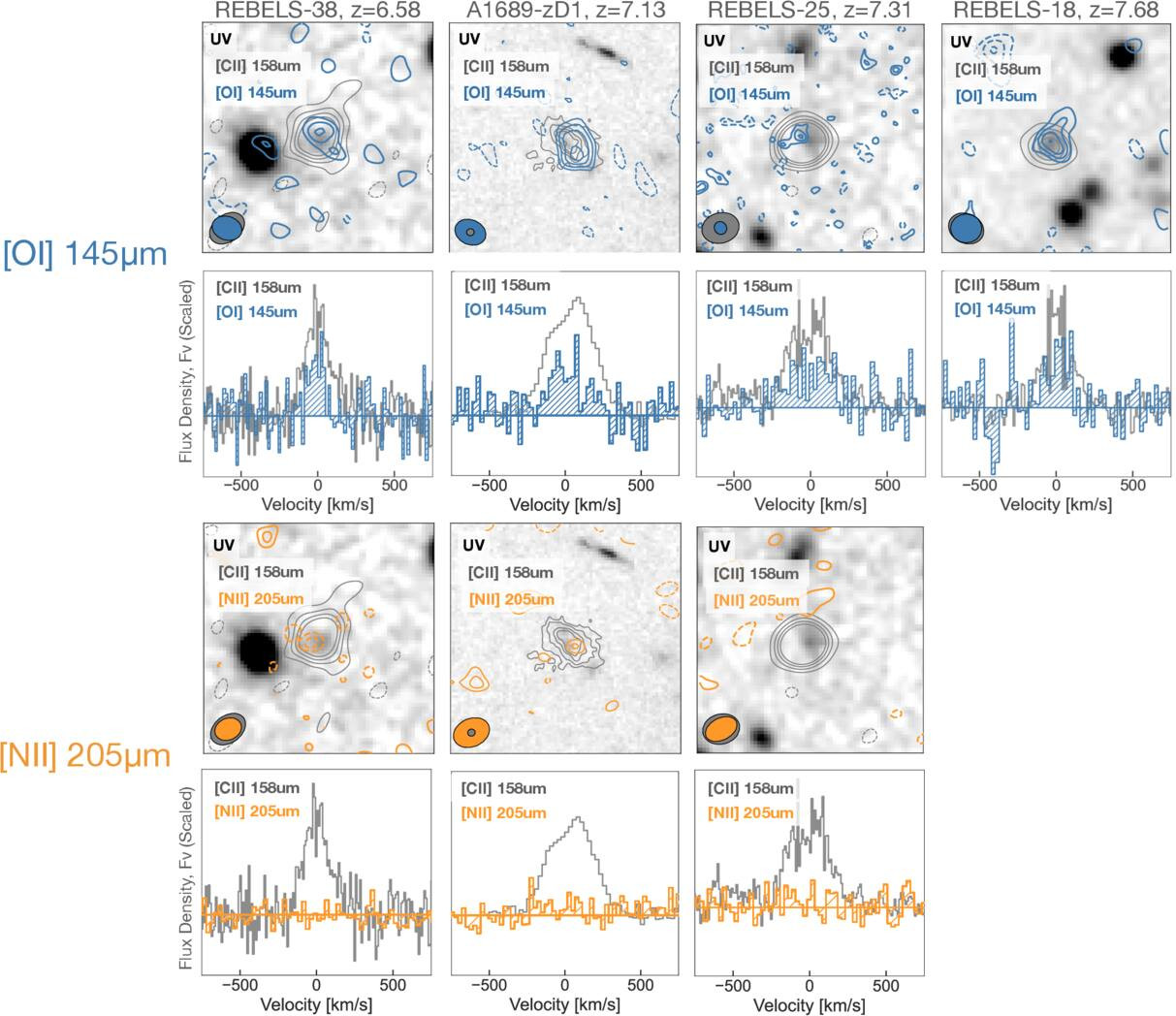
An international collaboration targeted four typical star-forming galaxies from when the cosmos was under a billion years old. Through ALMA, they found the [O I] 145 µm emission line in each galaxy. This emission is produced by neutral oxygen atoms and serves as one of the most straightforward indicators of neutral gas to astronomers. Unlike the more frequently examined [C II] line, which can trace both neutral and ionized regions, the oxygen line traces star-forming gas more distinctly. Additionally, the team examined the [N II] 205 µm emission line, which is exclusive to ionized gas. A weak [N II] signal reinforced that most emission originated from neutral gas. This allowed the researchers to confidently isolate and characterize the otherwise hidden gas reservoirs fueling early star formation.

Integrating ALMA and JWST to Explore Ancient Galactic Conditions
Published in the Astrophysical Journal, the research combined ALMA data with JWST findings to examine the physical and chemical properties of this gas in unprecedented detail. The work revealed that the neutral gas in these primordial galaxies was extraordinarily dense, rivaling that in today’s starburst galaxies, known for their intense star production. However, radiation levels around them were comparatively milder than typical starbursts. This suggests early galaxies were compact and gas-laden environments, supporting vigorous star formation under unique conditions. By contrasting oxygen and carbon emissions, scientists refined interpretations of prior [C II] observations, clarifying years of data within a more precise framework. The results hint that many early galaxies bristled with dense neutral gas, providing fertile grounds for rapid stellar birth during a pivotal cosmic epoch.
Most Remote Direct Evidence of Neutral Gas to Date
The impact of this discovery extends well beyond the sample of four galaxies. By demonstrating a direct technique for identifying neutral gas at extraordinary distances, it paves the way for future explorations into the earliest phases of galaxy formation. Assistant Professor Yoshinobu Fudamoto commented on the milestone:
“Our results represent the most distant direct detection of neutral gas in typical star-forming galaxies to date. This analysis unlocks the wealth of existing [C II] observations as a probe of neutral gas in the early universe.”
This statement underscores how the novel detection method enhances both new and extensive archival data interpretations. Scientists can now revisit earlier datasets with greater assurance, unveiling insights previously clouded by uncertainties over emission origins. This advancement transforms a common observational tool into a more potent means of probing how galaxies evolved during the earliest cosmic dawn.
A New Horizon on Star Formation’s Fuel Source
The findings from this study promise to guide future research on the young universe. By validating the usefulness of the [O I] 145 µm emission line, scientists now have a powerful access point for exploring an otherwise hidden gas phase in early galaxies. Dr. Akio K. Inoue highlighted the breakthrough: “Our work establishes the [O I] emission line as an effective tool for studying an elusive gas component in the early universe, opening a new window onto the ‘fuel’ behind star formation.” Upcoming surveys aim to increase the number of galaxies analyzed beyond this initial group. Blending data from ALMA, JWST, and future observatories, astronomers hope to trace a detailed history of how galaxies collected gas, formed stars, and evolved into the cosmic structures visible today. Each new observation brings us closer to understanding how the first galaxies emerged from the aftermath of the Big Bang and eventually gave rise to galaxies like our own Milky Way.
- Categories:
- News



0 comments
Sign in to Comment